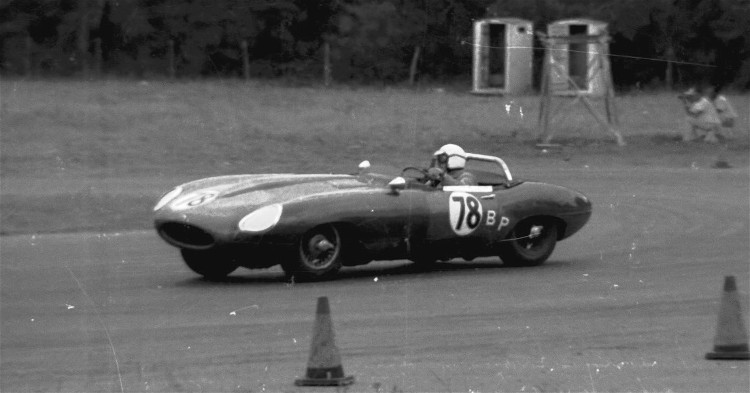
I have had first hand experience of driving my E-Type with and without bump stops. Consider driving at speed and approaching a tight left hand bend:
1. Standard Bump Stops
As the car enters the corner it begins to lean and as it does so the hub carrier begins to make contact with the bump stop. The design of the stop means it progressively reduces the rate of body roll and once the hole in the donut is compressed there is little further movement. The car is now stable, leaning in the corner and can be steered on the throttle. It has maximum grip and is handling the way it was engineered.
2. Bump Stops Removed
As the car enters the corner it begins to lean and continues to lean further until the shock absorbers bottom out. This is an extra 1" to 1.5" of movement so the lean angle is greatly increased. When the shocks bottom out they do so abruptly which causes the car to jerk and you feel the steering wheel shimmy in your hands. The extra lean takes weight off the nearside tyres reducing their grip. The off side tyres are forced sideways rolling towards the side walls. The road surface will have imperfections and they will cause the suspension to move up and down repeatedly bottoming on the shocks which causes more shimmy in the steering. Once the car straightens up any undulations in the road will cause the suspension to flex resulting in the exhaust hitting the road or the shocks sharply bottoming out causing discomfort to driver and passenger. You have 1"+ less ground clearance on the move.
So we have compromised handling, cornering, grip, ground clearance, ride quality and safety simply because those two bits of seemingly superfluous rubber have been removed. Every car on the road (apart from some E-Type's!) has bump stops fitted and 99.9% of those are internal on the shock absorber.

Jaguar had their unique IRS though and decided to forgo internal bump stops (which are service item and need replacement) and opted for an external stop which can be easily seen and replaced if it starts to deteriorate.
For those who have no bump stops there are two ways forward and neither are particularly palatable. First would be to reinstall the stock items but this will involve welding and may not be acceptable to those with a freshly restored car or are unwilling to give up their wide wheels. The other is to install bump stops in the shocks which involves removing them from the car, dismounting the springs and fitting the stops. Unfortunately the Boge shocks (others may be the same) do not allow you to remove the top mount to get the stop pushed on, which means the stop has to be cut and slipped on. This is no problem as the standard dust cover will hold it in place and allow it to function.
The big problem is selecting bump stops that will replicate the action of the stock items in terms of compress-ability and range of movement. Also the stock items are in a different place and angle. It will be a case of experimenting with the myriad styles and compositions available until the car behaves as Jaguar intended and that is going to take a lot of time and mileage. Jaguar probably went through many iterations of bump stop size and composition before settling on the specified part so all we can do is make a guess and hope it works or at least reduces the problem. It will never be as good as what Norman Dewis was happy with though. Best option is to use what Eric (64etype) used - he did sterling work thinking it through.
Interestingly people removed the bump stops to fit wider wheels/modern tyres to improve road holding when in fact they have achieved the opposite