Post
by bitsobrits » Sun Mar 05, 2023 2:14 am
Chris,
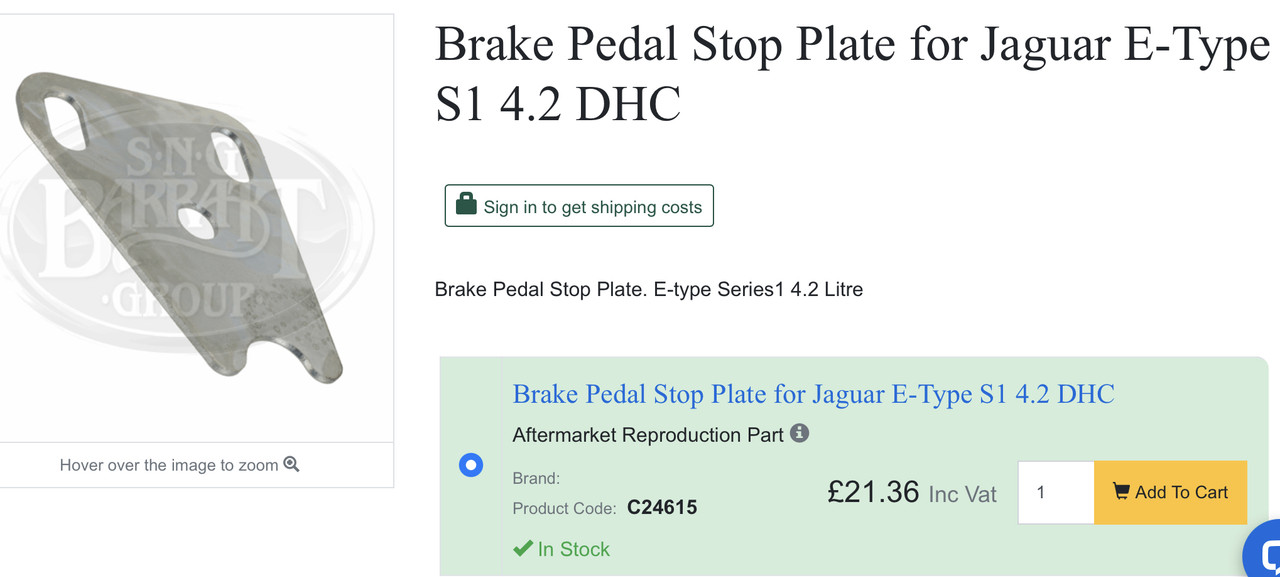
The stop plate is fitted to the inside of the car, not sandwiched between the pedal box and body. There should be two approx 1/4" spacers between the plate and the bulkhead sheetmetal (stacked washers will do), otherwise it can't sit properly due to the flanges on the bulkhead sheetmetal.
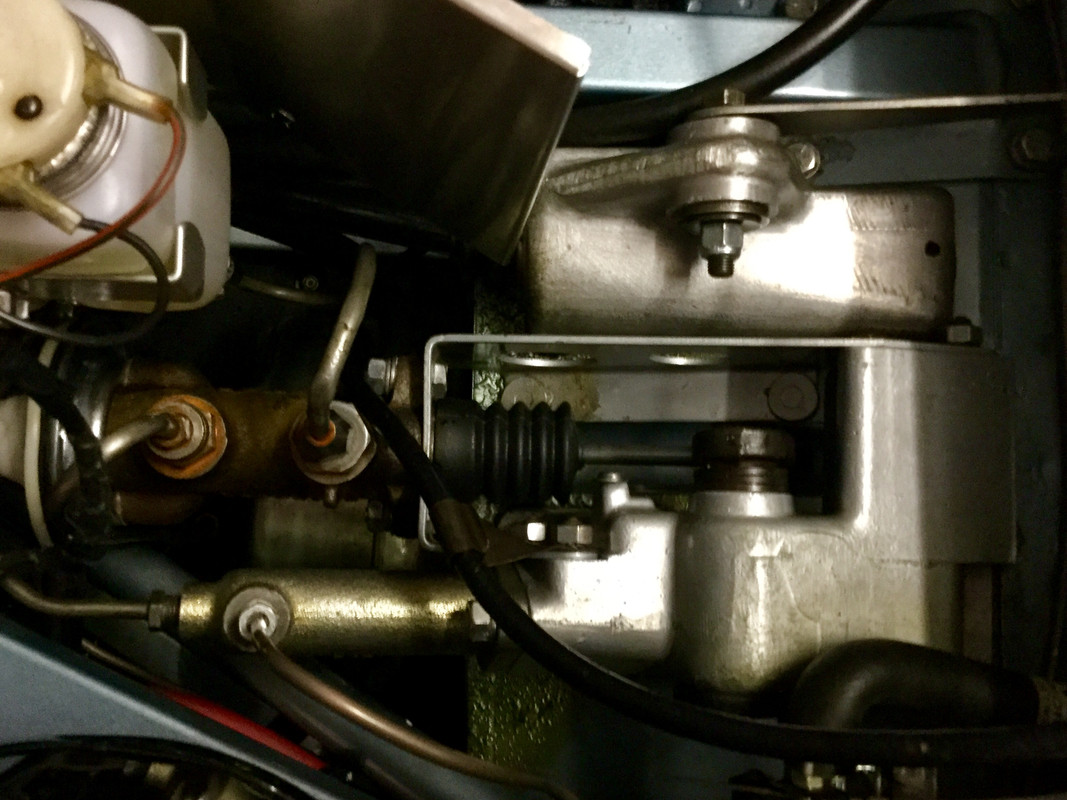
Once you have the stop plate correctly mounted and therefore the brake pedal in it's normal resting position (install a pedal arm return spring if the one in the pedal box is broken, which is common), you may need to make up a new adjustable pushrod set up to give a very slight amount (about 1/16") of free play (at the rod to MC interface, not at the brake pedal) when the pedal is in it's 'at rest' position. A new pushrod can be made from a common bolt of the correct size/length (5/16" coarse thread?) with the head cut off and the cutoff end rounded with a file or sander. Starting with a high strength stainless bolt (ARP) is a nice, but unnecessary touch.
If the pedal height differences are troubling (the variance you mention is in the normal range), you can adjust the clutch pedal height by both/either making up an adjustable pushrod or removing/replacing the spacer between the clutch master and the pedal box with a thinner one.
In my own car, I instead made up a new stop plate and moved the brake pedal forward to approximately the clutch pedal level to facilitate heel/toe operation. That does require removing the pedal box and re-positioning the brake actuating arm on it's splined shaft, so it's a more involved process.
Steve
'65 S1 4.2 FHC (early)



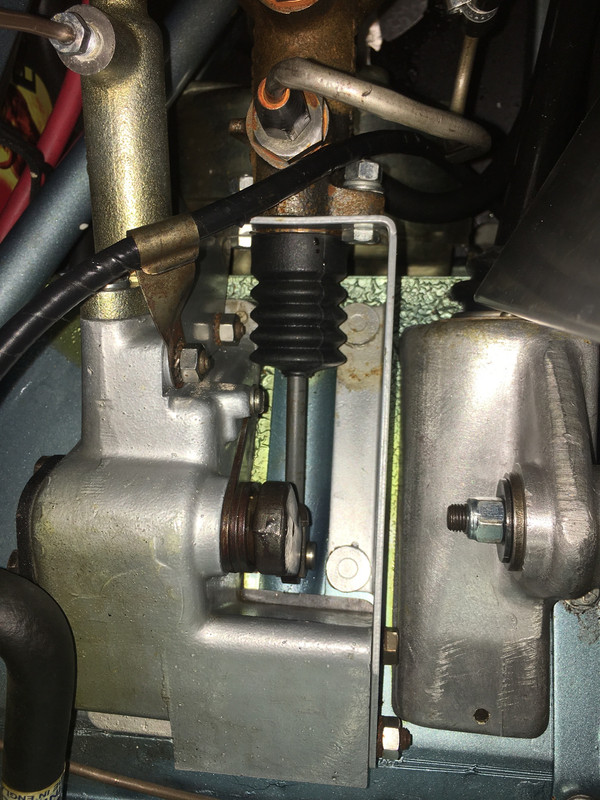

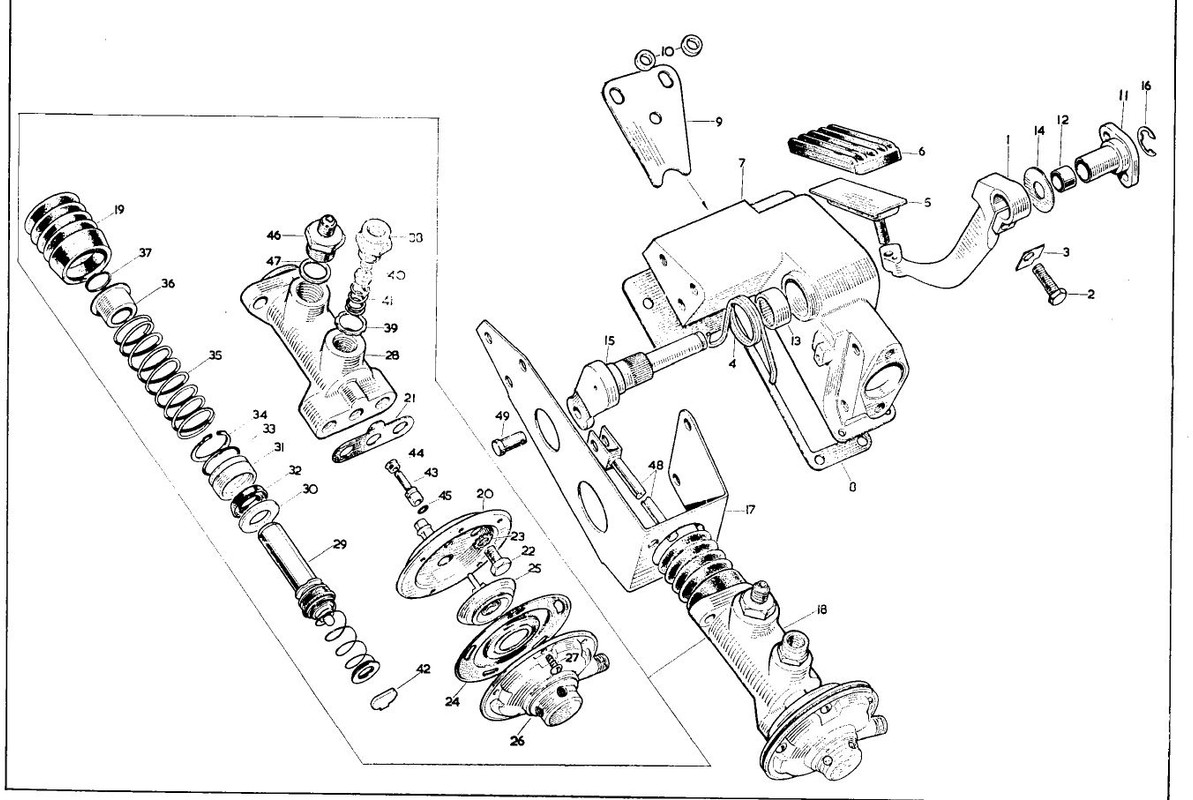


 if this isn’t correct I’ll need to investigate
  further.