Peter Wrote:
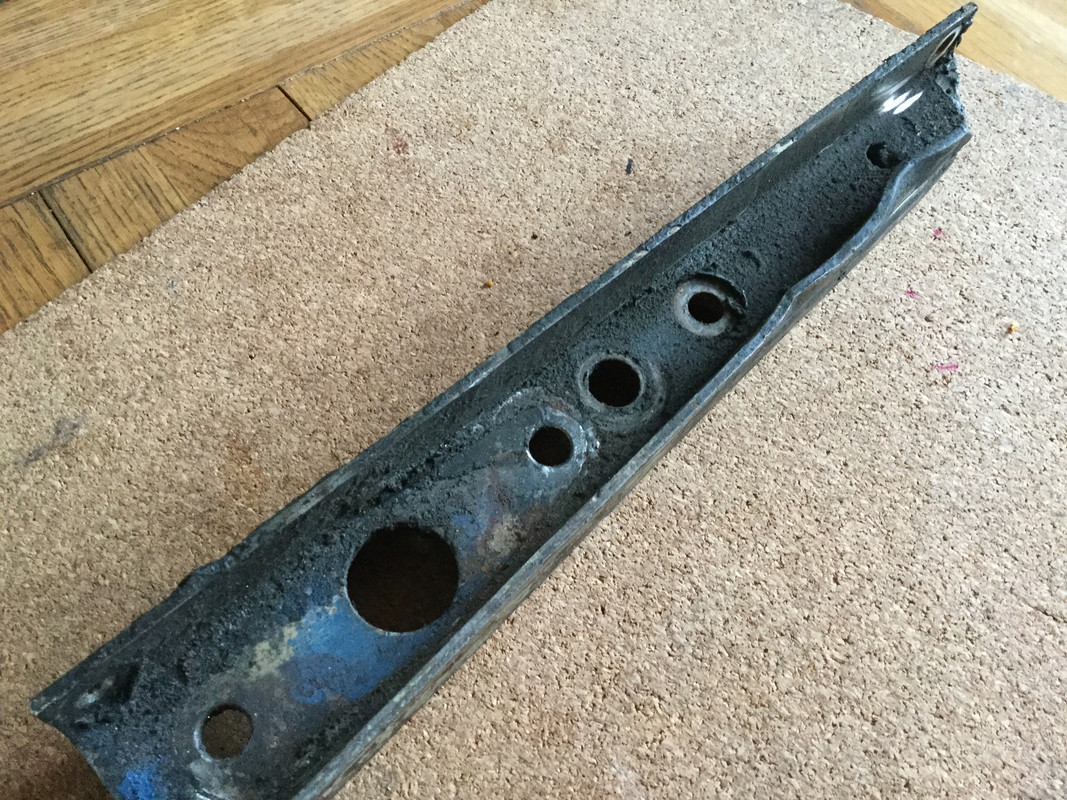
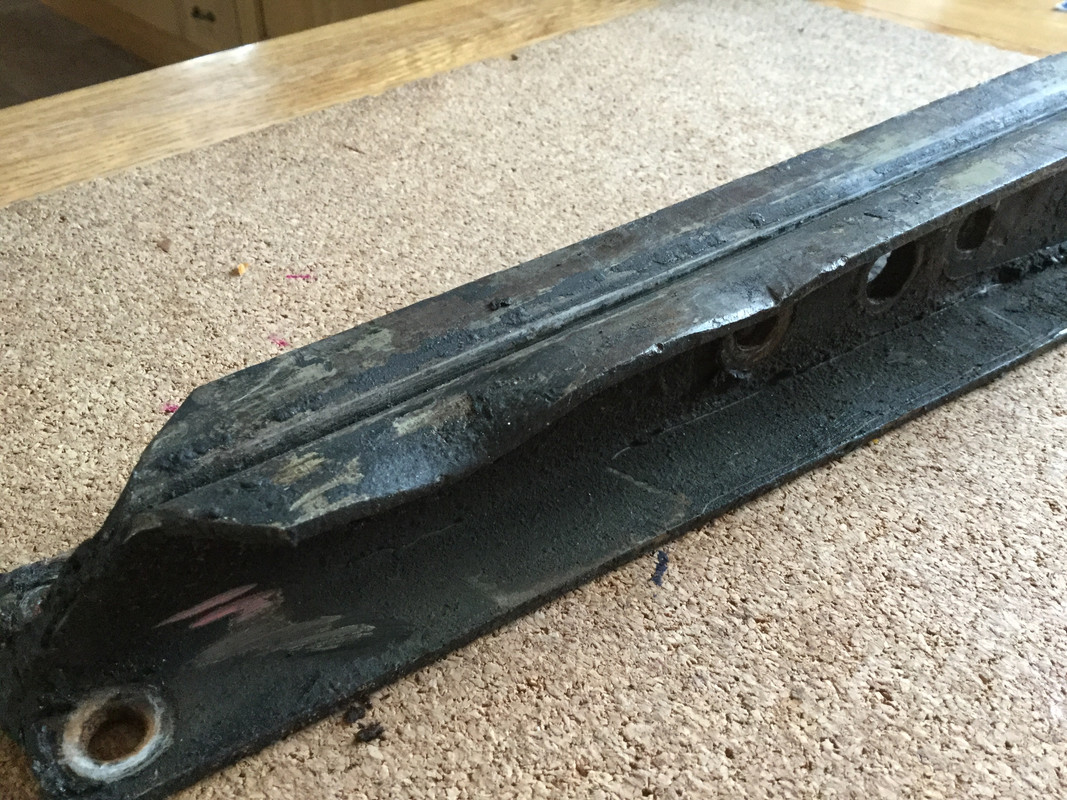
So does anyone know if heating this fitting up to red heat in odd spots, will destroy any production metallurgy and render the thing less than optimal?
Hello Peter,
The material is Mild Steel and considered a low carbon steel as it is defined as having a low carbon content of 0.05–0.25%. Accordingly, you could heat the part to cherry red and quench and no hardening whatsoever will occur. The only way to change its mechanical characteristics would be to apply a soaking heat with the component in a Carbonaceous environment. In this case, carbon is absorbed by the surface of the material (time spent in the Carbonaceous environment determines the depth of absolution) and subsequent quenching will result in a hardened case; hence the term "Case Hardening".
Your part could be successfully repaired to near perfection using a Hydraulic Press by applying a load to the deformed features sandwiched between suitable and as thick pieces of flat bar and plate that can be arranged.
If a press is not available to you and heating is required, the shape and material thickness of this part will resist distortion. In fact, planned and careful application of heat to small areas where the metal is stretched will pull the part back into shape. Because the metal surrounding a small area heated to a plastic state is unyielding and the hot spot is expanding, there is nowhere to expand to and therefore, the metal in the hot spot compacts. When quenched, the hot spot will have shrunk, thus pulling the surrounding metal towards it.
Pressing would be my choice of repair method, but you will find that the deformed edges of your part will straighten up very well cold with a hammer and flat bar as a dolly. With localized heat, the metal will move more easily.
Regards,
Bill