Darryl Wrote:
But it would be good it you could give me your thoughts on how much of a problem this is likely to be, and what the likely solution is.
Hello Darryl,
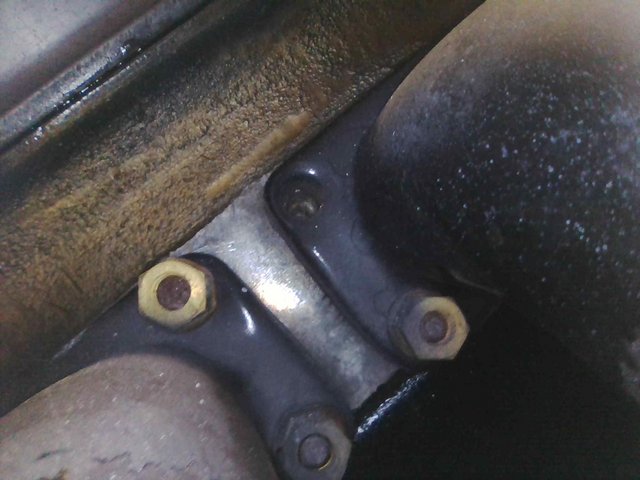
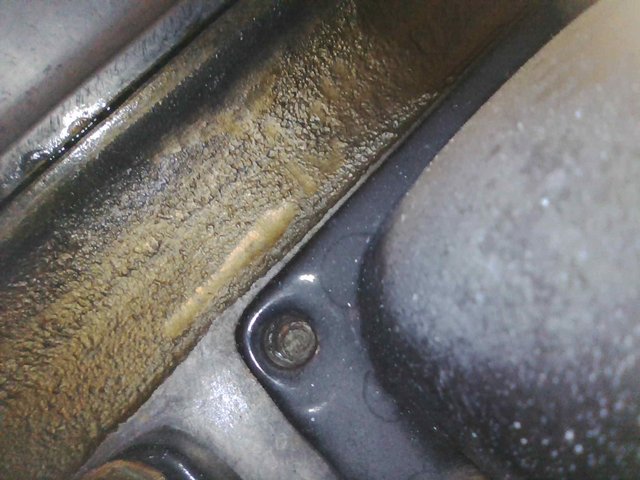
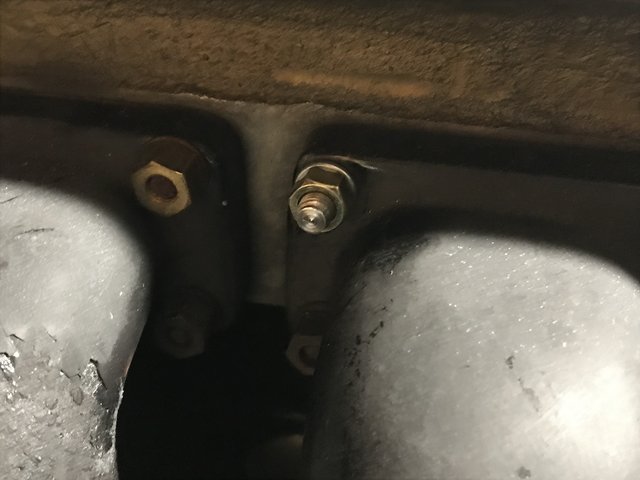
I get a few of these to do every year. When a nut can't be welded onto the broken stud, I have a plate we made with the hole pattern of the stud arrangement of one header (they are both the same), with the hole size minimal clearance on the 5/16" studs. The plate is located on the remaining studs and held secure with nuts. A cylindrical insert, with a bore the drill size of the correct stud remover for 5/16", is placed in the hole of the plate where the offending stud is. This arrangement provides a drill bush guide to ensure accurate drilling of the hole in the stud for the Stud Remover.
The hole in the stud is drilled right through (by measurement and feel, this is not hard to do), after which, a copper rod is placed in the hole and heat applied to the length that protrudes from the hole, followed by penetrating oil down the hole and left for a few hours. This process is repeated a few times over a couple of days before attempting to use the Stud Extractor. Just before using the Stud Extractor, we get the area around the stud quite warm and then squirt a freezing compound down the centre hole of the stud and move quickly to use the Stud Extractor. This method has never failed to safely and without any damage to the head, to remove a broken stud.
Regards,
Bill


 It won’t be a job I’ll be trying to do myself, I’ll leave it to someone who knows what they’re doing. But it would be good it you could give me your thoughts on how much of a problem this is likely to be, and what the likely solution is.