


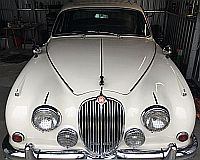

My 3.8 coupe resto has about 1000 miles on the engine now. It goes very nicely.
On the last drive I was a bit unhappy with the oil pressure; peak hot at about 30 psi on the gauge.
The sender is an old one, but I test them using compressed air before I install them and it read perhaps 5psi low at 50psi, so fairly accurate.
We routinely reuse the OP valve springs on restos as long as they are the correct length, and that's what I did with this car. So I decided to replace the OP valve spring with a new one and see what happened.
After that, peak pressure was around 25 psi and it was dropping to 15 or so hot at idle. I wasn't very happy with that. Bear in mind this is a brand new engine.
I did some measurements on the old spring and another new one I had. Both were exactly 2.00" in length. The old one compressed at 9.5lb per inch, the new one about 8.5lb/in. So the new one was actually a little weaker.
The compressed length of the spring when installed in the housing is 0.750", so it should need 12lb to start to compress it.
I installed the old spring in a spare housing I have and using a dowel and kitchen scales was able to demonstrate that almost exactly 12lb of pressure was needed to move the valve. Yay Mr Hooke.
I decided to try reinstalling the old spring with some shims to see what effect that would have on oil pressure. I saw a Youtube video of John Twiss shimming an MGB OP spring using a 1/8" washer.
So I got a couple of 60 thou thick washers and turned them down in diameter to fit over the spider, beneath the spring.
Reinstalled with 120 thou of shims I'm now getting 25 to 30 psi at idle and 45 at revs hot. So 1/8" of shim has given me around 10 to 15 psi extra.
Note that I'm not offering a fix for low oil pressure in a worn engine, but rather a ballpark of shim thickness if your spring is suspect.
I'd be interested in your thoughts.
Some musings on oil overpressure valves.
#1 Some musings on oil overpressure valves.
Andrew.
881824, 1E21538. 889457. 1961 4.3l Mk2. 1975 XJS. 1979 MGB (supercharged).
Adelaide, Australia
881824, 1E21538. 889457. 1961 4.3l Mk2. 1975 XJS. 1979 MGB (supercharged).
Adelaide, Australia
| Link: | |
| BBcode: | |
| HTML: | |
| Hide post links |
#2 Re: Some musings on oil overpressure valves.
My thoughts:-
What you appear to have told us is that the spring is able to compress just a little bit when warmed up, so the maximum pressure is never high. Before I'd reach that conclusion, I'd ask:-
1/ What pressure do you get if you make sure the spring never opens? Did you ever have much oil pressure in the first place?
2/ You could try an experiment. Put both springs in the oven at 80'c and then check their length and strength.
3/ Is there an external washer (i.e effectively a shim) as part of the pump housing assembly that affect the length?
4/ The exact opposite is done to lower cap for the s3 etype power steering pump (Saginaw pump).
kind regards
Marek
What you appear to have told us is that the spring is able to compress just a little bit when warmed up, so the maximum pressure is never high. Before I'd reach that conclusion, I'd ask:-
1/ What pressure do you get if you make sure the spring never opens? Did you ever have much oil pressure in the first place?
2/ You could try an experiment. Put both springs in the oven at 80'c and then check their length and strength.
3/ Is there an external washer (i.e effectively a shim) as part of the pump housing assembly that affect the length?
4/ The exact opposite is done to lower cap for the s3 etype power steering pump (Saginaw pump).
kind regards
Marek
| Link: | |
| BBcode: | |
| HTML: | |
| Hide post links |
#3 Re: Some musings on oil overpressure valves.
I accidentally assembled the OP valve incorrect once on my Mk2, so that it couldn't open. Oil pressure was off the scale and the oil filter seal blew out, dumping oil all over the garage floor.
My understanding is that for safety the pump can produce far more flow, and therefore pressure, than the engine needs. The OP valve acts to limit the pressure and diverts the excess flow back into the sump.
I don't think that lower pressures at running temperature reflect the spring getting weaker. I think it's because oil viscosity decreases. Oil pressure at idle is low because the pump is running relatively slowly, decreasing flow. As engine revs increase flow and pressure increase to the point that the pressure opens the OP valve.
There's no shim shown in the parts manual, nor is there a washer under the outlet fitting. It has a rubber seal (o ring) and positively locates into a recess. As you say, a washer in here would act to decrease oil pressure.
My understanding is that for safety the pump can produce far more flow, and therefore pressure, than the engine needs. The OP valve acts to limit the pressure and diverts the excess flow back into the sump.
I don't think that lower pressures at running temperature reflect the spring getting weaker. I think it's because oil viscosity decreases. Oil pressure at idle is low because the pump is running relatively slowly, decreasing flow. As engine revs increase flow and pressure increase to the point that the pressure opens the OP valve.
There's no shim shown in the parts manual, nor is there a washer under the outlet fitting. It has a rubber seal (o ring) and positively locates into a recess. As you say, a washer in here would act to decrease oil pressure.
Andrew.
881824, 1E21538. 889457. 1961 4.3l Mk2. 1975 XJS. 1979 MGB (supercharged).
Adelaide, Australia
881824, 1E21538. 889457. 1961 4.3l Mk2. 1975 XJS. 1979 MGB (supercharged).
Adelaide, Australia
| Link: | |
| BBcode: | |
| HTML: | |
| Hide post links |
#4 Re: Some musings on oil overpressure valves.
I have a v12, but the same principles apply.
The pressure cap is 65-70psi. That's evident immediately on a cold start and also where it caps out when hot at medium to high rpm.
If adding a shim made a positive difference, then the relief valve is starting to open "early" and not acting as a cap. Either the spring isn't working as you'd expected or the sealing surface is suspect.
kind regards
Marek
The pressure cap is 65-70psi. That's evident immediately on a cold start and also where it caps out when hot at medium to high rpm.
If adding a shim made a positive difference, then the relief valve is starting to open "early" and not acting as a cap. Either the spring isn't working as you'd expected or the sealing surface is suspect.
kind regards
Marek
| Link: | |
| BBcode: | |
| HTML: | |
| Hide post links |
-
 Series1 Stu
- Posts: 1813
- Joined: Thu Feb 02, 2017 12:26 pm
- Location: Shropshire

#5 Re: Some musings on oil overpressure valves.
I'm sure that Andrew's musings are quite correct.
Adding a shim, which effectively increases the preload on the valve's spring, will require a higher pressure to further compress the spring and therefore open the relief valve. Uprated oil pumps generally use a pressure relief spring with an increased spring rate to achieve the same effect.
The oil pump generates flow while the clearances in the hydro-dynamic bearings determine the oil pressure in conjunction with the flow rate & viscosity of the oil. Clearly, as the oil gets warmer and reduces in viscosity, the oil pressure will reduce accordingly. Similarly, as the main and big end bearings wear and the clearances increase, the oil pressure will likewise reduce. Hence low oil pressure being a significant indicator of engine wear.
I can't really see any problem with Andrew's suggestion provided the spring isn't approaching becoming coil-bound and there is sufficient clearance for the corresponding (very small) increase in diameter of the spring. The life of the spring may be reduced slightly but still probably well within the engine's wear limits.
It comes as no surprise that the aftermarket springs are not the same as the original items.
Regards,
Adding a shim, which effectively increases the preload on the valve's spring, will require a higher pressure to further compress the spring and therefore open the relief valve. Uprated oil pumps generally use a pressure relief spring with an increased spring rate to achieve the same effect.
The oil pump generates flow while the clearances in the hydro-dynamic bearings determine the oil pressure in conjunction with the flow rate & viscosity of the oil. Clearly, as the oil gets warmer and reduces in viscosity, the oil pressure will reduce accordingly. Similarly, as the main and big end bearings wear and the clearances increase, the oil pressure will likewise reduce. Hence low oil pressure being a significant indicator of engine wear.
I can't really see any problem with Andrew's suggestion provided the spring isn't approaching becoming coil-bound and there is sufficient clearance for the corresponding (very small) increase in diameter of the spring. The life of the spring may be reduced slightly but still probably well within the engine's wear limits.
It comes as no surprise that the aftermarket springs are not the same as the original items.
Regards,
Stuart
If you can't make it work, make it complicated!
'62 FHC - Nearing completion
'69 Daimler 420 Sovereign
'93 Jaguar X300 XJR basket case
'93 Audi 80 quatrro Sport
If you can't make it work, make it complicated!
'62 FHC - Nearing completion
'69 Daimler 420 Sovereign
'93 Jaguar X300 XJR basket case
'93 Audi 80 quatrro Sport
| Link: | |
| BBcode: | |
| HTML: | |
| Hide post links |