


It is possible to remove a rear hub assembly while the suspension is under the car? Or does the rear suspension need to be dropped to remove a hub. I may have a hub bearing going bad.
Thanks
Mark
Rear hub removal
-
TheMadBadger
Topic author - Posts: 20
- Joined: Mon Apr 12, 2021 5:27 am
- Location: SE Tennessee USA

#1 Rear hub removal
Mark Badger
1968 Series 2 E-type convertible
1971 Series 2 E-type coupe
1968 Series 2 E-type convertible
1971 Series 2 E-type coupe
| Link: | |
| BBcode: | |
| HTML: | |
| Hide post links |
#2 Re: Rear hub removal
No need
Pull split pin
Undo castellated nut
Push off hub from splined drive shaft
Undo outer fulcrum nut
Slide out fulcrum shaft
Remove hub carrier
Onto the bench
Pull split pin
Undo castellated nut
Push off hub from splined drive shaft
Undo outer fulcrum nut
Slide out fulcrum shaft
Remove hub carrier
Onto the bench
Robbie 1962 3.8 Coupe OSG 1962 OTS ODG
| Link: | |
| BBcode: | |
| HTML: | |
| Hide post links |
-
TheMadBadger
Topic author - Posts: 20
- Joined: Mon Apr 12, 2021 5:27 am
- Location: SE Tennessee USA
#3 Re: Rear hub removal
Sounds simple enough, thank you
Mark
Mark
Mark Badger
1968 Series 2 E-type convertible
1971 Series 2 E-type coupe
1968 Series 2 E-type convertible
1971 Series 2 E-type coupe
| Link: | |
| BBcode: | |
| HTML: | |
| Hide post links |
-
 bitsobrits
- Posts: 560
- Joined: Tue Dec 27, 2011 2:09 am
- Location: Omaha, NE area
#4 Re: Rear hub removal
While Robbiee's explanation in not incorrect, he does gloss over the reality of how tight the hub can be on the splines. And the remaining stub shaft doesn't exactly fall out of the bearings. But, yeah, you can remove it without dropping the IRS. Personally, I would remove the half shaft from the diff (at the brake disc) and take off the whole lot (half shaft and hub assembly) and work on disassembly on the bench, and with a press.
Last edited by bitsobrits on Mon Sep 11, 2023 1:57 pm, edited 1 time in total.
Steve
'65 S1 4.2 FHC (early)
'65 S1 4.2 FHC (early)
| Link: | |
| BBcode: | |
| HTML: | |
| Hide post links |


#5 Re: Rear hub removal
Hi Mark
There is a lengthy reply to the same question you posted at J L take a look at it
Cheers
Chris
There is a lengthy reply to the same question you posted at J L take a look at it
Cheers
Chris
1969 S2 2+2 manual, 1970 S3 Auto, 2005 Ferrari 360, XR8 Ford Ute, plus to many motorcycles
| Link: | |
| BBcode: | |
| HTML: | |
| Hide post links |
#6 Re: Rear hub removal
I agree the splined hub can be tight but once you’ve screwed in the pusher and released the grip the hub should slide off
Robbie 1962 3.8 Coupe OSG 1962 OTS ODG
| Link: | |
| BBcode: | |
| HTML: | |
| Hide post links |
#7 Re: Rear hub removal
Mark Wrote:
Many are assembled using Loctite on the splines and a fair percentage using high strength Loctite. These are real bears to get apart, with the standard JD7A tool not having a ghost of a chance of separating the splines.
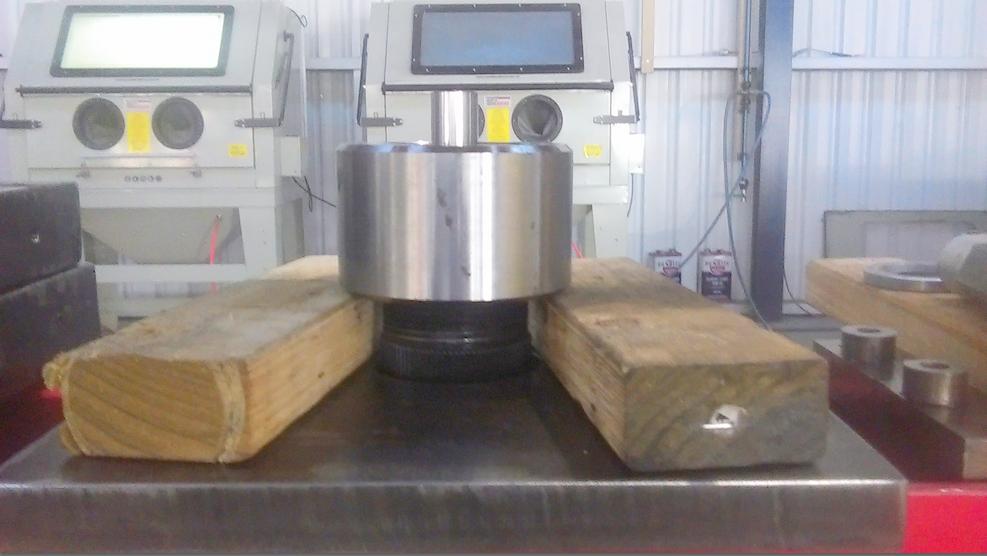
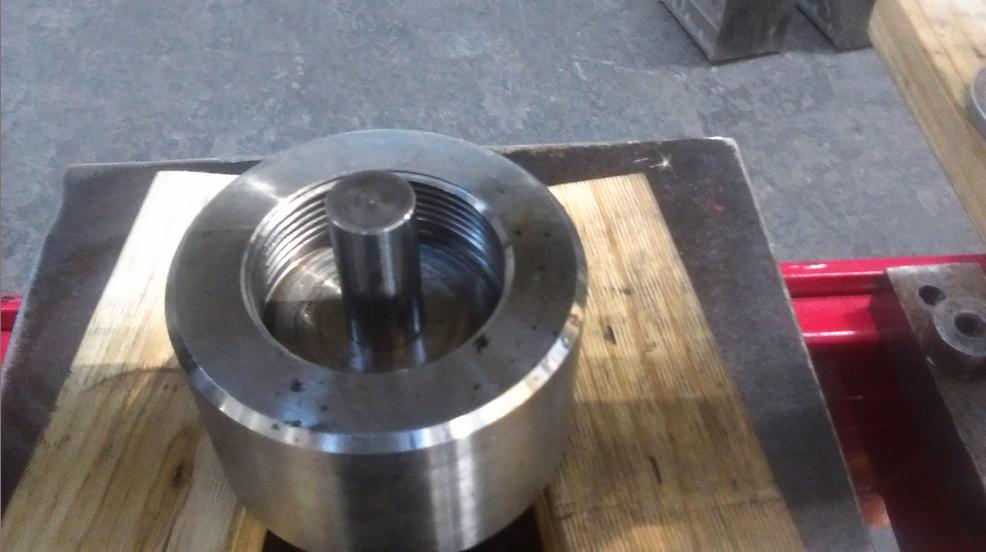
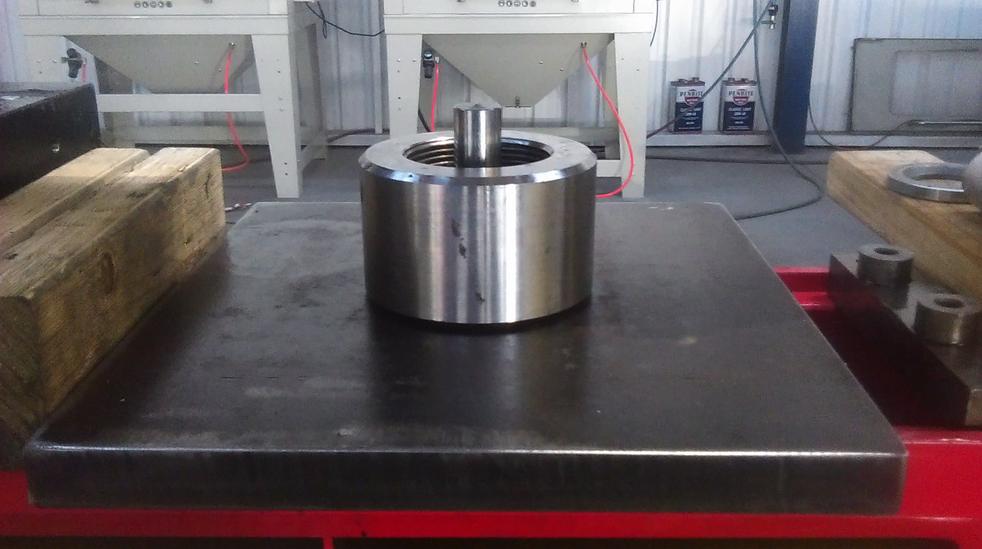
The following pictures show the tool that I made and use and will separate the toughest assemblies. However, I draw the line at circa 9 ton force, at which point I put the whole assembly in an oven to destroy the characteristics of the Loctite. Heating with a flame doesn't work that well, for there is quite an insulating air gap between where the flame can be applied and where the heat is require. A soaking heat is required and that's what the oven supplies.
The end of the threaded journal is relatively weak, due to the two crossed, slit pin holes and a rather large centre drilled hole in the end of the shaft. The standard JD7A tool has a Ball Bearing on the end of the Threaded Mandrel, which imparts a bursting pressure on the centre drilled hole; accordingly, its good practice to leave the nut on the end of the shaft, until the splines start to separate, to support the weak end of the thread.
The timber packers in the following pictures are only to show the hub coming up from underneath the plate. In operation the tool is assembled as in the last picture.
Regards,
Bill
It's simple until its not. I do this job many times a year and I'd say that probably only 1% dismantle easily.Sounds simple enough, thank you
Many are assembled using Loctite on the splines and a fair percentage using high strength Loctite. These are real bears to get apart, with the standard JD7A tool not having a ghost of a chance of separating the splines.
The following pictures show the tool that I made and use and will separate the toughest assemblies. However, I draw the line at circa 9 ton force, at which point I put the whole assembly in an oven to destroy the characteristics of the Loctite. Heating with a flame doesn't work that well, for there is quite an insulating air gap between where the flame can be applied and where the heat is require. A soaking heat is required and that's what the oven supplies.
The end of the threaded journal is relatively weak, due to the two crossed, slit pin holes and a rather large centre drilled hole in the end of the shaft. The standard JD7A tool has a Ball Bearing on the end of the Threaded Mandrel, which imparts a bursting pressure on the centre drilled hole; accordingly, its good practice to leave the nut on the end of the shaft, until the splines start to separate, to support the weak end of the thread.
The timber packers in the following pictures are only to show the hub coming up from underneath the plate. In operation the tool is assembled as in the last picture.
Regards,
Bill
| Link: | |
| BBcode: | |
| HTML: | |
| Hide post links |


#8 Re: Rear hub removal
Hey Bill, do you think you could post a picture of the tool disassembled, please ?
I’m guessing it’s two parts, the black core sliding in the threaded collar, right ?
Thanks,
Rory
I’m guessing it’s two parts, the black core sliding in the threaded collar, right ?
Thanks,
Rory
Rory
3.8 OTS S1 Opalescent Silver Grey - built May 28th 1962
3.8 OTS S1 Opalescent Silver Grey - built May 28th 1962
| Link: | |
| BBcode: | |
| HTML: | |
| Hide post links |