Page 1 of 2

#1 IRS mounts

Posted: Fri Oct 27, 2023 1:17 am
by lowact
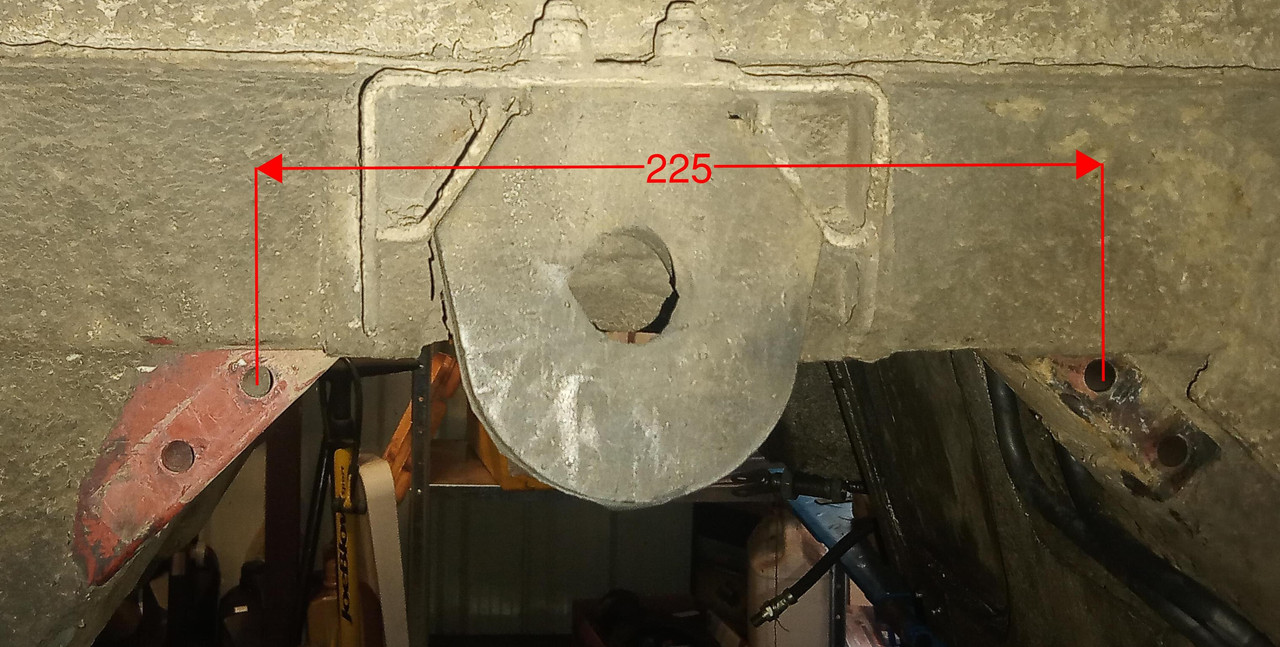
Here is pic showing that the top bolt holes for attaching S3 IRS mounts are 225 mm apart. This dimension dictates how much compression is required to fit the mounts. I'm trying to find out if S1 and S2 have the same dimension, can anyone advise? The question is for this topic in the General forum:
viewtopic.php?f=2&t=15799
Thanks.
Image

#2 Re: IRS mounts

Posted: Fri Feb 16, 2024 12:25 pm
by lowact
Here is my solution to the IRS mounting issue, applicable to all Jaguar IRS's, not just e-types:
Image

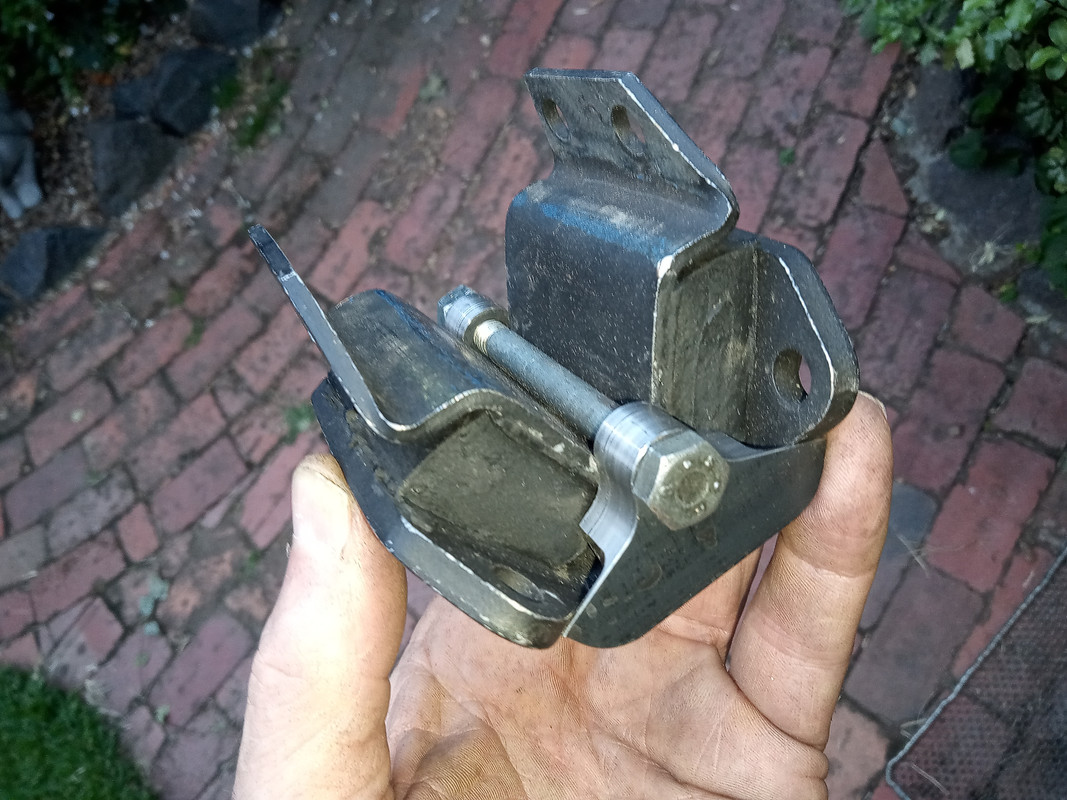
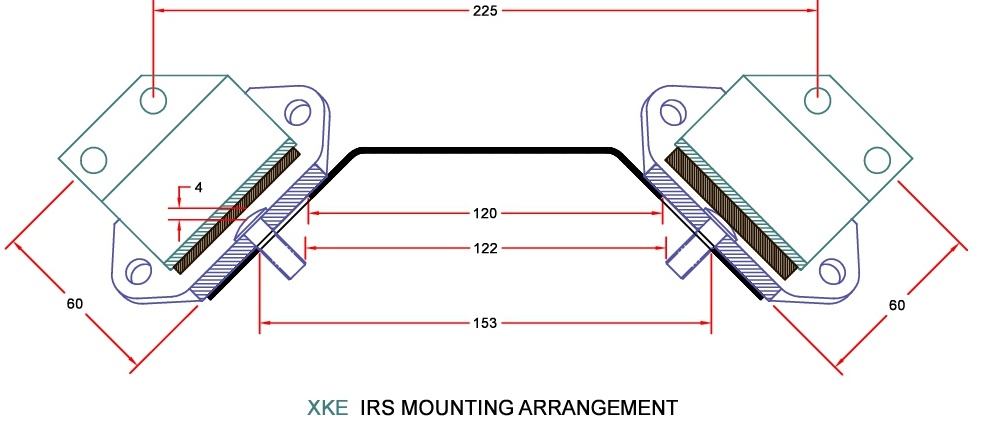
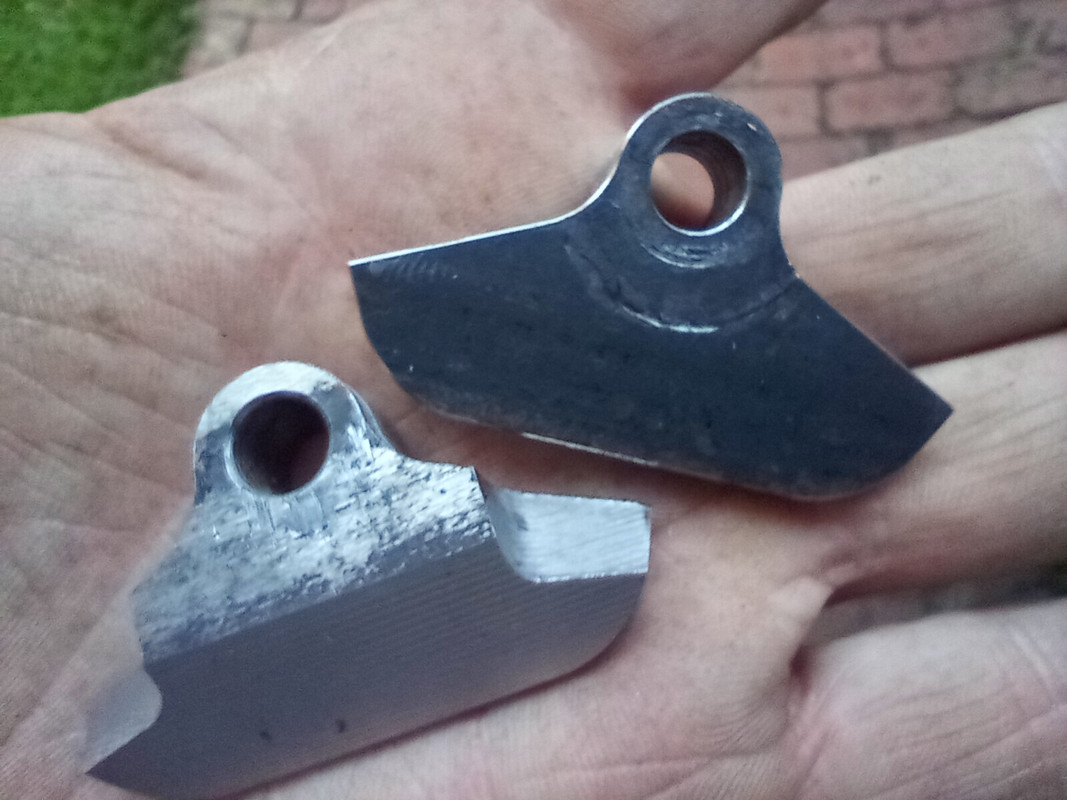
Instead of trying to compress the mounts while installing the IRS, the mounts can be pre compressed and these small plates used to hold this compression while the mounts and the IRS are being installed, then the plates are removed.
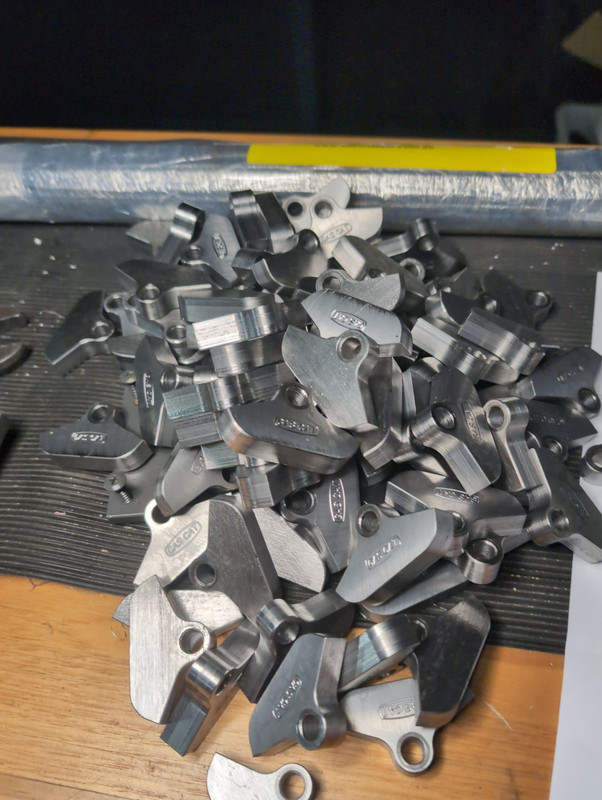
So no podgering, levering or hammering is required, IRS installation becomes quick and easy. The plates hold the mounts compressed just enough so that, when the IRS is raised into position, all of the mounting holes simultaneously line up, bolts slide in.
Risk of installation damaging the mounts is eliminated, each mount is compressed to no more than its in-service extent.
Radial arms can be reliably reconnected while the mounts are pre compressed, no need to lower the car onto its wheels and rock it.
The clamping plates are held in position by a connecting bolt. Loosening/removing this bolt allows the plates to slide outwards and upwards, thereby all held compression can always be gradually and safely released.

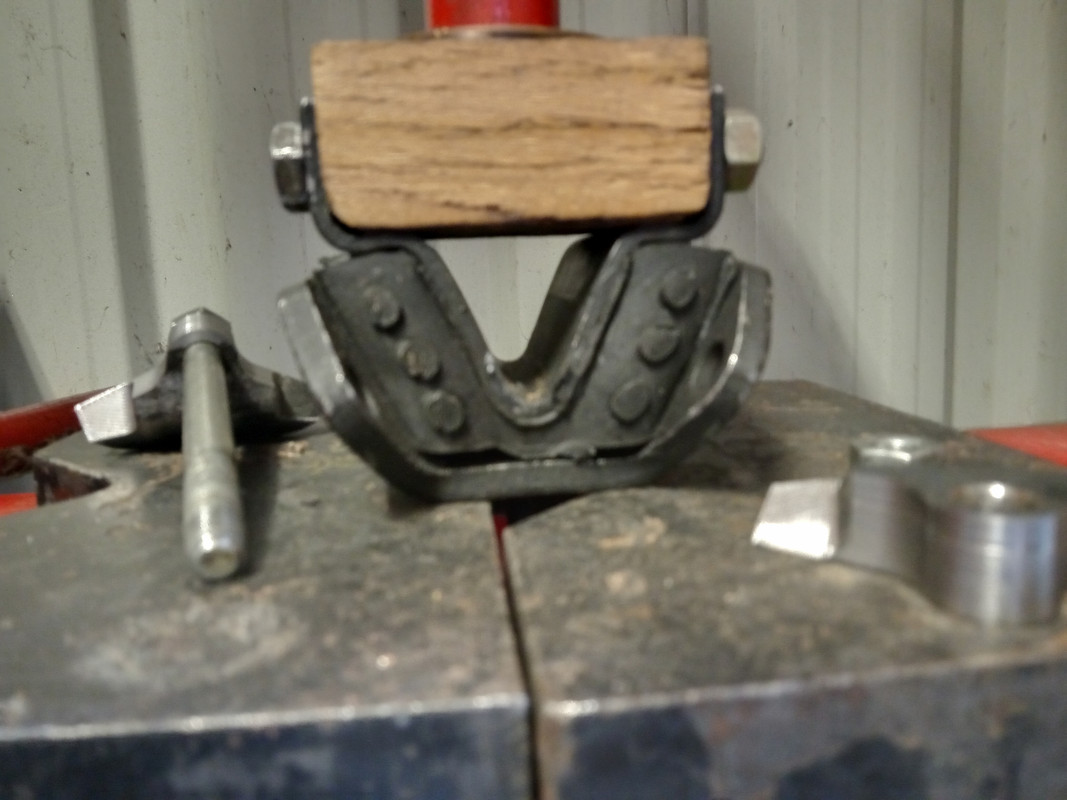
Here is pic of a new SNGB “upgraded” mount (height increased to 69 mm, rubber hardness increased to Shore A80) being pre compressed:
Image

Here is the same mount being held at its in-service height of 60 mm, ready for installation:
Image

#3 Re: IRS mounts

Posted: Fri Feb 16, 2024 8:42 pm
by bitsobrits
You should be selling copies of those. I would buy a set to hold in reserve for my next IRS adventure.

#4 Re: IRS mounts

Posted: Sun Feb 18, 2024 10:14 am
by Mephistopheles
Colin,

Great idea and great tool!
I would join in and also order a set if you decide to produce this tool. :wrench:

Regards
Holger

#5 Re: IRS mounts

Posted: Sun Feb 18, 2024 10:59 am
by mgcjag
So you need 4 sets to install your irs?

#6 Re: IRS mounts

Posted: Sun Feb 18, 2024 4:45 pm
by Iansparky
Hi Colin
Do you have any drawings/ plans for producing this tool.
Thanks ian

#7 Re: IRS mounts

Posted: Mon Feb 19, 2024 6:26 am
by lowact
Ok, it would be great to be able to share what it is costing to develop this thing, I’ll make them as cheaply as I can, happy for any suggestions.

Kit could comprise eight of the plates, four of the bolts and two auxiliary blocks for use during compression.

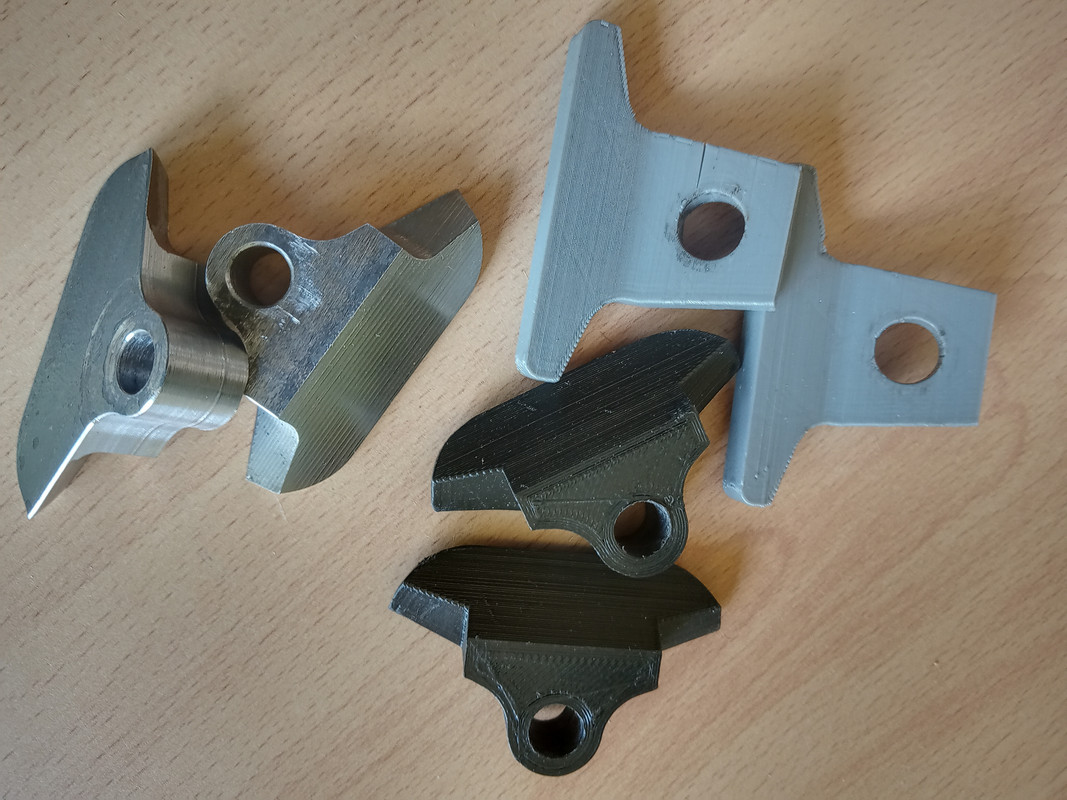
The plates were 3D modelled, different arrangements tried till we found one that was substantial enough while still leaving plenty of room for installing the IRS mounting bolts.
Image
Stp/step file generated so production is by NC machining after a rudimentary holding jig was built. Machinist has suggested some mods which, together with a more sophisticated jig, will reduce the time and therefore unit costs. Working on this atm.

The bolts are proposed to be M8 x 100 hex head set screws to DIN standard 933, Grade 8.8, plain finish, fully threaded. 100 mm is the minimum length necessary to enable the largest to date (69 mm) mounts to be fully decompressed simply by unscrewing the bolt. Normally you would never need to do this but …

100 mm bolts (partially threaded) have thread length around 22 mm, we need at least 32 mm thread length to fully compress, this is why we’ve opted to use fully threaded.

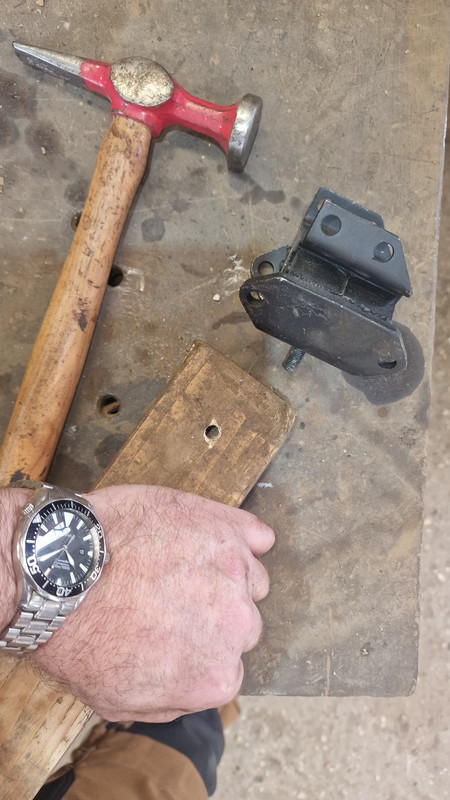
Two auxiliary blocks enables pre compression using a suitable vice, as shown in the included video. When compressing, the mount is bolted to the upper block (using its own bolts); to ensure that the mount will not spread instead of compress. The side bolt holes through the upper block are large diameter so that the bolts cannot be pressed on, when compressing the mounts. The lower block is merely to accommodate the mount’s bottom stud, via a single end hole. To date (photos and videos) the blocks are wooden, for the kit we propose them to be steel, NC machined, each 60x60x20. The two blocks will be made the same, with both side and end holes, thereby interchangeable. The blocks will be for e-type. Other jaguars will require blocks of different dimension.

All protected by the most superficial spray-can paint job.
Packaging hasn’t been thought about…


#8 Re: IRS mounts

Posted: Tue Feb 20, 2024 7:37 pm
by rfs1957
Interesting.

I wasn’t ready to believe these were made in Oz until I saw the Crocs :lol:

#9 Re: IRS mounts

Posted: Fri Feb 23, 2024 8:51 am
by Dawnpatrol
That’s clever Colin, nice one👍
Regards,
Michael

#10 Re: IRS mounts

Posted: Fri Feb 23, 2024 2:05 pm
by 1954Etype
Very well done!

#11 Re: IRS mounts

Posted: Mon Apr 08, 2024 7:18 am
by lowact
Update of where this tool is at:
Available to purchase as a FULL set or a HALF set. FULL set includes 8 holding plates, 4 holding bolts, 2 aluminium blocks, weighs 0.75 kg. HALF set is half of the above.

FULL set is recommended for fitting new IRS mounts to all e-types, including S3’s and 2+2’s. For smaller cars, where the IRS is able to be rotated into position, it is possible that a HALF set may be sufficient, although I haven’t tried this. HALF set also enables incrementally lower postage cost. With a HALF set you will need to find your own substitute for the 2nd aluminium block.

The following costs are only if purchased via this forum, after some “mass production”. Otherwise, costs would be a lot higher. Fun fact: Ebay seller fees are more than 13% of the total, including postage and taxes.

The following costs INCLUDE tracked shipping (economy air, nom. 2 weeks) via Australia Post.
Australia: FULL set = AUD 265, HALF set = AUD 141
New Zealand: FULL set = AUD 275, HALF set = AUD 151
International: FULL set = AUD 296, HALF set = AUD 172

The above costs do NOT include import duty and tax. I will declare HS/TARIC code 8205.70 (hand tools - steel clamps and the like). Use this code as the product description in https://www.simplyduty.com/import-calculator/ to calculate the import duty and tax that you may (?) have to additionally pay to your king and country, if they notice.

Purchasing process via this forum:
PayPal. The above costs INCLUDE all PayPal (seller) fees.
You PM or email to me (Colin, lowact@gmail.com), what you would like to buy, including the delivery address. I will reply confirming the corresponding price (as above), also earliest shipping date (based on stock availability) and provide an invoice number. You send the above AUD to my paypal account: lowact@gmail.com, referencing the invoice number. I will pack, dispatch and reply with the tracking number.

Usage guide will be included, initially based on my e-type-s3 experience, i.e.:

Independent Rear Suspension (IRS) Installation Tool

1. For holding IRS rubber mounts compressed during installation of the IRS units fitted to some Jaguar, Aston Martin and Daimler cars during 1961-1992. Before using, please read these guidelines entirely.

2. Definitions: The IRS mounts that are compressed by this tool comprise elastomeric material that is bonded between a steel inner bracket, that bolts to the chassis of the car, and a heavier steel outer bracket, that bolts to the IRS:

3. Tool comprises steel clamping plates, holding bolts and aluminium blocks, the latter provide for the IRS mounts on Jaguar E-type’s to be readily and safely compressed without distortion. Other cars would require “user-made” blocks of different dimensions.

4. Place the aluminium blocks onto an IRS mount; one block should be lightly fastened (fastener not included) between the flanges of the inner bracket. The other should be placed over the centre stud that protrudes from underneath the mount’s outer bracket.

5. Use a suitable vice or press to compress the IRS mount between the aluminium blocks. The compression req’d is to enable a holding bolt, along the “valley” of the inner bracket, to connect two clamping plates under the ends of the outer bracket, that are fully in contact with the ends of the mount’s inner bracket. Ensure that the head of the holding bolt is on the side that is opposite the chamfered end of the inner bracket, so that the holding bolt can be subsequently removed (downwards) after the IRS has been installed. Lightly tighten the holding bolt into this position.

6. With the bolt holding the clamps lightly tightened into position, release the press/vice. The elastomeric material will expand until any gap between the “tips” of the clamping plates and the outer bracket (underneath the wings) is taken up. Take care to keep fingers clear of these gaps when releasing the press/vice.

7. Remove the aluminium blocks and install the IRS mount onto the car. If the mount is new and upgraded (thicker and or harder elastomeric) and was over-compressed, it may be necessary to prise the aluminium block from between the flanges of the inner bracket. This demonstrates the principal purpose of the aluminium blocks; to prevent the compressed elastomeric forcing the inner bracket to fold inwards. Promptly installing the compressed IRS mount onto the car is recommended. Note – for Jaguar E-type the specified distance between the flanges of the inner bracket is 2-3/8” ± 1/32”.

8. Repeat steps (4) to (7) for all IRS mounts.

9. Use a floor lift to raise the (330 lb) IRS unit up to the mounts. If the car and IRS are level and square and the lift is vertical, when the IRS unit is raised the bolt holes, for attaching the IRS unit to its mounts, will all be in alignment. Install the bolts but do not tighten until all are installed. If any bolt holes are not in alignment, one technique is to slightly loosen the holding bolt, allowing the expanding elastomeric to force the holes into alignment. Don’t loosen the holding bolts prematurely; to retighten you will need to put the mount back in the vice.

10. Technique for loosening the holding bolts: hand not power tools, hold the nut and turn the bolt. As you loosen the bolt the clamps will slide up and out along the underside of the lower bracket, allowing the compression to be gradually and smoothly released in a controlled manner, as evidenced by the loosening being stiff, all the way to the end. If you do opposite, hold the bolt and loosen the nut, the plates may be temporarily caught up on the bolt thread or some burr on the underside of the lower bracket, allowing the nut to spin loose without the compression releasing until it suddenly lets go with a bang. Irrespective, whenever loosening a holding bolt, if it starts to loosen prematurely, stop and give it a light tap until the loosening becomes stiff again.

11. Connect the radial arms before or after removing the holding bolts and lowering the hoist, depending on the alignment.
#12 Re: IRS mounts

Posted: Sun Apr 14, 2024 8:14 am
by politeperson
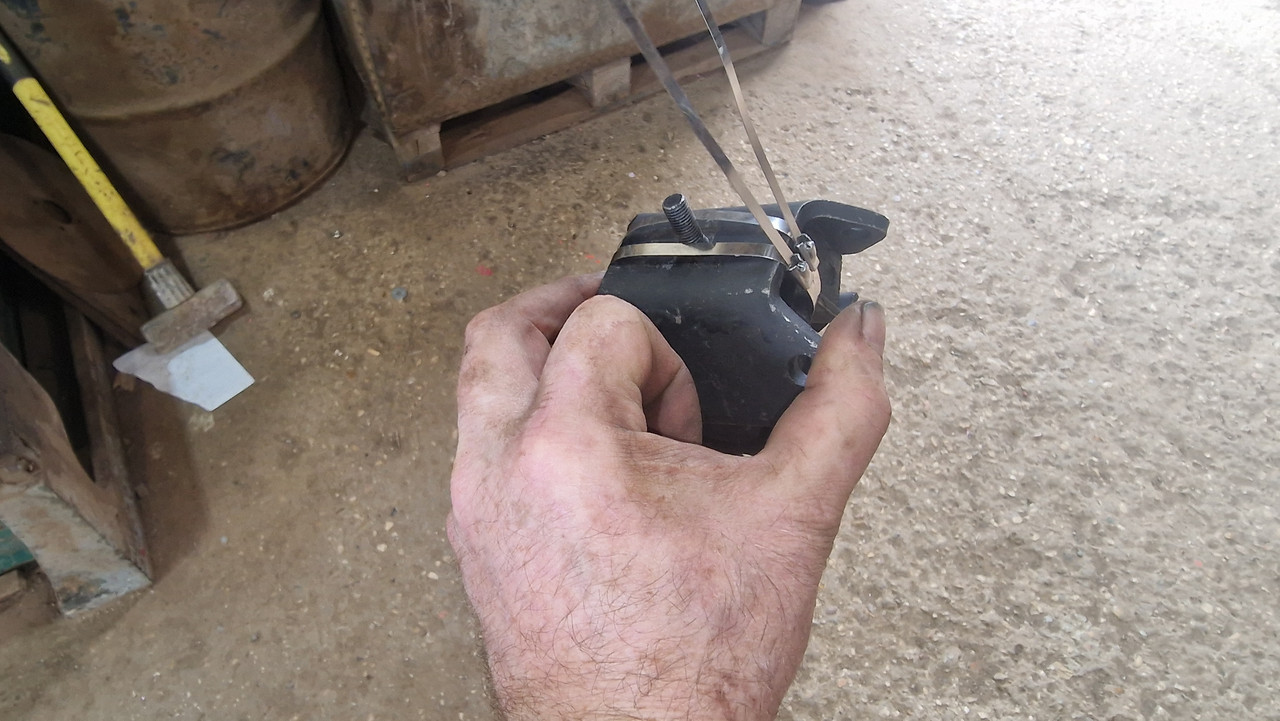
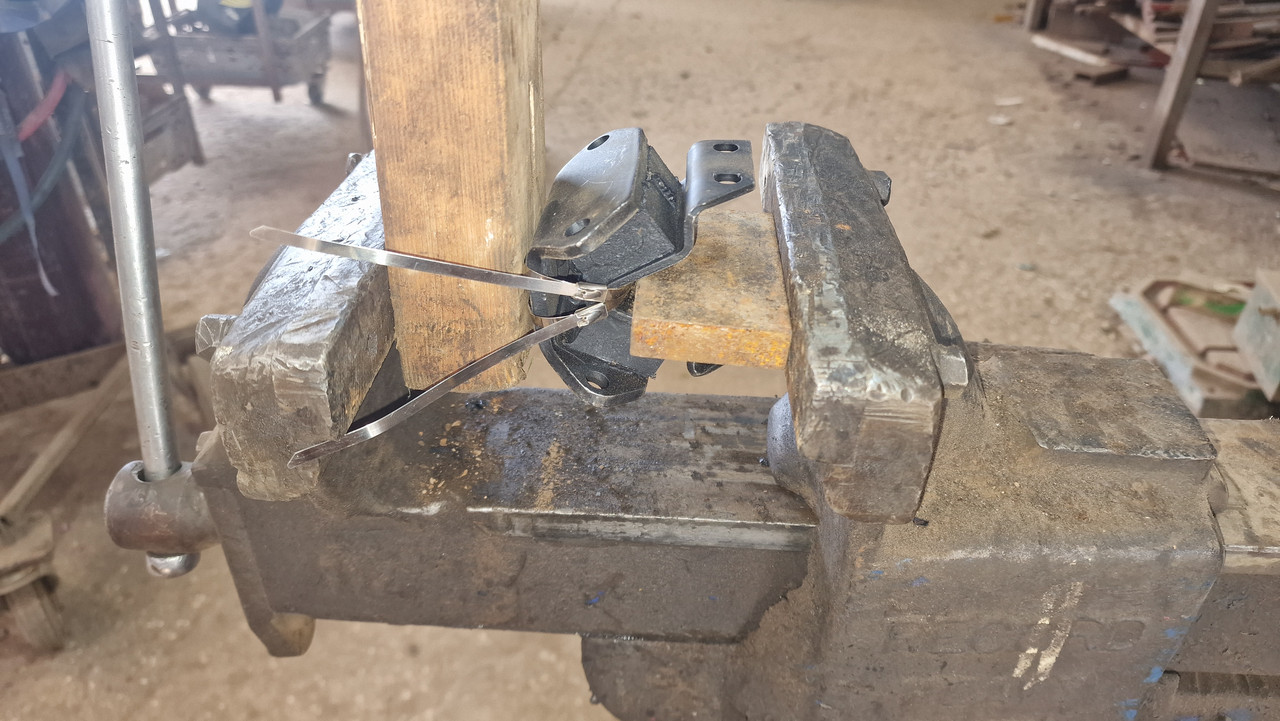
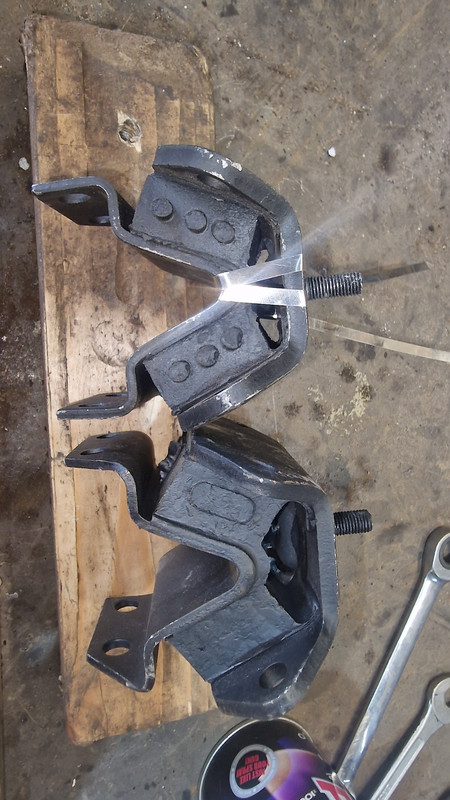
My solution, involving metal zip ties.
Image


Image

Image

Image

#13 Re: IRS mounts

Posted: Sun Apr 14, 2024 1:22 pm
by lowact
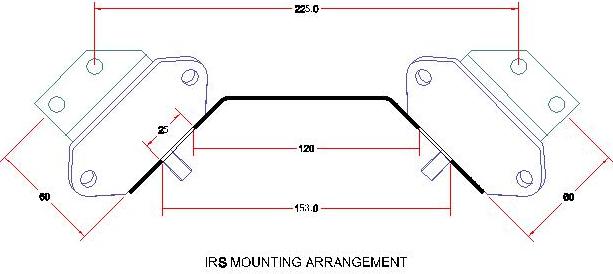
That's brave. Aim to compress the mounts close to 60 mm, i.e. by simple geometry:
Image

#14 Re: IRS mounts

Posted: Wed Apr 17, 2024 12:34 am
by lowact
We're making enough for 15 full sets of these:

Image

They make refitting an IRS a cinch. Very useful considering how much maintenance of brakes suspension, diff and drive shaft requires this. Also fitting new mounts does sharpen up the stance ...

#15 Re: IRS mounts

Posted: Mon May 06, 2024 1:34 am
by lowact
Btw, another use for this tool: When our cars are on a hoist with the rear wheels hanging, the only thing holding up the 330 lb IRS (380 with wheels) is the bonding between the rubber and the steel components of the IRS mounts. If the car is on the hoist for an extended time, or if the mounts are a bit old, the likelihood that this bonding will fail is fairly high - happened to me. Fitting this tool, before lifting the car, the tool holds the mounts together and carries the weight of the IRS.

#16 Re: IRS mounts

Posted: Fri Mar 21, 2025 2:28 am
by HuffUSJag
All: I just came across this- any update as to availability?
Huff

#17 Re: IRS mounts

Posted: Fri Mar 21, 2025 8:15 am
by mgcjag
Send a PM to Colin above.....Steve

#18 Re: IRS mounts

Posted: Wed Mar 26, 2025 2:27 pm
by lowact
Thanks peoples. Still got a few left. From sales I’ve made I’m learning that old mounts failing when the IRS is left hanging is not uncommon. Also that you cannot tell, just by cursory looking, if a mount has failed or not.

Meanwhile, some opinions about the replacement e-type mounts that you might buy:

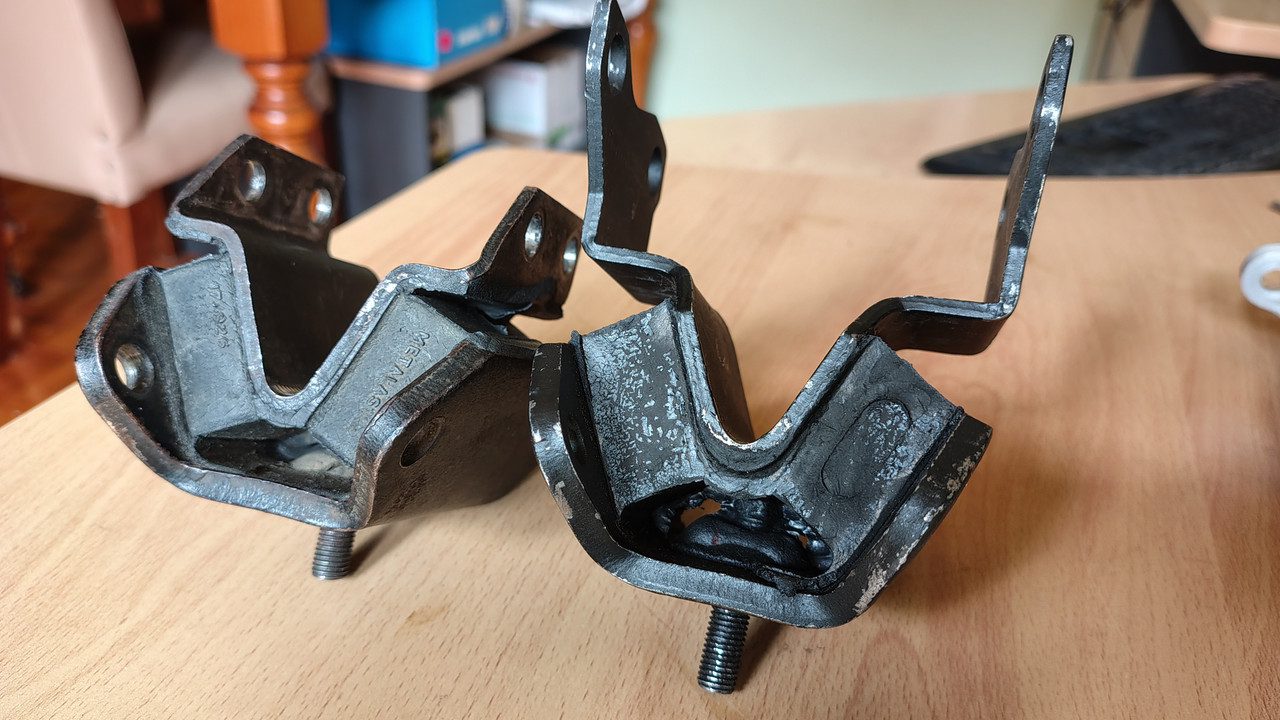
There are two different designs, the original design and the “uprated” design. These are both marketed with reference to the original e-type part number (C17198) however they are more different than this implies.

Two ways to tell them apart: The free height, from the base to the centre of the top mounting holes, is 67 mm on the original design and is 69 mm on the “uprated” design. The length of the bottom stud is 16 mm on the original design and is 19 mm on the “uprated” design.

The “uprated “ e-type mounts are XJ mounts (CAC3067) that have been made using an e-type chassis bracket instead of the XJ chassis bracket. To explain this, here is a photo of an original e-type mount (C17198) on the left and an XJ mount (CAC3067) on the right. The “uprated” e-type mounts are a combination of these; the bottom part and rubber from the mount on the right, molded to the top part (chassis bracket) from the mount on the left.
Image

Performance difference between original and “uprated” e-type mounts is explained by the differences between Jaguar’s e-type (C17198) and XJ (CAC3067) designs. CAC3067 mounts have larger and stiffer rubber. More significantly, e-type mounts are compressed, while XJ mounts are not. With XJ, to install the IRS you just raise it up, the chassis bolt holes align. With e-type you need to compress the mounts to align the bolt holes; this is done to make the mounts stiffer. With e-type the two mounts on each side oppose each other at 45 degrees. This configuration causes the compression that was required to install the IRS to be locked in, it is pre-load that is not completely relieved until eventually (end-of-life), like all stressed rubber, it develops a set.

Summarising; original e-type mounts were made with the relatively soft rubber of the day, sufficient stiffness was achieved by pre-loading. For XJ’s the required stiffness is by harder rubber, without any pre-loading. The uprated e-type mounts have both, larger, harder rubber and pre-loading. Imo this makes them genuinely uprated, it’s not just a marketing term.

One issue: Uprated e-type mounts inherit the XJ’s longer (19 mm) bottom stud. This prevents the method of installing the IRS on LWB cars; which is to fit the mounts to the chassis and raise the IRS up to the mounts. Because, even when the mounts are fully compressed, 19 mm studs protrude too far to pass through the slots in the IRS:
Image

Solution is to trim the studs back to the e-type length (< 16 mm).

#19 Re: IRS mounts

Posted: Mon Apr 07, 2025 12:28 pm
by Fspp369
I’ve just taken delivery of a full set of irs mount compression tools from Iowact..
They came in the best packages I’ve ever tried to open (several mins with snips) and when opened revealed some really nicely made bits of kit, Thanks forum for spreading the word.
My only question now is,to stop any surface corrosion do I silver or gold plate them ? :scratchheadyellow: :bigrin: :salute: :drinkingcheers: :thankyouyellow:

#20 Re: IRS mounts

Posted: Mon Apr 07, 2025 12:58 pm
by Zei220
I have also just taken delivery of a set, and as you say, well packaged and more importantly, the tools itself are fantastic quality items.