You dont want to believe everything you read on the Internet, especially if I write it.
There's nothing revolutionary in what follows but as there seemed to be nothing about this on the Forum I thought I'd put some suggestions up, the kind of hand-holding I might have enjoyed before getting stuck in.
My recent Caerbont/Smiths temperature gauge, and brand new sender unit, gave readings that were palpably well below the true engine temperature.
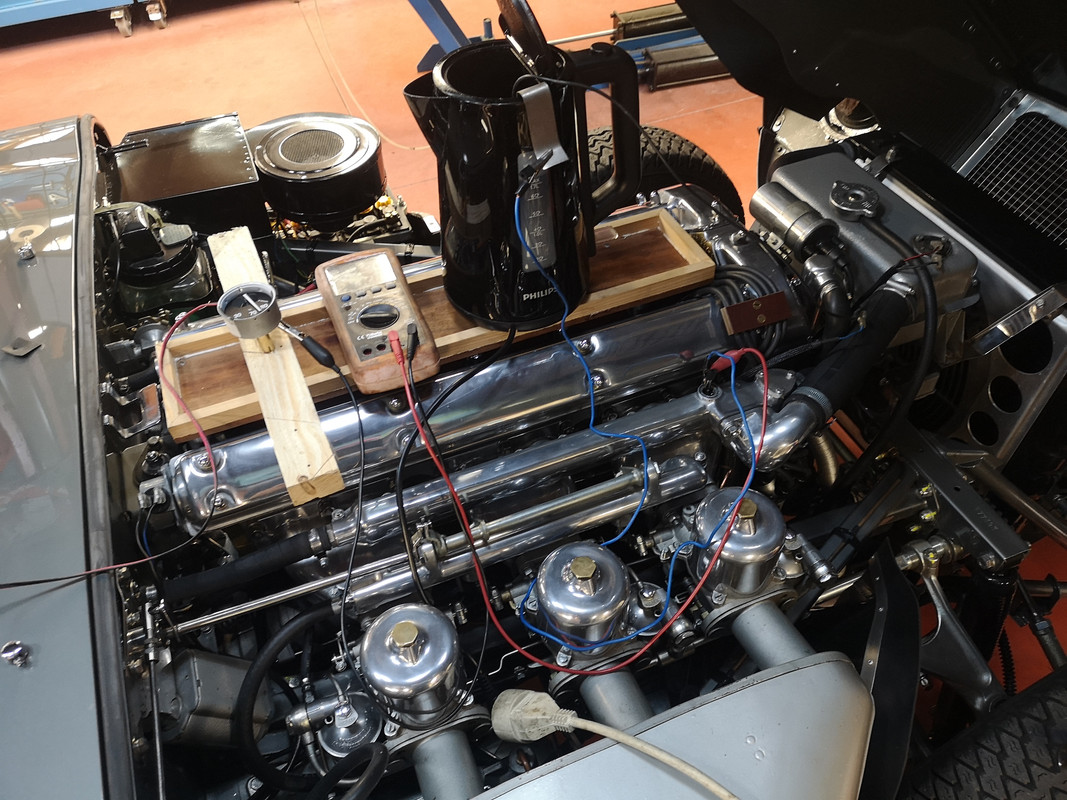
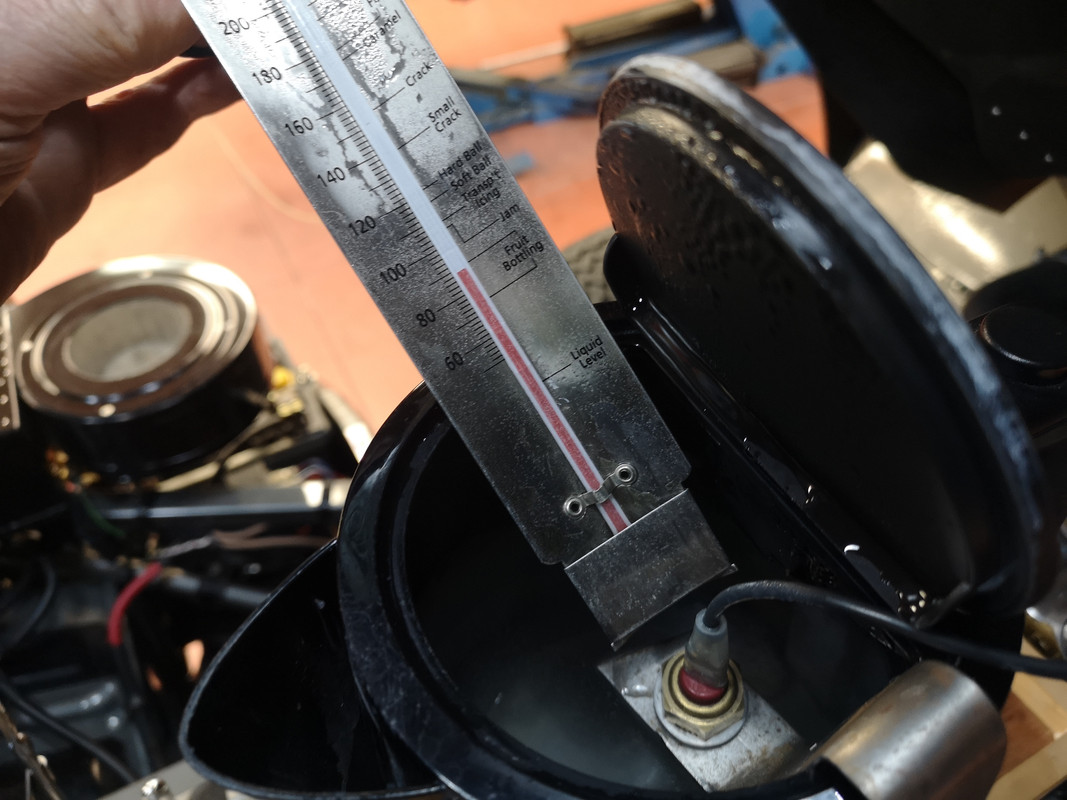
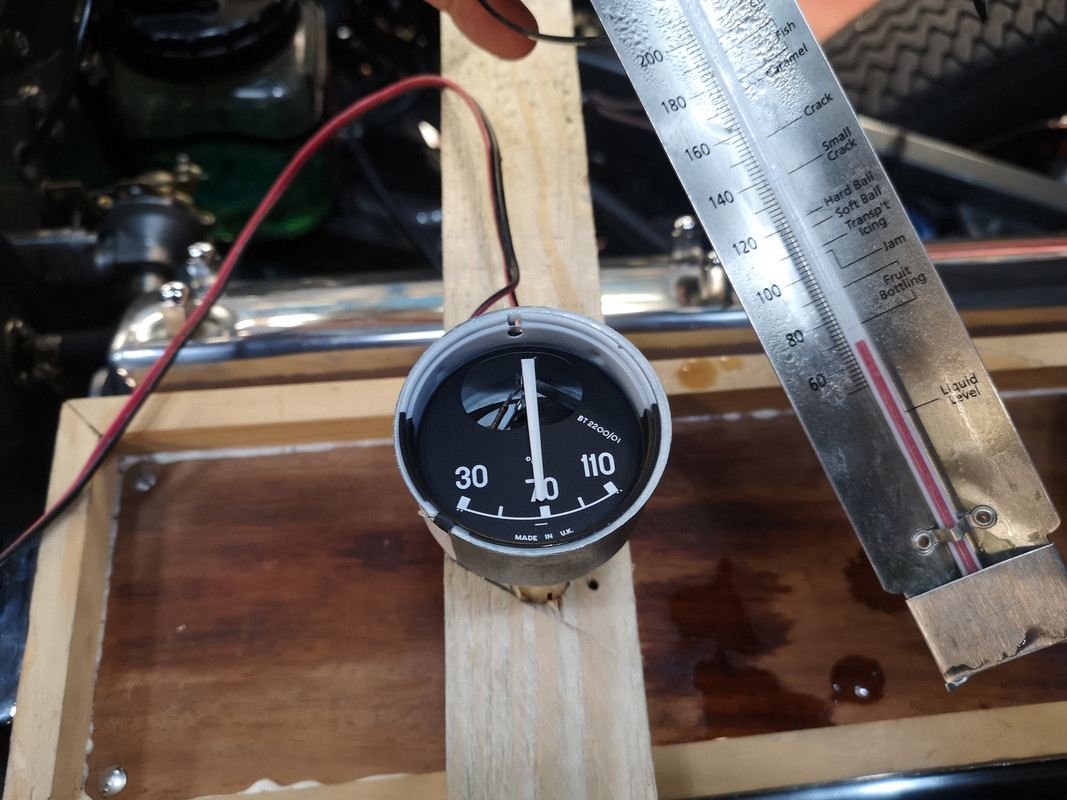
With a kettle and a fruit thermometer, a bracket to hold the sender unit, and a few wires, you can set the gauge up on top of the engine and run it around the "fruit-bottling" temperatures of between 70°C and 100°C.
Make sure your Jaguar Dealer has one of these, they probably had to pay £150 for it.
I now have so many jigs that I can't even remember what some of them are for, or I end up making them a second time, so I now have to write on them.
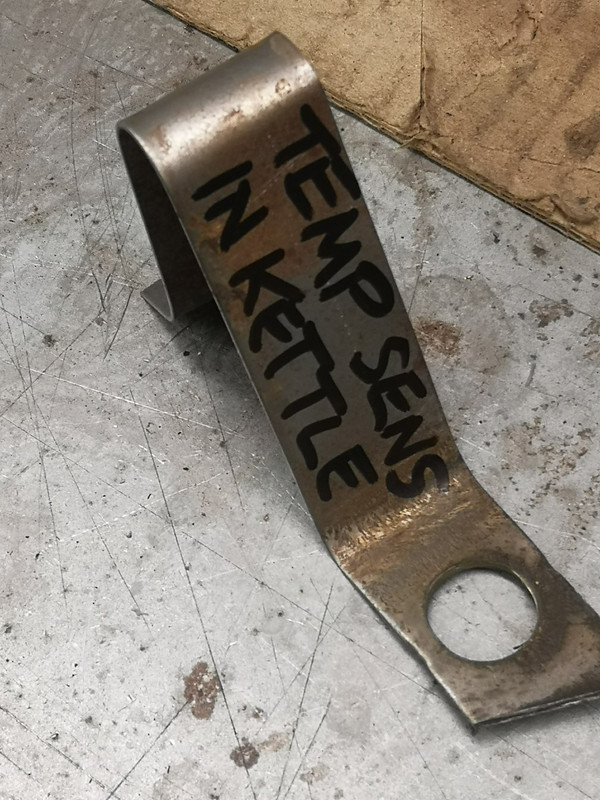
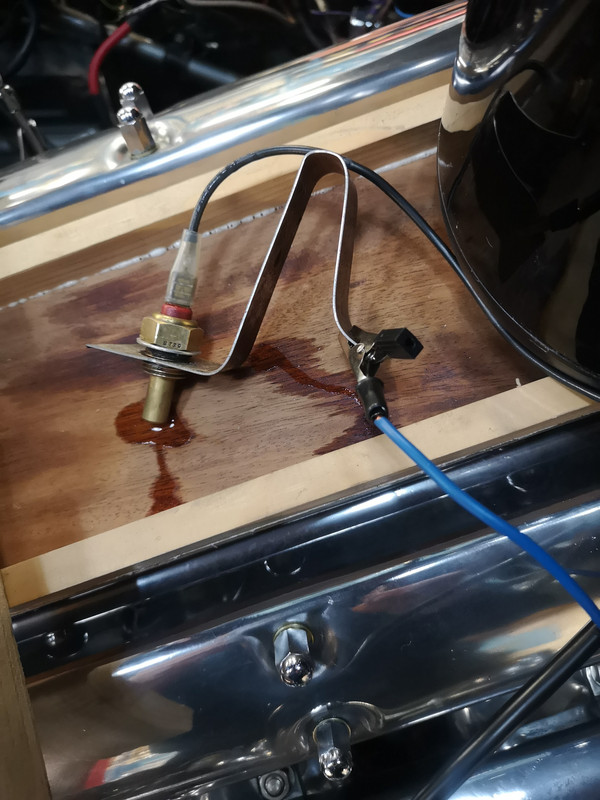
It's a lot easier if you have a my Patented Tool Tray, another one that every Jaguar Dealer ought to possess.
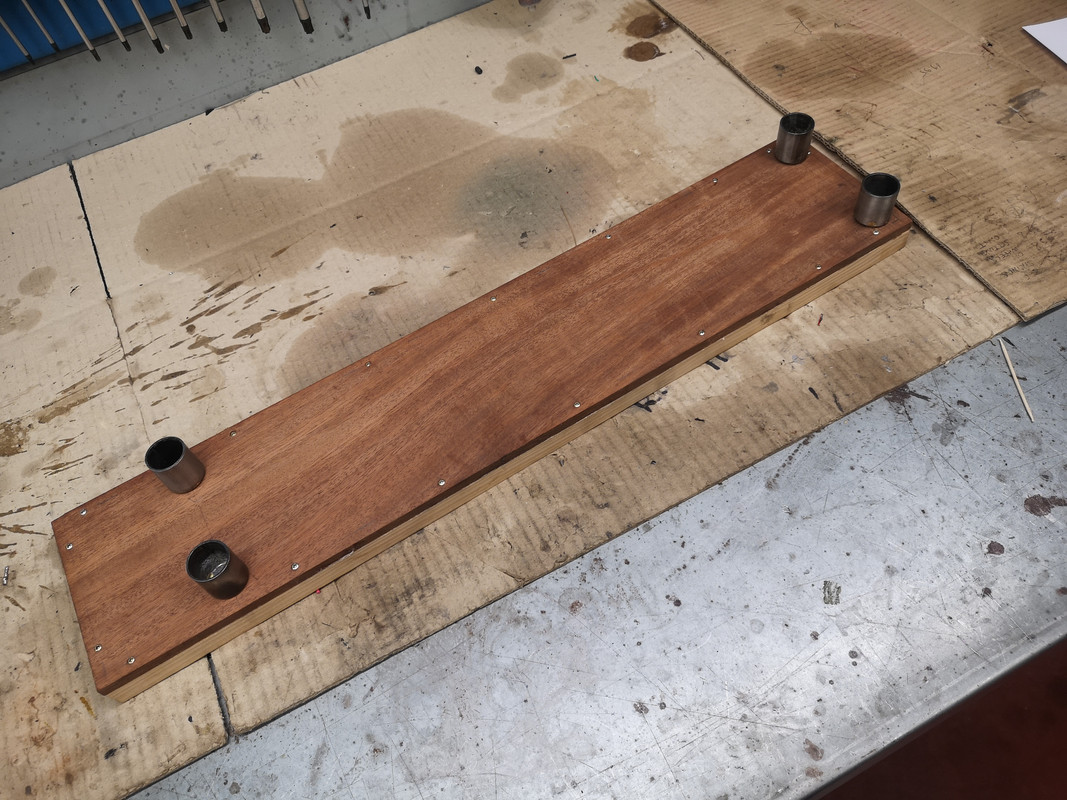
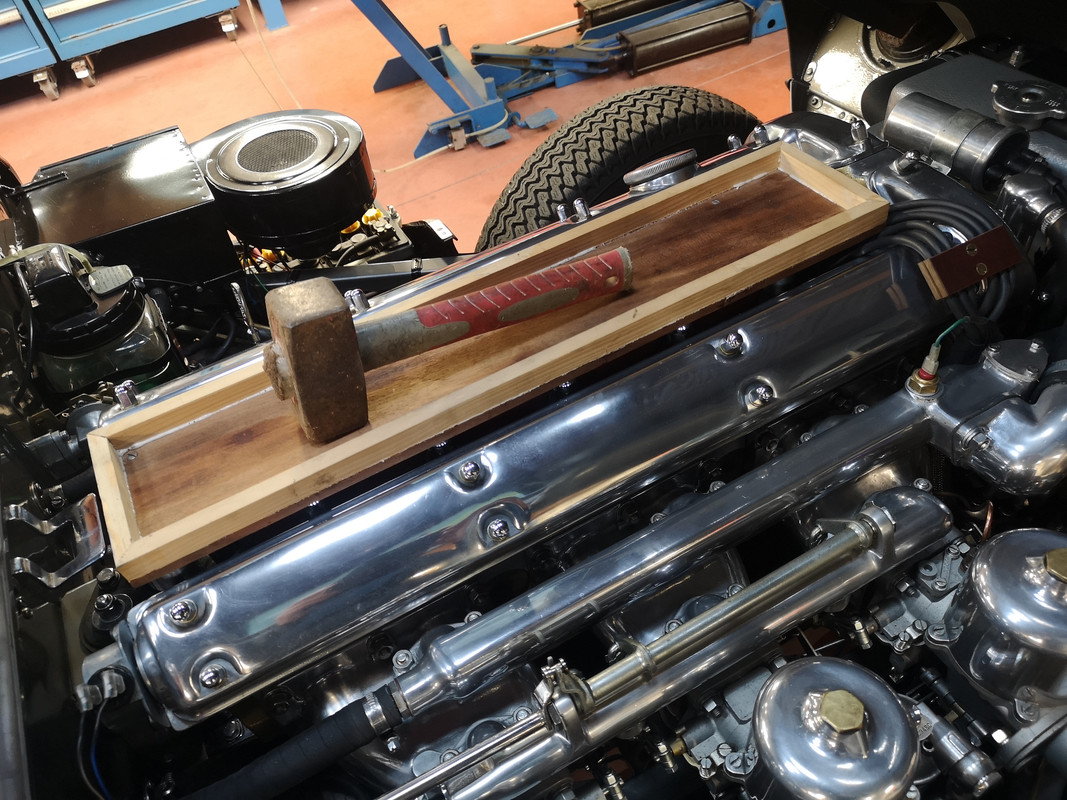
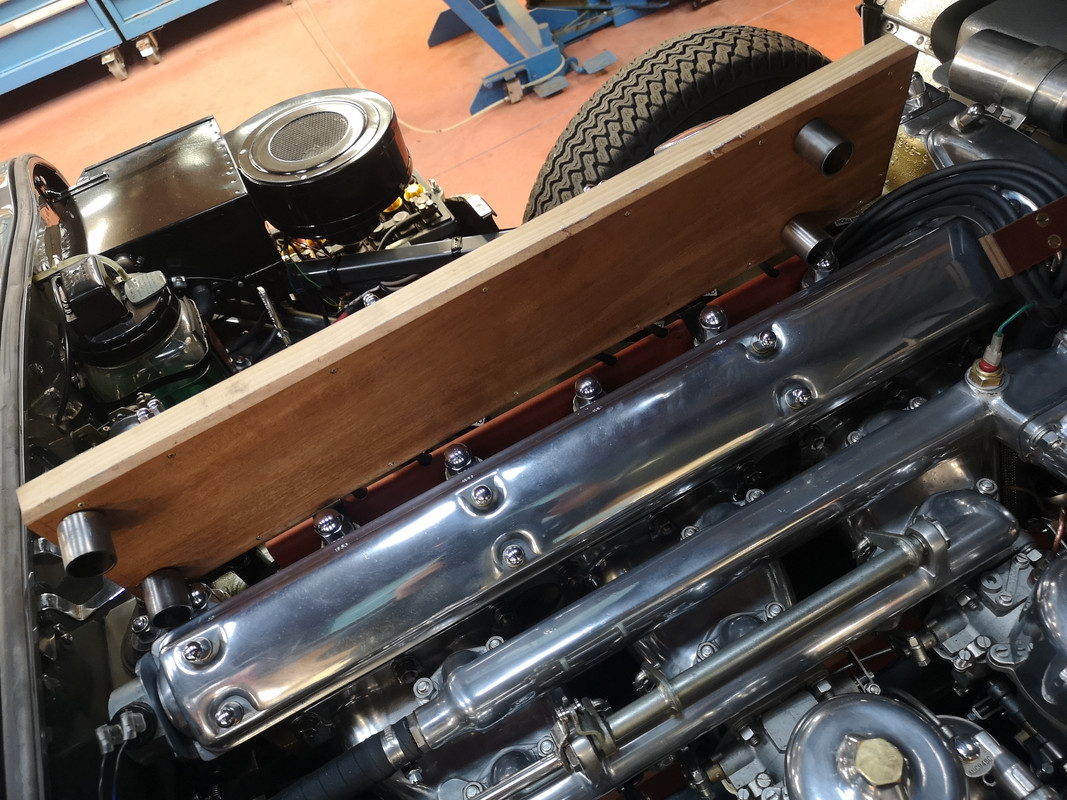
SNGB could make a fortune popping these out in fibreglass or blow-moulded plastic whatever, as we all know the spark plug area gets used as a tool-rack.
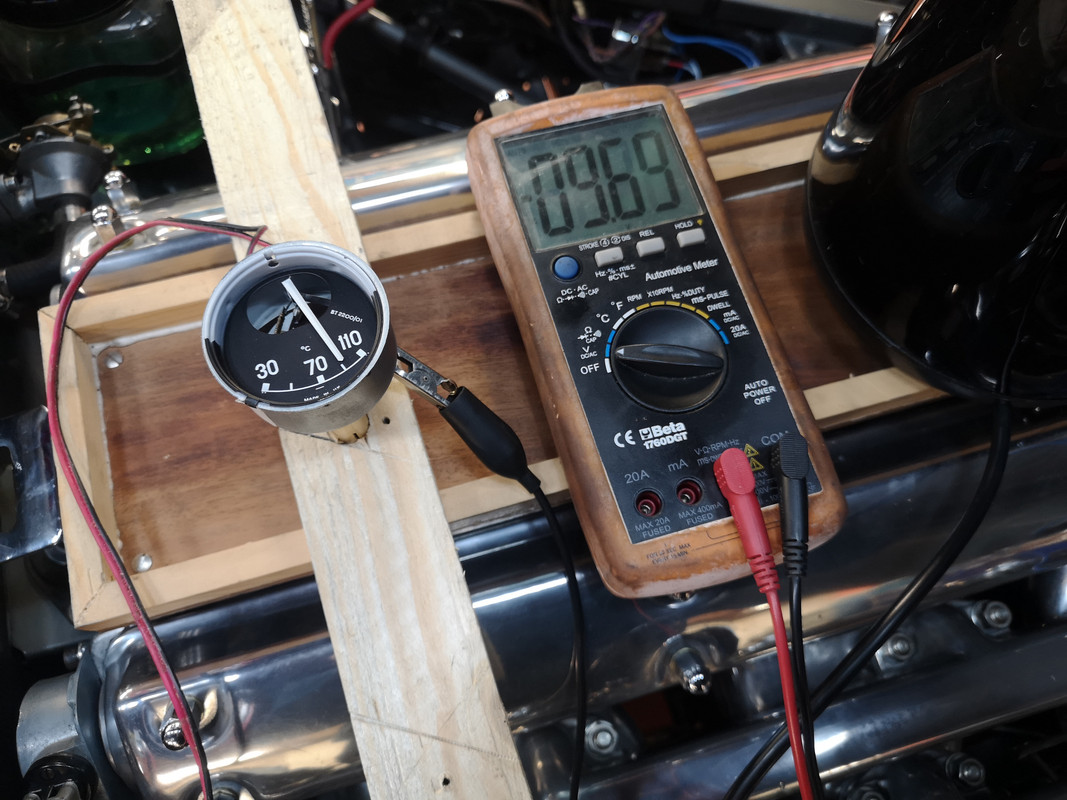
I also used a voltmeter on the "10v" feed to make sure that nothing untoward was going on with all the extra wiring - my voltage regulator always reads 9.70 on this meter, but as long as its steady this isn't an issue.
Getting the bezel off a recent Smiths gauge shows the downward path they're engaged in, as there are no longer the three cut-aways in the case to correspond with the three lugs on the bezel.
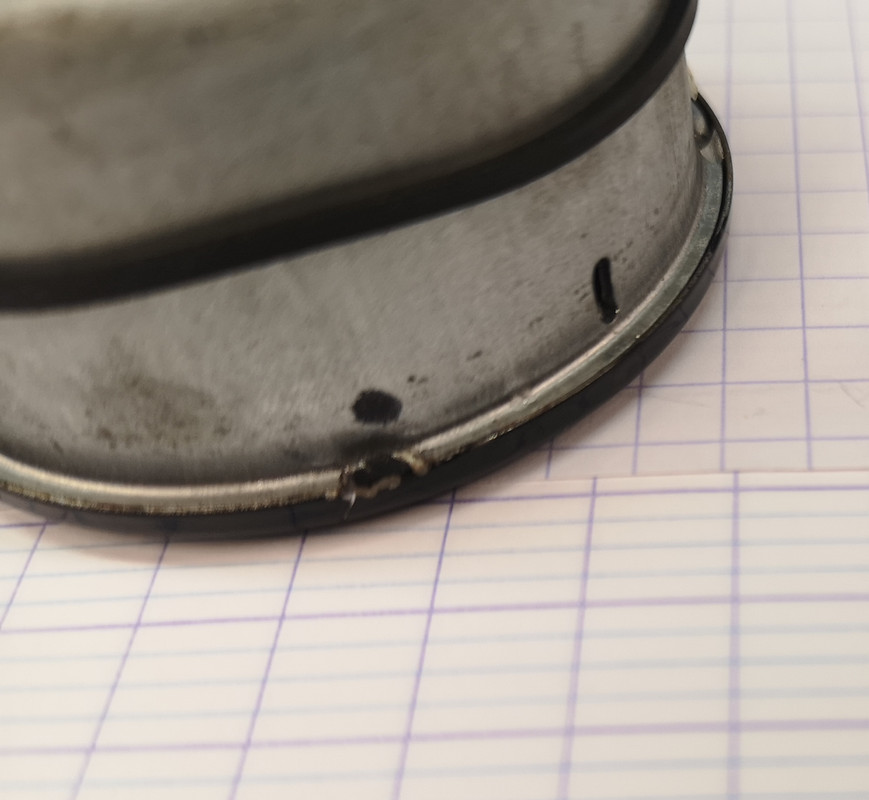
For evident reasons of economy, you now have to bend the tangs right back, so there's none of the rather satisfying bayonet-rotation sensation that we've enjoyed for 60+ years.
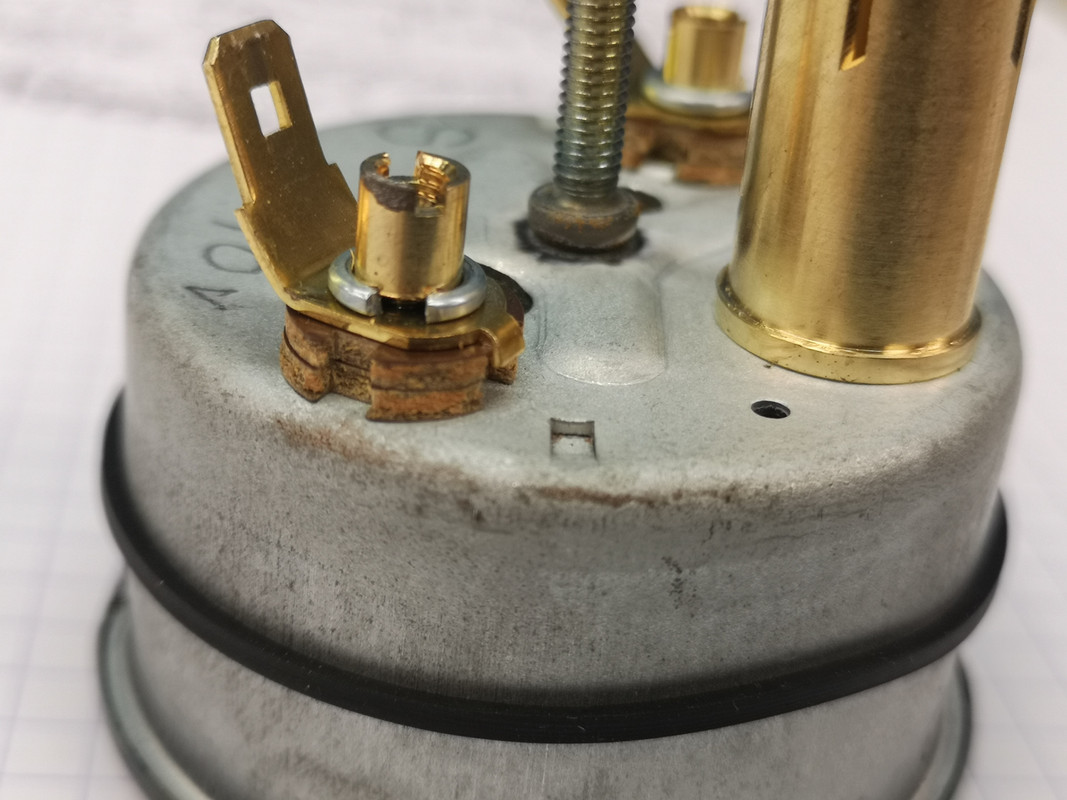
Was it economy that led them to use 2BA spring-washers instead of 4BA ones, I wonder, on the terminal posts ?
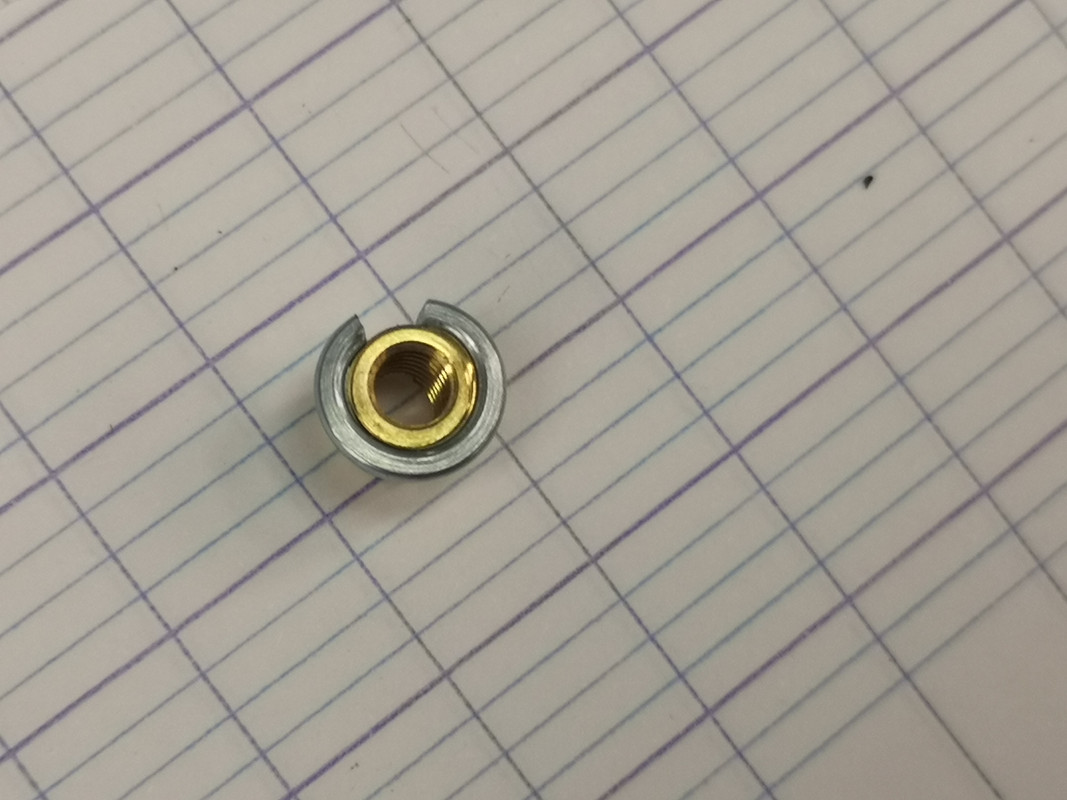
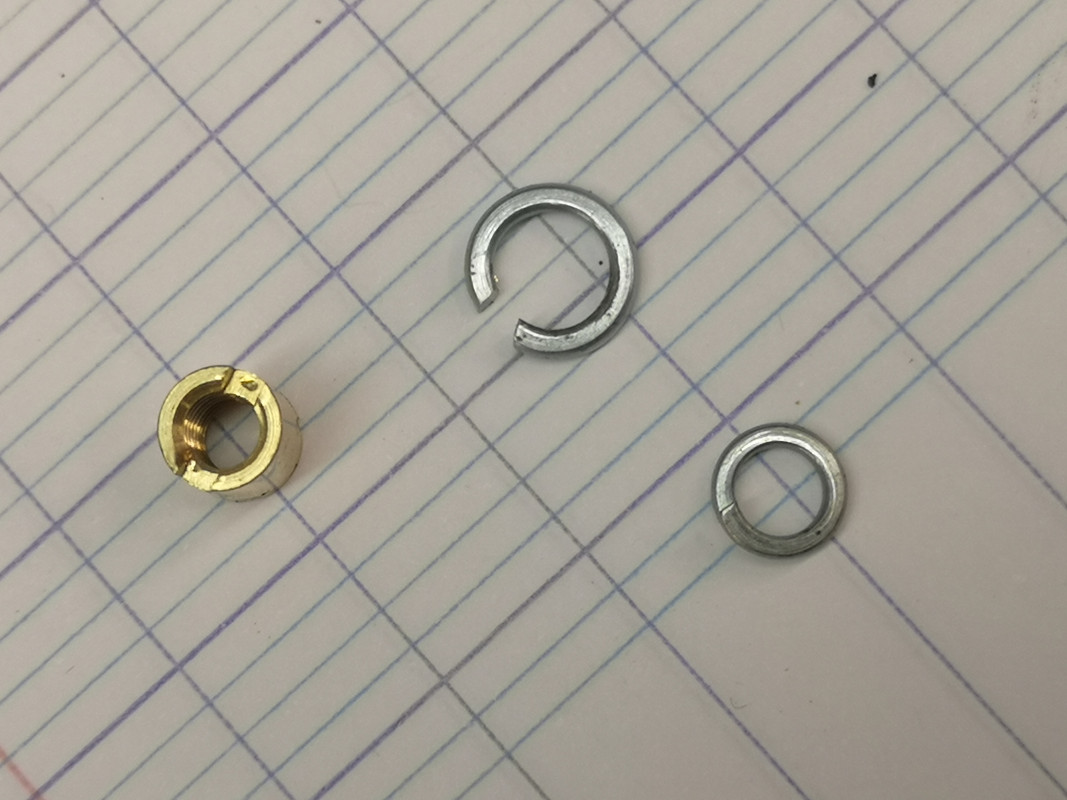
Once you've got the bezel and glass off, you need to get the outer face off too in order to gain access to the actual root of the needle. The main face stays in place.
Tweaking the needle to suit the fruit-thermometer reading is a pretty fraught operation, only possible if the gauge is fixed firmly on a support of some sort. I found a 4mm hole for the fixing stud and a 13mm hole for the bulb holder tube, in a bit of 2x1, and pushing both in a certain distance, gave me a steady platform.
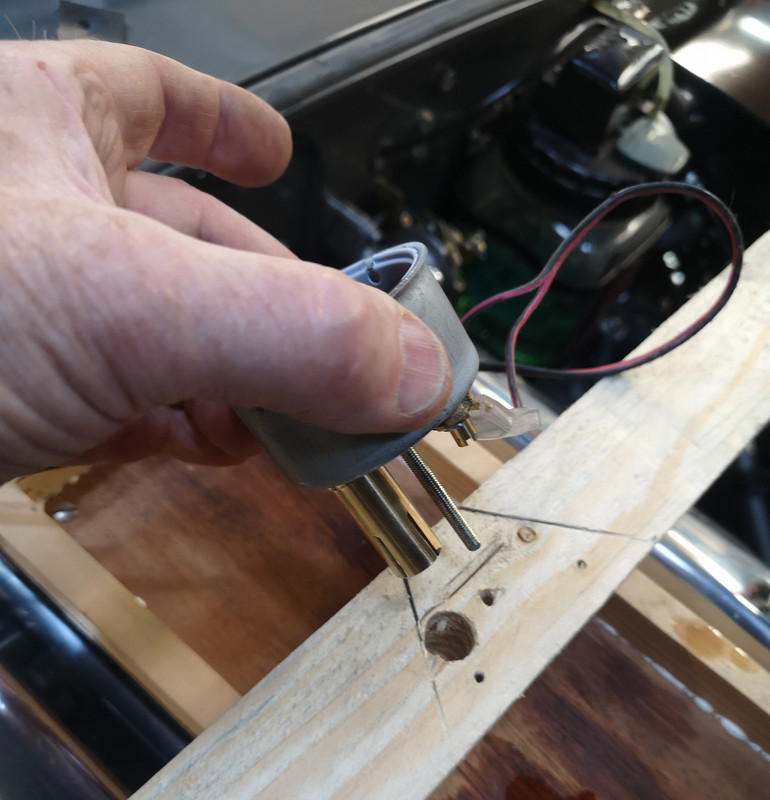
It requires a really thin-nosed pair of tweezers, and a delicate needle-ended tool, to even begin to do this safely - as you have to grip the root of the needle, right next to some frighteningly delicate linkage, and slightly twist the needle root.
I ended up with the needle poking out too far, and/or moving in an unintended direction, so it took quite a few stabs before it was where I wanted it ; and I'm not sure I'd do this any better if I had to do it again. Is there an easier way ? Please don't tell me there's a hidden screw that does all this for free !
Anyway, across the 70-100 range I got perfect correlation, so if the jam thermometer is accurate then so am I.
One of the delights of a completely rebuilt car has been to be able to drive it without glancing nervously at the temperature gauge the whole time, including at 35°C in a traffic jam, and the modifications I made to the thermostat to improve the efficiency of the cut-off (soldering a segment to the edge, to effectively make for a snugger fit) appear to have worked very well
viewtopic.php?f=4&t=17043
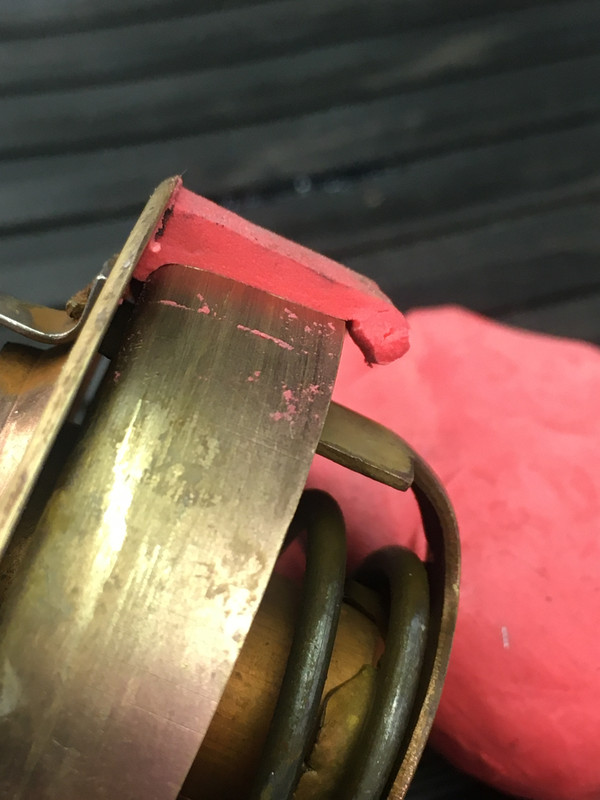
This is using Plastiscene, sliced to measure the clearance ; the better the fit across the bleed port, the better the efficiency of the cooling system.
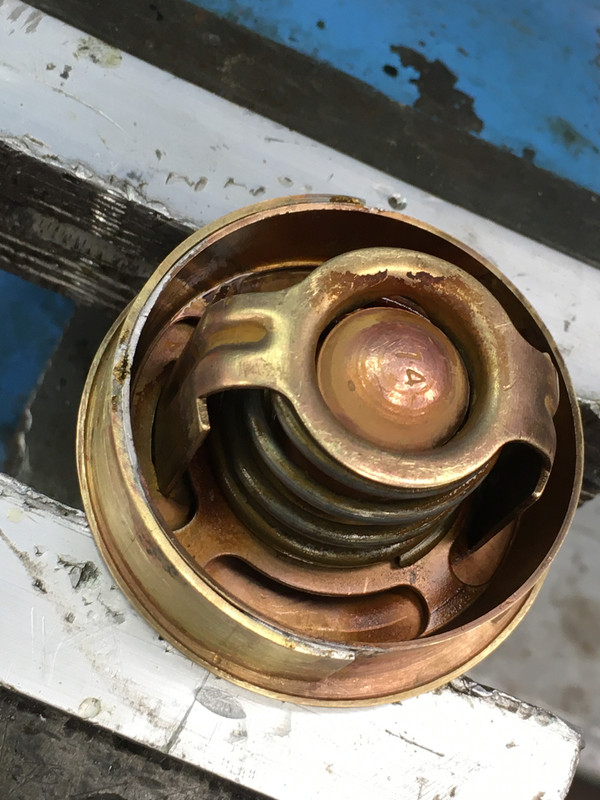
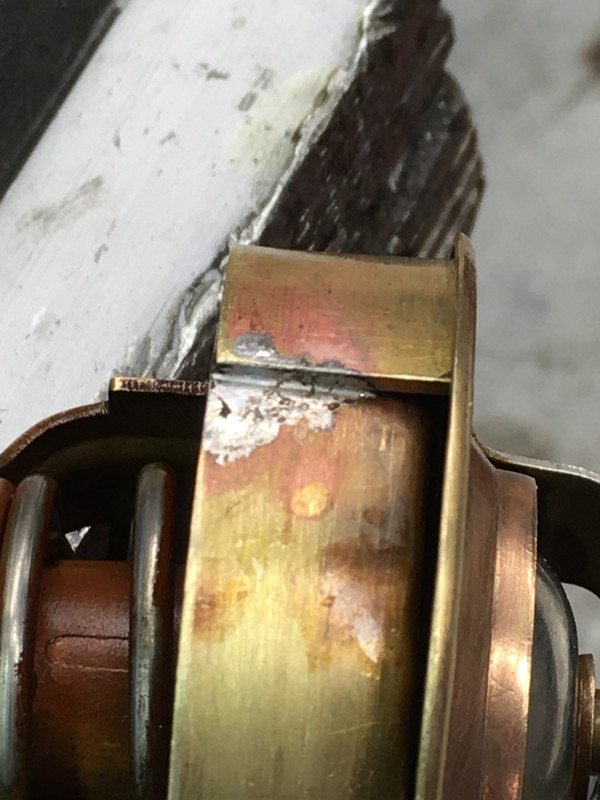
as the temperature rises quickly once running, and then remains remarkably steady across all sorts of driving conditions.
Making the temperature gauge accurate was on my Long Term List, so it's a very satisfying crossing-off.