


I fitted a new electric aerial today, unfortunately it didn't come with a switch and it is designed to raise when it receives a signal from the radio. I have a 60's radio installed however and this doesn't have an aerial feed, I therefore need to use a switch. The aerial has 3 wires, one Earth, one permanent 12v & one for an aerial feed from the radio. I jury rigged a 12v supply and when I connected this to both the 12v supply wire and the aerial feed wire the aerial went up, if I remove the aerial feed wire it doesn't retract however. I'm looking for advice as to what kind of switch I should get to be able to raise and lower this aerial, any thoughts?
Ian
S2 Aerial Wiring

#2
Ian,
Glad your sorted the flasher problem but not sure about the speed of the indicators. Just a guess - does the aerial feed wire need to be connected to earth to retract. Rather than just disconnected.
Chris
Glad your sorted the flasher problem but not sure about the speed of the indicators. Just a guess - does the aerial feed wire need to be connected to earth to retract. Rather than just disconnected.
Chris
| Link: | |
| BBcode: | |
| HTML: | |
| Hide post links |
#3
I'll try that tomorrow Chris, I'm assuming I need an On/Off/On switch to use this aerial but electrickery is not my strong point as you might have noticed :-)
Ian
Ian
E-type - TBC
1968 Triumph GT6 Mk1
1968 Triumph GT6 Mk1
| Link: | |
| BBcode: | |
| HTML: | |
| Hide post links |

#4
Ian,
As this third wire sends a "trigger signal", it may well be that disconnecting it and then re connecting momentarily will send it down. So to test this theory, I would touch it on to a positive supply once for up and then again for down.
If this works you will need a suitable "momentary" switch. something like this available from E bay.
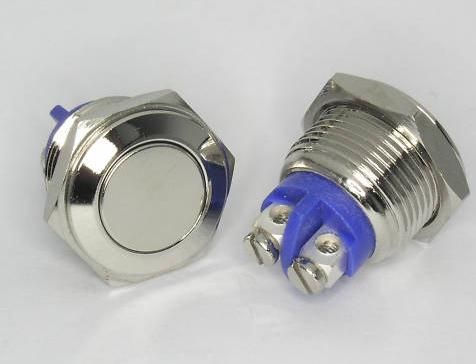
As this third wire sends a "trigger signal", it may well be that disconnecting it and then re connecting momentarily will send it down. So to test this theory, I would touch it on to a positive supply once for up and then again for down.
If this works you will need a suitable "momentary" switch. something like this available from E bay.
| Link: | |
| BBcode: | |
| HTML: | |
| Hide post links |
#5
Thanks, I'll have a fiddle with it today.288gto wrote:Ian,
As this third wire sends a "trigger signal", it may well be that disconnecting it and then re connecting momentarily will send it down. So to test this theory, I would touch it on to a positive supply once for up and then again for down.
If this works you will need a suitable "momentary" switch. something like this available from E bay.
E-type - TBC
1968 Triumph GT6 Mk1
1968 Triumph GT6 Mk1
| Link: | |
| BBcode: | |
| HTML: | |
| Hide post links |
#6
Dear Ian,
Automotive aerials typically work in conjunction with a double pole double changeover ("DPDT") relay. The aerials have two windings and three wires, so one wire is common to both windings:- identify that colour by using an ohm meter. One winding moves the aerial up and the other winding moves the aerial down.
The relay coil is controlled using a 12v output from the radio - when the radio is on you have 12v on this wire and when the radio is off, you don't. Two other wires are used to power the aerial, an earth and a 12v feed.
The way it'll be wired up will be to swap 12v and earth from one aerial winding to the other aerial winding, depending on whether the radio outputs the 12v control signal for the relay.
I'll describe in "Lucas" speak.
You need two simple changeover relays, with contacts w1,w2,c1,c2,c3 and W1,W2,C1,C2 and C3. I've used capital letters to differentiate them.
Connect W1 and w1 to the radio 12v "radio is on" output .
Connect W2 and w2 to earth.
Connect C2 to permanent 12v ON.
Connect c2 to earth
Connect c1 to C3 ad on to the common aerial winding
Connect c3 to one of the other aerial windings
Connect C1 to the remaining (non-common) aerial winding.
If you follow the circuit through, you'll see that you either put 12v and 0v onto the one aerial winding OR you put 0v and 12v onto the other aerial winding, but never both at the same time.
Typically, one uses a single dual pole dual throw relay in place of two simple changeover relays, the only difference being that one set of coil windings control both changeover halves in unison.
kind regards
Marek
Automotive aerials typically work in conjunction with a double pole double changeover ("DPDT") relay. The aerials have two windings and three wires, so one wire is common to both windings:- identify that colour by using an ohm meter. One winding moves the aerial up and the other winding moves the aerial down.
The relay coil is controlled using a 12v output from the radio - when the radio is on you have 12v on this wire and when the radio is off, you don't. Two other wires are used to power the aerial, an earth and a 12v feed.
The way it'll be wired up will be to swap 12v and earth from one aerial winding to the other aerial winding, depending on whether the radio outputs the 12v control signal for the relay.
I'll describe in "Lucas" speak.
You need two simple changeover relays, with contacts w1,w2,c1,c2,c3 and W1,W2,C1,C2 and C3. I've used capital letters to differentiate them.
Connect W1 and w1 to the radio 12v "radio is on" output .
Connect W2 and w2 to earth.
Connect C2 to permanent 12v ON.
Connect c2 to earth
Connect c1 to C3 ad on to the common aerial winding
Connect c3 to one of the other aerial windings
Connect C1 to the remaining (non-common) aerial winding.
If you follow the circuit through, you'll see that you either put 12v and 0v onto the one aerial winding OR you put 0v and 12v onto the other aerial winding, but never both at the same time.
Typically, one uses a single dual pole dual throw relay in place of two simple changeover relays, the only difference being that one set of coil windings control both changeover halves in unison.
kind regards
Marek
| Link: | |
| BBcode: | |
| HTML: | |
| Hide post links |
#7
I've just tried it and you are absolutely correct, now to try a momentary switch.
Ian
Ian
E-type - TBC
1968 Triumph GT6 Mk1
1968 Triumph GT6 Mk1
| Link: | |
| BBcode: | |
| HTML: | |
| Hide post links |
#8
Thank you for the detailed response Marek, I assume there is a relay built into the aerial unit as it handles this changeover internally providing there is an aerial feed from the radio. My problem is that I don't have such a feed and need a switch, it appears that a momentary switch is all I need hopefully so I'll give that a go.
Regards
Ian
Regards
Ian
E-type - TBC
1968 Triumph GT6 Mk1
1968 Triumph GT6 Mk1
| Link: | |
| BBcode: | |
| HTML: | |
| Hide post links |
-
 ALAN COCHRANE
- Posts: 712
- Joined: Sun May 06, 2012 9:37 am
- Location: Fife

#9
Ian
I had the same problem with the radio in my GT6. It dated from the 70's and the aerial was wired to extend when the ignition came on. This became a bit of a pain so I decided to dismantle the radio and soldered on the aerial trigger wire to the switched 12V supply coming from the on/off switch.
You can easily check which one this is with a multimeter. I found there were two situated immediately behind the radio front plate. The aerial now operates as it was originally intended-only extending when the radio is switched on. So no need for an unsightly aftermarket switch, which I also tried before I wired it to the ignition and it became a pain as well.
Hope this helps.
Cheers
Alan
I had the same problem with the radio in my GT6. It dated from the 70's and the aerial was wired to extend when the ignition came on. This became a bit of a pain so I decided to dismantle the radio and soldered on the aerial trigger wire to the switched 12V supply coming from the on/off switch.
You can easily check which one this is with a multimeter. I found there were two situated immediately behind the radio front plate. The aerial now operates as it was originally intended-only extending when the radio is switched on. So no need for an unsightly aftermarket switch, which I also tried before I wired it to the ignition and it became a pain as well.
Hope this helps.
Cheers
Alan
Alan Cochrane
1961 S1 OTS,1968 Triumph TR250, 1971 Triumph GT6 Mk3, 2008 Porsche Boxster RS60 Spyder
1961 S1 OTS,1968 Triumph TR250, 1971 Triumph GT6 Mk3, 2008 Porsche Boxster RS60 Spyder
| Link: | |
| BBcode: | |
| HTML: | |
| Hide post links |
#10
Thanks Alan, I'm loathe to dismantle my radio, it's a chrome fronted 60's German one that I bought from an outfit that refurbs them and adds an MP3 lead, unfortunately I can't find any manual for it and I'd rather not risk damaging anything.
Ian
Ian
E-type - TBC
1968 Triumph GT6 Mk1
1968 Triumph GT6 Mk1
| Link: | |
| BBcode: | |
| HTML: | |
| Hide post links |
#11
My aerial is now working properly, I was overcomplicating things by trying to connect both wires to a switch, the solution is much simpler:
Ignition controlled 12v supply to aerial 12v wire (Red)
Earth - obvious
Ignition controlled 12v supply via ON/OFF switch to radio sensing wire
The switch then controls up/down as required.
Ian
Ignition controlled 12v supply to aerial 12v wire (Red)
Earth - obvious
Ignition controlled 12v supply via ON/OFF switch to radio sensing wire
The switch then controls up/down as required.
Ian
E-type - TBC
1968 Triumph GT6 Mk1
1968 Triumph GT6 Mk1
| Link: | |
| BBcode: | |
| HTML: | |
| Hide post links |
-
ALAN COCHRANE
- Posts: 712
- Joined: Sun May 06, 2012 9:37 am
- Location: Fife
#12
Ian
Glad you got it sorted.
I forgot to mention that you can get a voltage sensing relay which would be wired between the radio live and earth. If I remember correctly, it detects a drop in voltage when the radio is switched on and closes a set of contacts which would allow the aerial voltage trigger wire to be energised. I was advised of this option before I opted for the radical radio surgery. I didn't investigate this any further, but I think most car alarms use this system to detect forced entry via a door etc.
It might be something to consider, if like me you find that the momentary switch becomes a bit of a pain after a while.
Cheers
Alan
Glad you got it sorted.
I forgot to mention that you can get a voltage sensing relay which would be wired between the radio live and earth. If I remember correctly, it detects a drop in voltage when the radio is switched on and closes a set of contacts which would allow the aerial voltage trigger wire to be energised. I was advised of this option before I opted for the radical radio surgery. I didn't investigate this any further, but I think most car alarms use this system to detect forced entry via a door etc.
It might be something to consider, if like me you find that the momentary switch becomes a bit of a pain after a while.
Cheers
Alan
Alan Cochrane
1961 S1 OTS,1968 Triumph TR250, 1971 Triumph GT6 Mk3, 2008 Porsche Boxster RS60 Spyder
1961 S1 OTS,1968 Triumph TR250, 1971 Triumph GT6 Mk3, 2008 Porsche Boxster RS60 Spyder
| Link: | |
| BBcode: | |
| HTML: | |
| Hide post links |
#13
I haven't used a momentary switch Alan, just an On/Off one, I leave the aerial up most of the time anyway so no big deal, it's just useful to be able to lower when the car is on a hoist.
Ian
Ian
E-type - TBC
1968 Triumph GT6 Mk1
1968 Triumph GT6 Mk1
| Link: | |
| BBcode: | |
| HTML: | |
| Hide post links |
-
 PeterCrespin
- Posts: 4561
- Joined: Fri Mar 05, 2010 8:22 pm
- Location: Gaithersburg, Maryland.
- Contact:

#14
The Series 3 XJ used a delay relay that waited a few seconds after radio switch off before lowering the mast. Many cars ended up with one before external antennae were abandoned. Sounds silly but it saves wear and tear and a nuisance if you switch off and on in rapid succession, such by using the ignition key for some other action rather than radio knob.
1E75339 UberLynx D-Type; 1R27190 70 FHC; 1E78478; 2001 Vanden Plas
| Link: | |
| BBcode: | |
| HTML: | |
| Hide post links |