Advice on diff input seal

Technical advice Q&A
User avatar

Topic author
juicerider
Posts: 60
Joined: Tue Oct 20, 2015 1:15 am
Location: Perth WA
Australia

#1 Advice on diff input seal

Post by juicerider » Thu Mar 15, 2018 10:13 am

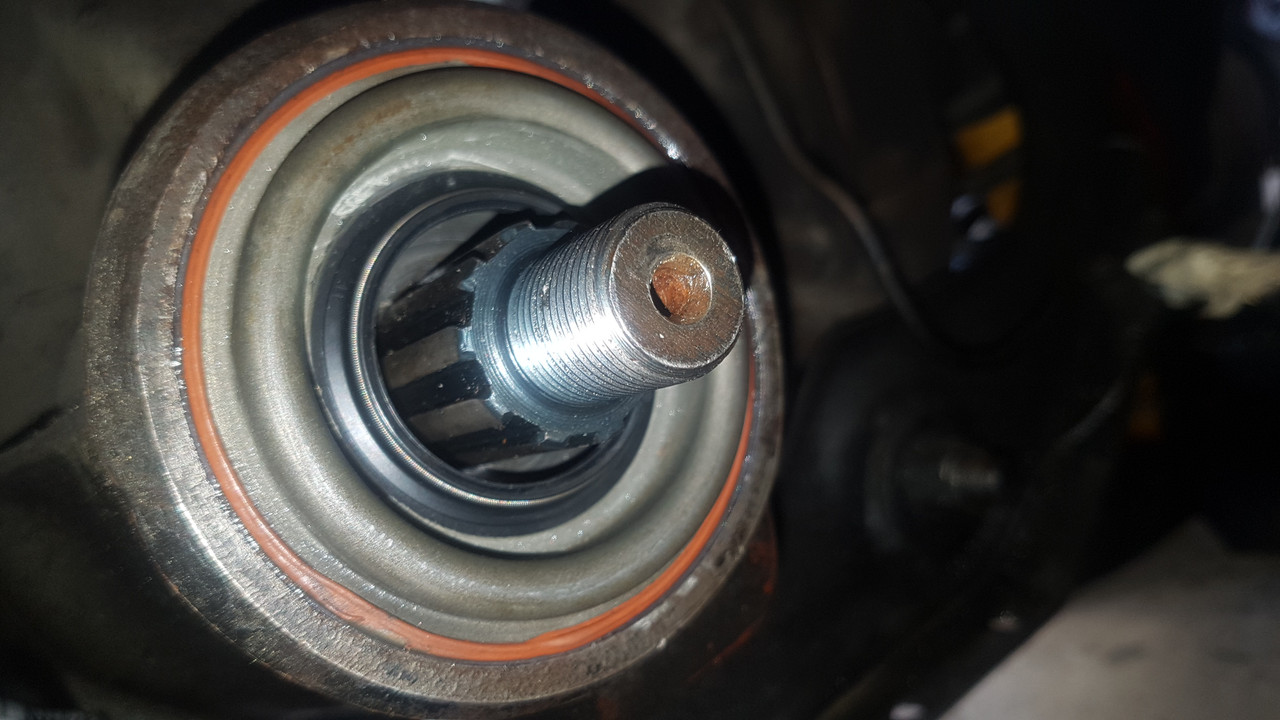
Well today I dropped the irs and one of the jobs I did was change the input shaft oil seal.
I’m thinking I may need to redo it because the rubber around the edge is not sitting rite and also should I have changed the seal gasket and the collapsible washer too?
Image
It’s a S2 OTS by the way.
Thanks
Steve

Link:
BBcode:
HTML:
Hide post links
Show post links

User avatar

mgcjag
Moderator
Posts: 8992
Joined: Fri Jul 09, 2010 6:15 pm
Location: Ludlow Shropshire
Great Britain

#2 Re: Advice on diff input seal

Post by mgcjag » Thu Mar 15, 2018 4:53 pm

Hi Steve......did you mark the nut location before undoing it so that you can do it back up to exactly the same position...if not then think you need to take to a Diff specialist to have it stripped set up again... Steve
Steve
69 S2 2+2 (sold) ..Realm C type replica, 1960 xk150fhc

Link:
BBcode:
HTML:
Hide post links
Show post links


angelw
Posts: 701
Joined: Sat Feb 16, 2013 8:27 pm
Location: Ballarat, Vic, Australia
Australia

#3 Re: Advice on diff input seal

Post by angelw » Thu Mar 15, 2018 9:18 pm

Steve Wrote:
Hi Steve......did you mark the nut location before undoing it so that you can do it back up to exactly the same position...if not then think you need to take to a Diff specialist to have it stripped set up again... Steve
Hello Steve,
Except when the nut is not tightened to have either no end play, or bearing pre-load, removing and doing the Companion Flange Nut up to a different position has no effect whatsoever on the Crown Wheel and Pinion set-up, only the pre-load (or lack thereof) of the Pinion Shaft bearings. Pursuant to the instructions given in the Workshop Manual, if this nut is over torqued, or removed, the collapsible spacer that is positioned between the set of two taper roller bearings should be replaced with a new spacer and the nut tightened to the correct torqued.

Because this collapsible spacer is positioned between the two bearings, its effect is to keep the bearings apart. Accordingly, the logic is that this spacer must collapse just the right amount so that the bearing cones come into contact with their corresponding cups with the applied torque to the nut. Presumably, this occurs at a predetermined torque just shy of the specified torque and therefore, a pre-load of the bearing system will exist when the specified torque is reached. Once the cones are in intimate contact with their cups and the system starts to apply a pre-load, no further collapse of the spacer occurs (I've determined this by torquing the nut to varying torque beyond the 120 to 140lb/ft specified, up to 250lb/ft, recovering the spacer, measuring and comparing lengths. Accordingly, I see no validity in the Workshop Manual statement that "Should the nut be inadvertently over-tightened, the flange must be removed and a new collapsible spacer fitted. On no account must the nut be slackened off and re-torqued, as this will result in incorrect pre-loading of drive pinion bearings".

This system relies on so many ducks being inline:
1. just the right amount of preliminary crush of the supplied, new spacer
2. the exact same wall thickness of the tube used in the manufacture of the spacer as the original design.
3. the exact (within design tolerance) same length as the original design.
4. same material hardness as the original design

that, in my opinion, this system is profoundly flawed.

The system employed before the collapsible spacer was introduced, was the use of shims to set the pre-load on the bearings, with the final test being a specified torque needed to turn the pinion shaft (8lb/ft). For many years, I've mimicked the earlier system by using a non-collapsible spacer to replace the collapsible spacer.

I use a Master Spacer that is slightly longer than required. This results in measurable end float when the Companion Flange nut to tightened. Given the measured end float and the known length of the Master Spacer, the correct length spacer is easily calculated. The final test after the nut is torqued up is to check the torque required to rotate the pinion shaft.

I doubt when the collapsible spacer system was suggested that the words "here is a much better system we have developed" were used in a sentence, but more likely "we have developed this cheap and nasty, cost saving system".

Regards,

Bill

Link:
BBcode:
HTML:
Hide post links
Show post links

User avatar

44DHR
Posts: 605
Joined: Tue Jun 10, 2008 7:32 pm
Location: Fishbourne Isle of Wight
Great Britain

#4 Re: Advice on diff input seal

Post by 44DHR » Fri Mar 16, 2018 10:34 am

Steve #1
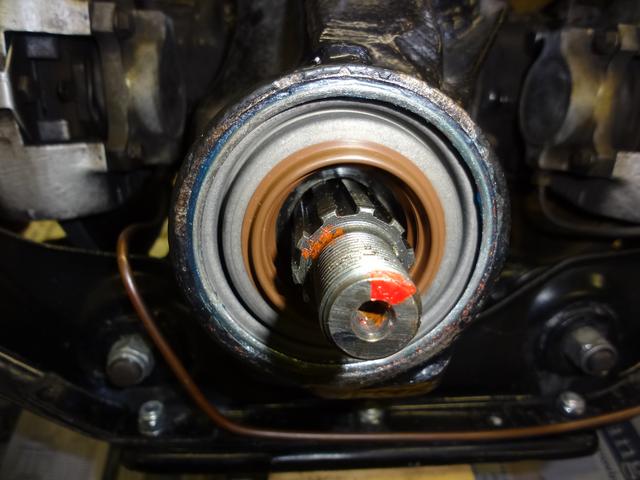
The lip seal appears to be installed the wrong way round. Generally the lip seal should point toward the medium being contained. This would have the metal retaining spring on seal on the inside.


Image

Bill
You are correct in that the collapsable spacer is not the “perfect” engineering solution and that shims are the ideal solution. However the use of collapsable spacers are widely used in automotive differentials to achieve the correct preload between the two Pinion bearings. I have lost track of the number of people who bring a differential to me after “having a go at it” and in the case of the collapsable spacer this is non recoverable as once it is over tightened and reduced in length. This necessitates a new collapsable spacer to be fitted between the bearings and correctly torqued - which quite an involved process involving removing the bearing.
The accepted method to retain the spacer at it’s present crushed state is - as Steve #2 stated - to mark the Pinion shaft and nut before removal and carefully retighten it back to exactly the same position.
Regards,
Dave
Last edited by 44DHR on Sat Apr 28, 2018 2:32 pm, edited 1 time in total.
Dave Rose
1967 Series 1 4.2 FHC

Link:
BBcode:
HTML:
Hide post links
Show post links


angelw
Posts: 701
Joined: Sat Feb 16, 2013 8:27 pm
Location: Ballarat, Vic, Australia
Australia

#5 Re: Advice on diff input seal

Post by angelw » Fri Mar 16, 2018 11:00 am

Dave Wrote:
You are correct in that the collapsable spacer is not the “perfect” engineering solution and that shims are the ideal solution. However the use of collapsable spacers are widely used in automotive differentials to achieve the correct preload between the two Pinion bearings.
Hello Dave,
The collapsible spacer is positioned between the bearings, effectively keeping them apart. Pre-load of the taper roller bearings will only start to occur when the opposing cones make contact with their respective cups. If the specified torque is achieved before the spacer has collapsed to the extent that the opposing bearings cones have made intimate contact with their cups, there will be end play in the system; a condition I've seen frequently using the myriad of After Market spacers being produced for these differentials.

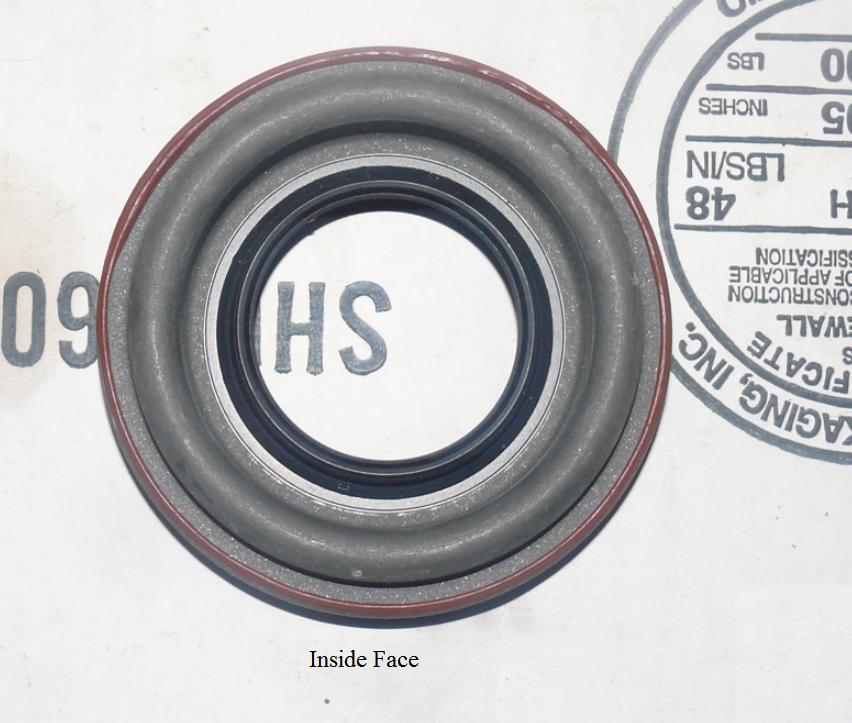
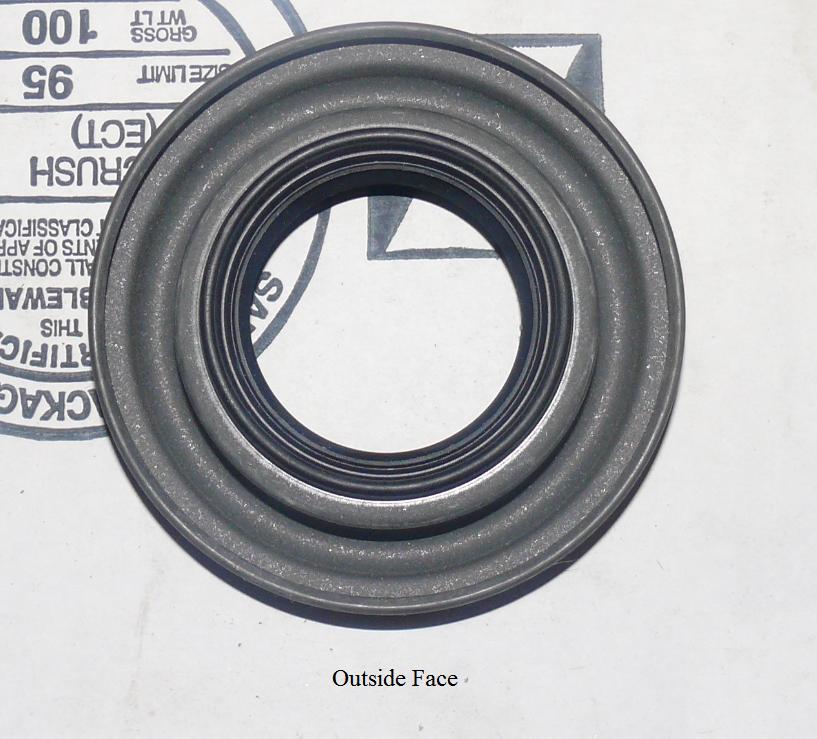
And yes, Steve has the seal installed the wrong way. The following pictures show the correct Inside/Outside surfaces.

Image

Image

Regards,

Bill

Link:
BBcode:
HTML:
Hide post links
Show post links

User avatar

Topic author
juicerider
Posts: 60
Joined: Tue Oct 20, 2015 1:15 am
Location: Perth WA
Australia

#6 Re: Advice on diff input seal

Post by juicerider » Sun Mar 18, 2018 10:39 pm

Thanks for all your advice here.
Yeah I realised I had the seal the wrong way round when I had another look at it over the weekend. I’ve put a new seal in now the correct way round and torqued the pinion nut up to 120ft/lbs. It seems to spin ok without feeling tight.
Interestingly being a manual us import I was expecting the ratio to be 3.54 but it’s got a 3.307 ratio in it.

Link:
BBcode:
HTML:
Hide post links
Show post links

User avatar

valley7
Posts: 29
Joined: Mon Jul 24, 2017 1:31 pm
United States of America

#7 Re: Advice on diff input seal

Post by valley7 » Fri Mar 30, 2018 6:27 pm

Wish I had ready this 2 days ago, I just did the same as you; I took my pinion nut off without thinking to mark it. I'm planning to take my diff into a shop to have them redo it because I don't want to take a chance.

Does anyone have any recommendations on who to buy the spacer from?

Link:
BBcode:
HTML:
Hide post links
Show post links

User avatar

valley7
Posts: 29
Joined: Mon Jul 24, 2017 1:31 pm
United States of America

#8 Re: Advice on diff input seal

Post by valley7 » Tue Apr 03, 2018 5:41 pm

I'm really puzzling over this. I have an S1 and I'm starting to think maybe mine is a fixed spacer instead of a crush washer. Is my setup different than the S2?

Sorry to hijack the thread!!

Link:
BBcode:
HTML:
Hide post links
Show post links

User avatar

mgcjag
Moderator
Posts: 8992
Joined: Fri Jul 09, 2010 6:15 pm
Location: Ludlow Shropshire
Great Britain

#9 Re: Advice on diff input seal

Post by mgcjag » Tue Apr 03, 2018 6:08 pm

Hi It would really help if you put your name and model information in the signature area..are you a 3.8 .....4.2...2+2.....thanks... Steve
Steve
69 S2 2+2 (sold) ..Realm C type replica, 1960 xk150fhc

Link:
BBcode:
HTML:
Hide post links
Show post links

User avatar

valley7
Posts: 29
Joined: Mon Jul 24, 2017 1:31 pm
United States of America

#10 Re: Advice on diff input seal

Post by valley7 » Tue Apr 03, 2018 6:14 pm

Good idea. This better?

Link:
BBcode:
HTML:
Hide post links
Show post links


Geoff Green
Posts: 141
Joined: Tue Apr 22, 2014 3:13 am
United States of America

#11 Re: Advice on diff input seal

Post by Geoff Green » Tue Apr 03, 2018 7:30 pm

Stephen,

3.8 diff pinion has two shim adjustments on the pinion with a set distance spacer, not a crush sleeve. One shim adjustment sets the dept of the mesh of the gear faces. The second adjustment sets the tapered bearing free play on the two pinion bearings.

There are other differential shim adjustments for the ring gear and the output shafts.

Link:
BBcode:
HTML:
Hide post links
Show post links

User avatar

valley7
Posts: 29
Joined: Mon Jul 24, 2017 1:31 pm
United States of America

#12 Re: Advice on diff input seal

Post by valley7 » Fri Apr 06, 2018 1:17 am

That is most helpful. Thank you!

Link:
BBcode:
HTML:
Hide post links
Show post links

User avatar

rfs1957
Posts: 1585
Joined: Sat Jan 15, 2011 2:52 pm
Location: Languedoc - France
France

#13 Re: Advice on diff input seal

Post by rfs1957 » Mon Sep 23, 2024 8:18 pm

Thought I’d tag onto the end of this rather than start another.

My diff inlet seal didn’t appreciate being woken up after nearly seven years of being stationery, and - boy - does just 100ml of SAE 90 coat a LOT of the car, including the rear of the floor pan, over a 1.500km spin.

On my car at least, there is NO way you can do this with the IRS in situ, if anyone is looking at this string with that question in mind.

I used a masonry nail to punch two holes at 180 degrees and then coaxed in a pair of self-tappers, levering required an intermediate spacer in order to get a mechanical advantage against the diff casing, as the seal edge stood proud of the cast iron housing.

My question concerns the seal, are there firm opinions on which type of seal I should buy, and/or from what source I should buy it ?

Your experiences most welcome 🙏
Rory
3.8 OTS S1 Opalescent Silver Grey - built May 28th 1962

Link:
BBcode:
HTML:
Hide post links
Show post links

User avatar

mgcjag
Moderator
Posts: 8992
Joined: Fri Jul 09, 2010 6:15 pm
Location: Ludlow Shropshire
Great Britain

#14 Re: Advice on diff input seal

Post by mgcjag » Mon Sep 23, 2024 9:48 pm

Hi Rory..iv used this lip seal from SNG a few times with no issues....however on removing the flange that's been running in the original type leather seal scoring of the running surface of the pinion flange is often seen..iv fitted new flanges...and used speedi sleeves...Steve https://www.sngbarratt.com/English/#/UK ... 201779038)
Steve
69 S2 2+2 (sold) ..Realm C type replica, 1960 xk150fhc

Link:
BBcode:
HTML:
Hide post links
Show post links

User avatar

44DHR
Posts: 605
Joined: Tue Jun 10, 2008 7:32 pm
Location: Fishbourne Isle of Wight
Great Britain

#15 Re: Advice on diff input seal

Post by 44DHR » Tue Sep 24, 2024 11:17 am

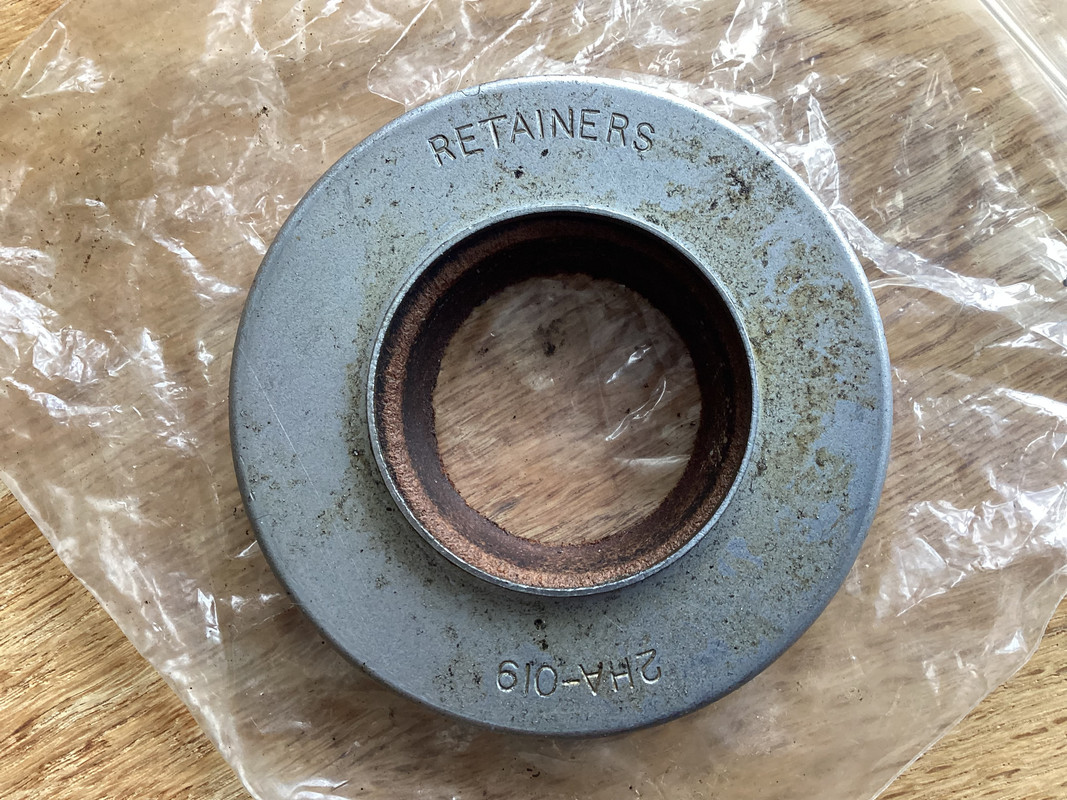
I agree with Steve and use the modern lip seal rather than the older leather seal. I have some “New Old Stock” leather seals here, but I won’t be using them !

Image

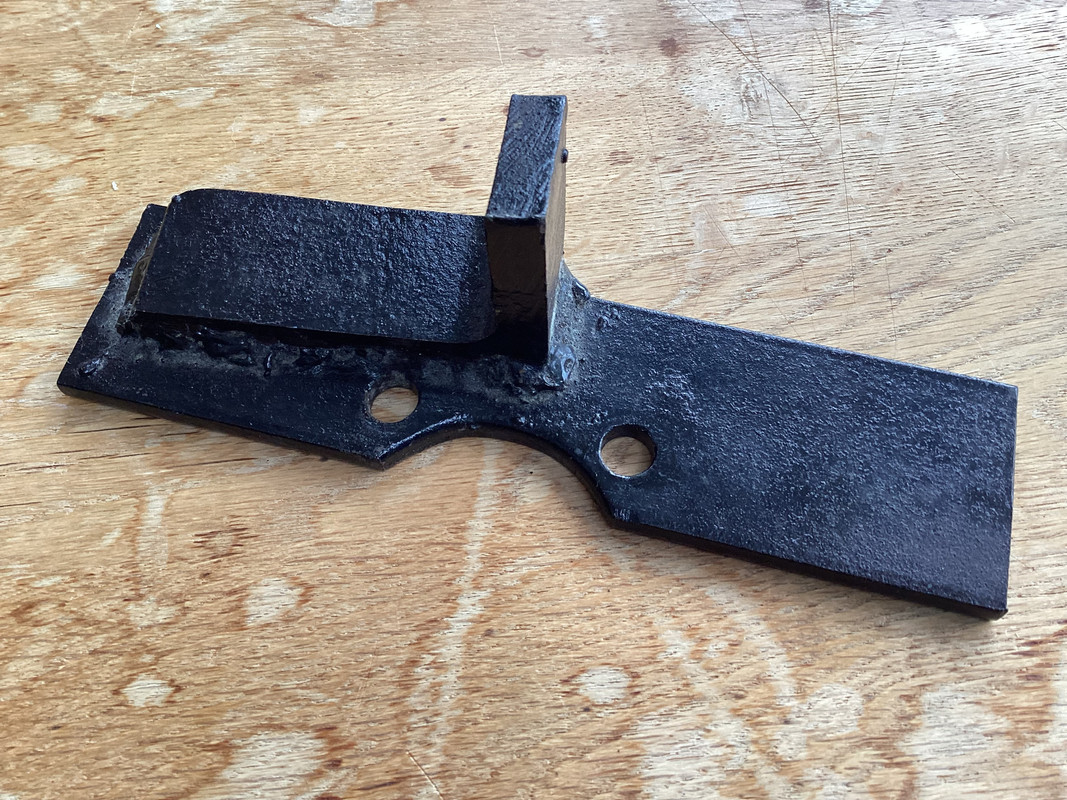
Out of interest, this is the tool that I made many moons ago to lock the diff pinion flange to undo the nut. The tool bolts behind the flange using two of the flange holes and locks against the diff casing.

Image

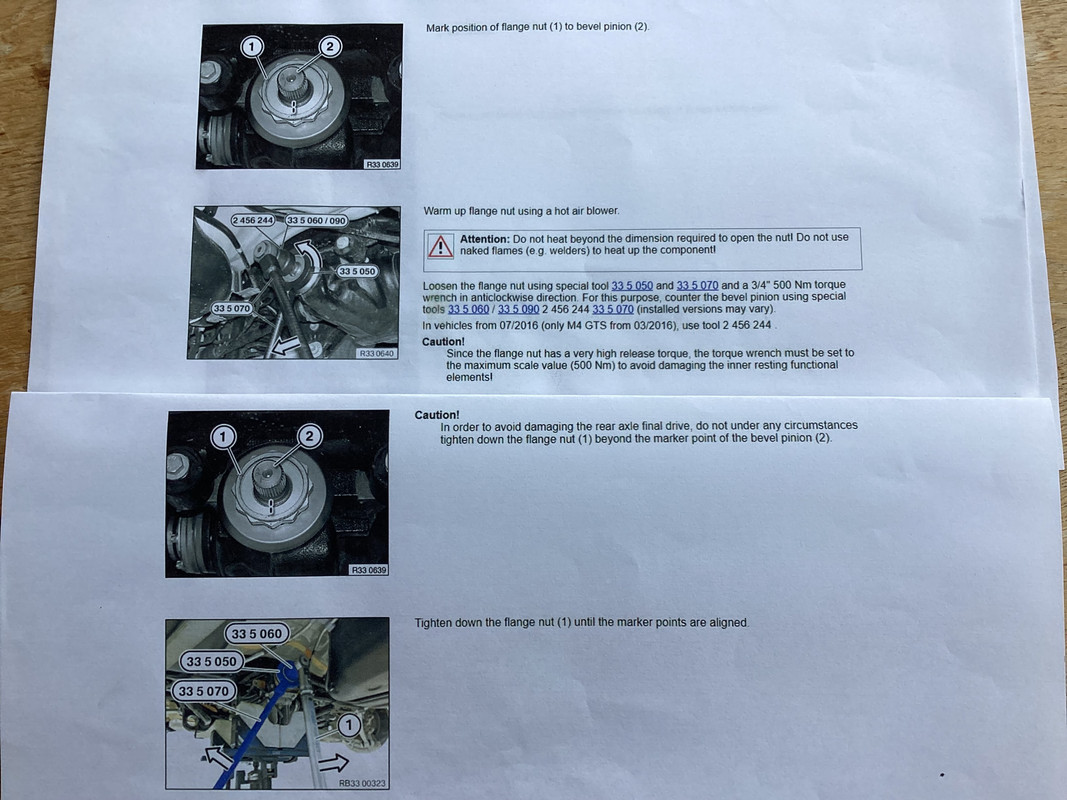
Although it sounds a crude engineering practise to mark the position of the pinion shaft relative to the nut to avoid over tightening the crush washer to destroy the pinion settings, this method is still used on modern cars. I have just had to replace the diff pinion seal on my modern, pretty new, less than 25k miles BMW M2. BMW as a bastion of “Engineering Excellence”, requires three specialist tools - ordered on loan from BMW in Germany (!) - to undertake this job. Firstly the propshaft has to be removed and the propshaft doesn’t employ a universal joint to the diff and is locktighted directly onto to the pinion shaft using a captive 39 mm nut at massive torque ! Once the propshaft is removed, another specialist tools is used to undo the Diff Input Flange Nut - using the crude method of marking the nut relative to the shaft ready for reassembly once the seal is removed - again using a specialist tool to get the old seal out. This diff seal is used on many current BMW cars and I note the BMW description in their TIS (Technical Information System) describing the process, that care must be used on the flange nut “to avoid damaging the inner resting functional elements !”. Basically, get the marker points correctly aligned, or risk ruining the very expensive electronic locking diff internals ! I certainly don’t like the idea that the original nut has to be reused as this has the required markings on it and goes against the usual practice of using new replacement fixings. Anyway, job all done now, but this is a common failure on a whole range of new BMWs, including their halo M cars.
Regards,
Dave

Image
Dave Rose
1967 Series 1 4.2 FHC

Link:
BBcode:
HTML:
Hide post links
Show post links


angelw
Posts: 701
Joined: Sat Feb 16, 2013 8:27 pm
Location: Ballarat, Vic, Australia
Australia

#16 Re: Advice on diff input seal

Post by angelw » Tue Sep 24, 2024 1:28 pm

Dave Wrote:
Although it sounds a crude engineering practise to mark the position of the pinion shaft relative to the nut to avoid over tightening the crush washer to destroy the pinion settings
S1 E Types don't use a Crush Sleeve to set the pre-load of the Pinion Bearings, they use shims; accordingly, all that is required is to torque the nut up again after replacing the seal and reinstalling the Companion Flange.

Regards,

Bill

Link:
BBcode:
HTML:
Hide post links
Show post links

User avatar

rfs1957
Posts: 1585
Joined: Sat Jan 15, 2011 2:52 pm
Location: Languedoc - France
France

#17 Re: Advice on diff input seal

Post by rfs1957 » Tue Sep 24, 2024 1:34 pm

Sounds like a real dockyard job Dave.

Is the reference to setting the 500Nm wrench aimed at protecting the WRENCH and its sensitive contents, or the DIFF and its sensitive contents, and if the latter then what do you do if it doesn’t budge at 500Nm ?

Confirms my desire to keep looking for a circa 2010 sub 100.000km electronics-free Honda FR-V diesel to replace the 300.000km one I have now, on which I’ve basically done nothing.

One tricky car is enough in my life.
Rory
3.8 OTS S1 Opalescent Silver Grey - built May 28th 1962

Link:
BBcode:
HTML:
Hide post links
Show post links

User avatar

44DHR
Posts: 605
Joined: Tue Jun 10, 2008 7:32 pm
Location: Fishbourne Isle of Wight
Great Britain

#18 Re: Advice on diff input seal

Post by 44DHR » Tue Sep 24, 2024 4:30 pm

Bill is absolutely correct - as always - that Series 1 E Types differential pinions are shimmed, but I was really making the observation that I personally don’t think this is a good engineering way to service cars with crush spacers by hoping to get the marks correctly re-aligned - such as on Series 2 E Types and the practise continues across many manufacturers - to include my newish BMW highly engineered M model. I guess in reality, the Technicians working on these new cars if problems occurred would just fit a compete exchange unit rather than have the joy we have actually working and setting up these marvels of engineering.
I have lost count over the years when a “specialist Classic garage” - who should have known better - brought a diff round with the pinion rattling around after someone there had over tightened the crush washer and subsequently wanted the diff set up as they were unable to fix it.

Rory, the repair of this particular BMW diff input seal is potentially a bane of BMW technicians and only since my diff input seal let go, did I research how common this is across a wide range of BMW models. This idea of bolting the propshaft to the diff input shaft to form a solid link - rather than use any form of universal joint - does appear questionable. Once the specialist tools are obtained, I can assure you that it is a two man job to break the nut joining the propshaft and not only is the nut extremely tight, it has a strong BMW thread lock, which on reassembly has to be performed within 5 minutes and the new replacement nut needs a minimum of two hours to set before the car can be driven. Hopefully, during the removal and after a few tense moments, you hope at maximum settings on a very strong long torque wrench, the nut gives way. I’m not too sure on the shock load to the sophisticated diff internals when the “big bang” happens !
Oh, how we love our old “simple” cars !
Cheers,
Dave
Dave Rose
1967 Series 1 4.2 FHC

Link:
BBcode:
HTML:
Hide post links
Show post links

Post Reply Previous topicNext topic