Page 1 of 1
#1 C2896 Long Tommy Bar - Are both of these original?
Posted: Sun Feb 16, 2020 12:51 pm
by Philk
For the tool experts on the forum...… I have two C2896 large Tommy Bars in my possession and am deliberating over which to keep in my toolkit. I've pored over the Roger Payne articles on E-Type Tools but am struggling a bit to determine whether both are original and, if so, which might be more appropriate to my year of production (1964). Both weigh within 1g of each other (188g vs 189g) and are identically proportioned. Neither bar looks to have been machined. The construction of the head however, is different as per the photos below.
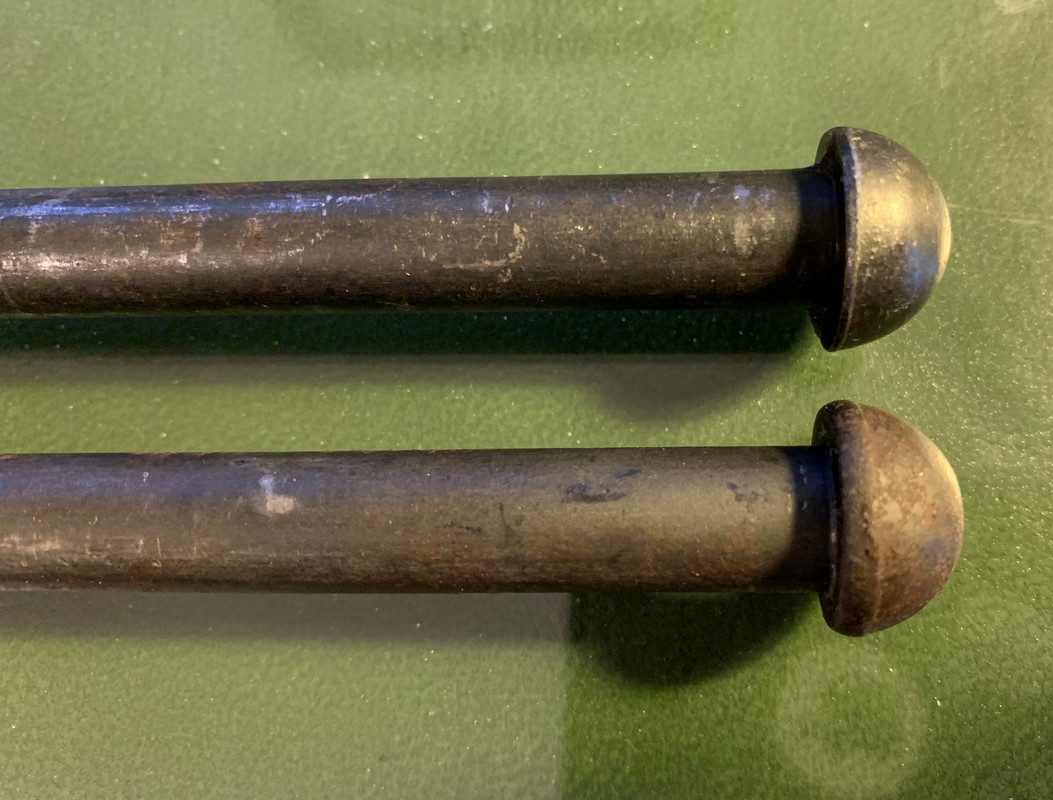
The bottom bar (referrred to as Bar #2 hereafter) has a slight ridge running around the base of the top whereas the top bar (#1) has a more chamfered base. Looking more closely at the tops highlights the following:
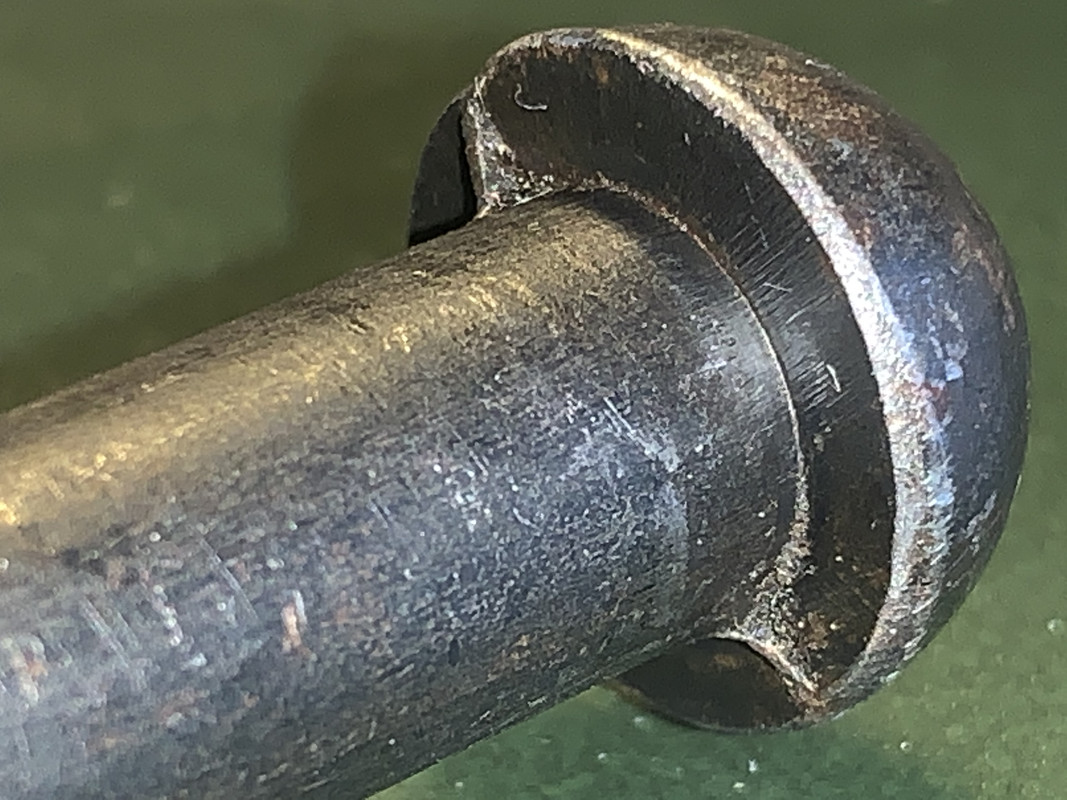
Bar #1 has striations running through the metal and has two distinct "winged extensions" on either side of the bar (which suggests it is not a machine turned reproduction although there is no such mention of such extensions in the Roger Payne article).
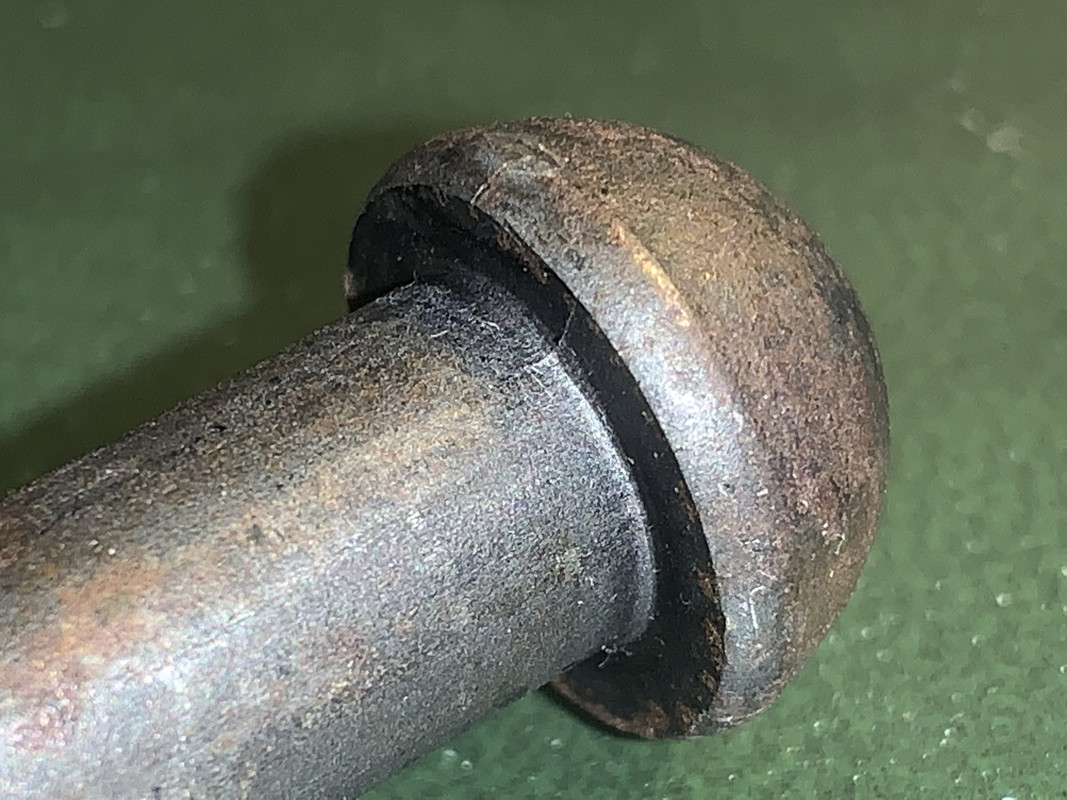
Bar #2 has no such extensions and also has no striations running through the metal. It also looks to have the "tell-tale flash of the join in the split-dies" referred to by Roger.
My inclination is to go with Bar #2, but I would really like to know whether Bar #1 is original and, if so, what year was it introduced?
#2 Re: C2896 Long Tommy Bar - Are both of these original?
Posted: Sun Feb 16, 2020 5:47 pm
by PeterCrespin
You have too much time on your hands

The one with the beveled head is 2896a fitted from the first E-types.
The hemispherical head is 2896b and came in around 1965.
I only know this because Bud Marston has just published a 6-page fully-illustrated article on S1 toolkits, in collaboration with Roger Payne, It is in the March/April issue of
Jaguar Journal which is available to non members via
www.jcna.com, click on 'Merchandise' and then 'JCNA Publications'. The current issue at any time is always available if you scroll down to the 13th (?) item called 'Curent Issue' (I know, I know...the pic is ancient as well). Give it a day or two because the relevant issue only just got mailed out. Next issue (May/June will have a similar article on S2/S3 toolkits.
#3 Re: C2896 Long Tommy Bar - Are both of these original?
Posted: Sun Feb 16, 2020 6:50 pm
by Philk
It's been a very wet day here in the UK so thought I'd dig around in my spares! Thank you for that information - I'll look up the article when its available
#4 Re: C2896 Long Tommy Bar - Are both of these original?
Posted: Sun Feb 16, 2020 9:53 pm
by xk140
PhilK,
If you have any questions regarding E-type tools I am more than happy to respond to direct questions to
rogerpayne@bigblue.net.au I don't always keep up to date with questions on the Forum.
But for your 1964 E-type your pictured top Bar #1 is most definitely more probably 1964 correct than the bottom Bar #2, which is another example of the later poorer quality Tommy Bars that were sourced in later 1960s/70s as can be found in Series 2 E-type tool kits, I suspect from a new manufacturer. (refer to Issue #163 June 2018 issue of THE E-TYPE), see pic below of the three described heads, bearing in mind there was a lot of variability in the poorer quality Series 2 E-type era heads that further degenerated into the misformed heads
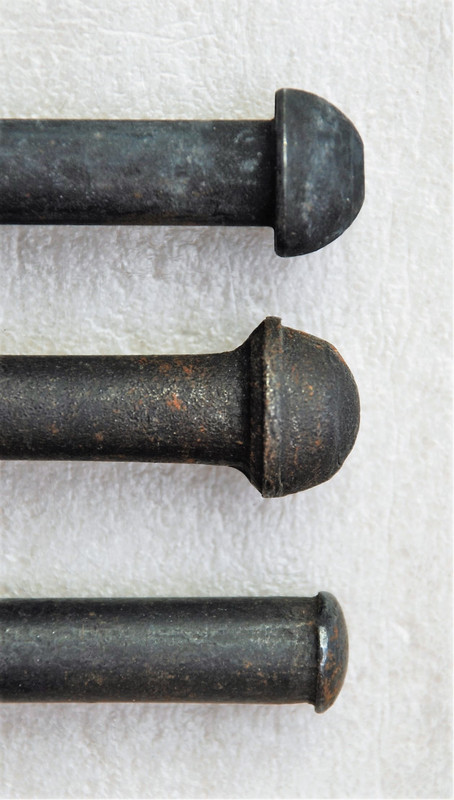
The Bar #1 has the much better sharper forged head and better quality close-grained steel typical of all 1950s and Series 1 E-type era C2896 Tommy Bars, and indeed the flash from the split upset forging dies was variable ranging from barely visible to examples such as yours which I have to agree is at the top end of the extent of flash that I have seen. I attribute this to nothing more than mass production variables, and in your case, the split die has not firmly closed as well as usually or indeed possibly damaged. These dies had a life, and were replaced as required. The main reason I did detail this upset-forging manufacturing technique and the typical split die flash is it is the easiest/best indicator of being an original rather than a reproduction, that are invariably made on a lathe simply turning down a larger diameter bar being far simpler (and cheaper) than tooling up for an upset forging process. So your Bar #1 is a particularly good example
#5 Re: C2896 Long Tommy Bar - Are both of these original?
Posted: Mon Feb 17, 2020 8:05 am
by Philk
Hi Roger - thank you for taking the time out for the comprehensive reply (thank you also for your contact details and reference points). This really was very helpful. Bar #1 will be taking its place in the toolkit!