https://www.ebay.co.uk/itm/324193342893 ... 101224.m-1
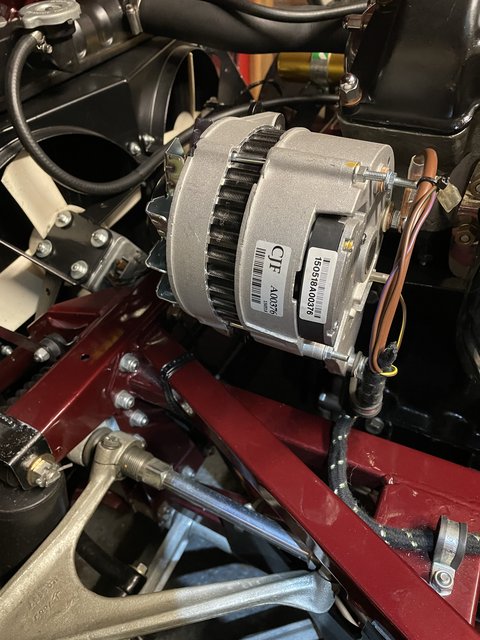
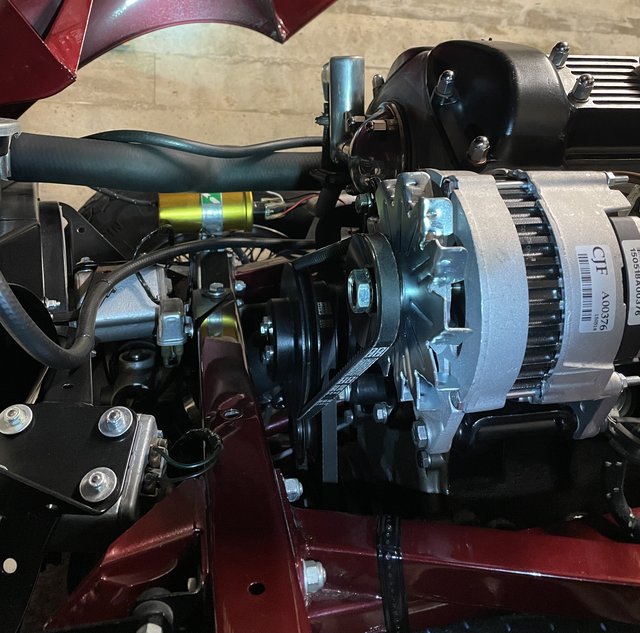
and it fitted almost perfectly. I say almost, because I did have to shim the pulley forward by 3mm, but that was it. And this task was simplified by the 8mm allen keyway in the end of the shaft which made removing the pulley securing nut very easy.
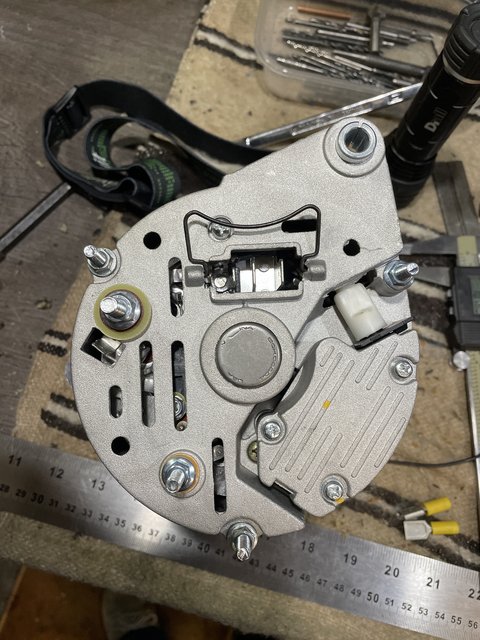
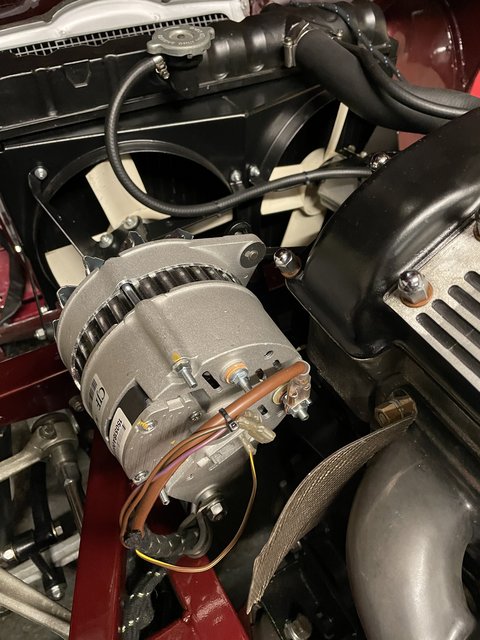
So, no modified mounting or adjusting link, and the 6RA, 3AW & 4TR are now history. The connections consist of a group of 3 [ B+ B+ D+ ] for which a Lucas style plug is readily available, and a separate B+ terminal post which has a separate 6mm spade term next to it. The smaller terminal post is, I think, the tacho connection.
Having removed the plug from the 4TR, I linked the brown/yellow & brown/black wires disconnected from the 3AW, and at the alternator connected the brown/yellow wire to the D+ terminal. With the ignition on but the engine stationary, current flows from fuse 7 through the warning light which illuminates. This 12v also provides the initial excitation of the alternator. As the engine starts, the earth that was present at the D+ term is replaced by 12v, and with 12v at either end of the warning light circuit there will be no current flow.
INTERESTING ASIDE.
Having fitted and tested the new alternator, I then replaced the instrument lamps with LED’s. However, the first time I started the car with the LED’s fitted, the ign warning light remained on, and my tester showed only battery voltage. The reason I discovered was that there was only 5v at the brown/yellow wire at the D+ terminal which was obviously insufficient to excite the alternator. Replacing the LED with the original incandescent lamp restored the necessary 12v and cured the problem. Why there is only 5v downstream of the LED I have no idea, but hopefully someone will educate me?
Only time will tell if this unit turns out to be reliable or not, but at £50 it wouldn’t be overly onerous to carry a spare, and the 3 spanners necessary to change it.