


The basic system is already designed such that the radiator has more cooling capacity than the engine has to produce heat and there is already a feedback mechanism to discard the excess cooling capacity. When the designers judge that to fall short (i.e. when above the Otter temperature switching point), they call in the cavalry and apply fans 100%. This controller simply adds some cooling via fan when there is still an excess to be had by the original system. In principle, there is nothing wrong with that, but it doesn't add any cooling.
You can't actually tell or even control what the "correct" engine temperature is closer than plus/minus 3'c because of the way the thermostat works. This is a graph of an engine idling on the driveway. RPM is constant, so total waterflow is constant. The car is stationary, so airflow is zero. Cooling capacity is constant. The car engine rpm is constant, so heat generation is constant. The temperature still yo-yo's between ~82'c and ~88'c. This can only be because the thermostat is moving - nothing else is changing! It is quite clearly only letting the radiator have the minimum amount of water it can and thanks to the way the wax melts and resolidifies, there is a delay and hysteresis naturally present that you cannot design away. If you have thermostats in your car, you are stuck with this as a limitation. This is how the feedback loop works.
See http://forum.etypeuk.com/viewtopic.php? ... ph#p132484 for explanation.
So if the thermostats are not yet fully open, all the new controller can achieve is make the E to F slope slightly steeper and more quickly push the temperature down towards the designed operating temperature. That's no bad thing, but the system has not yet lost control, so it isn't actually needed. If the thermostats are fully open, why are we messing about with PWM? For God's sake, turn the fans on 100% NOW! That's my point.
The thermostat and PWM aspect are somewhat duplicating each other. The further above the minimum engine operating temperature the water is, the higher the duty cycle is for water sent for cooling (the thermostat is just a water splitter). The PWM switch is also set up for a higher duty cycle based on radiator exit temperature. If it succeeds, then the thermostat acts against it and if the radiator succeeds with what the thermostat gave it, then the fan PWM duty cycle drops. You don't need two PWM type control mechanisms competing for feedback control prior to the thermostat being fully open. This will be a great system if it is tweaked for what is not covered by the original, rather than adding a layer of complication* that duplicates the original.
What is actually needed are two things:- 1/ if the radiator exit temperature is too high as judged by the new programmable Otter switch (which, as a concept, I have no problem with), just go to 100% fan - the thermostat will tell you when the job is done - going via PWM simply means the temperature takes longer to stabilise at the minimum operating temperature than need be. So let's just have a user settable Otter switch and be done. 2/ Instead of duplicating the enabling of cooling capacity, programme in the safe operating area of the engine and force the fans 100% on when you are heading out of that region. Put bluntly, stop playing with PWM percentages and instead place a Hall effect sensor in the tacho and speedos - when below 20mph AND below 1500rpm AND rpm>0, force the fans ON 100%. We already know an average radiator is good when there is airflow and waterflow, but overheating occurs when waterflow and airflow are at their minima - so use the programmable nature to pre-empt that. You either need these fans or you don't - you never half need them, or 70% need them.
- annotated Image5.jpg (43.35 KiB) Viewed 3622 times
So, in summary, the custom controller looks nice, but it may not actually be doing much.
kind regards
Marek
*There is a design hazard here - I don't know what chip is doing the switching here, but if it is a transistor, then there will be heat dissipated in there and looks to be a surface mount (rather than through hole) item. For an average 6amps drawn, it'll see 6x0.67=4watts of heat to lose. That's why, with my lack of education ten years ago, I used a TO220 package mounted in free air, not a surface mount item. Tom's controller also it has to not fail at ~95'c operating temperature if it is sitting on a radiator. Also, people do mount bigger aftermarket fans in there and they draw utterly HUGE currents. Obviously, they ought to disclose that to Tom before they go for this "upgrade", so I hope it uses a nice cool running MOSFET or is happy switching a good 30amps at 11kHz. If not, they will blame Tom rather than themselves for any potential overheating episode.
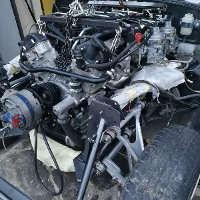

 (I am more concerned about the temperature of the MCU which is the -6 85° version and not the -3 125° version in the moment).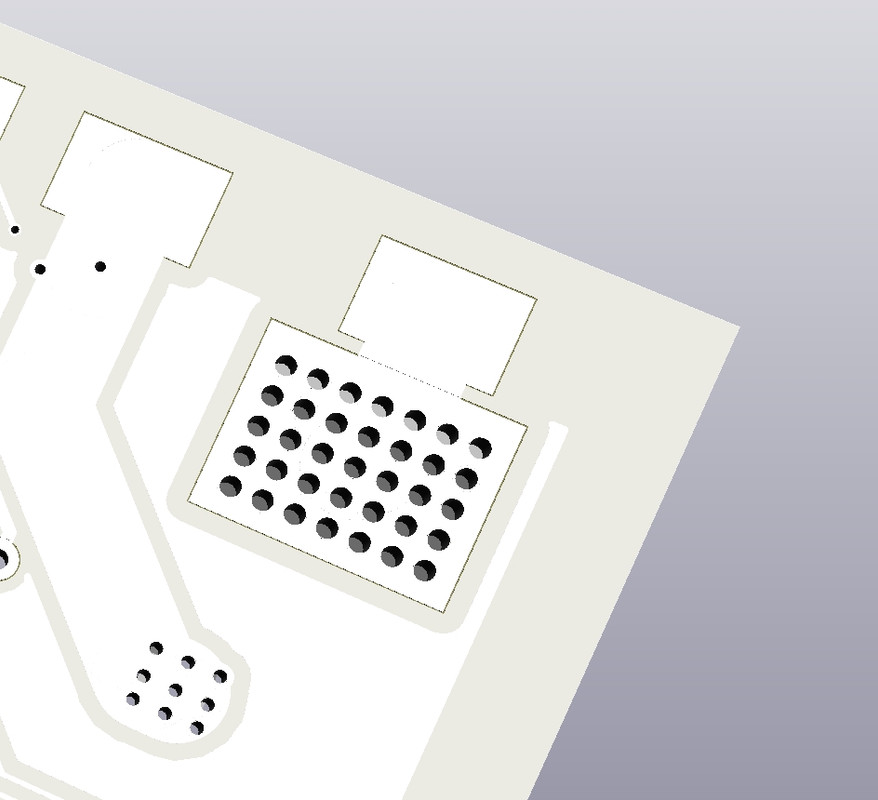
 )
)