#1 About distributors
Posted: Tue Nov 26, 2019 7:19 am
This is regarding the original distributors fitted to Jaguar V12’s up until 1989, including modified variants available from SNGB and EFIH.
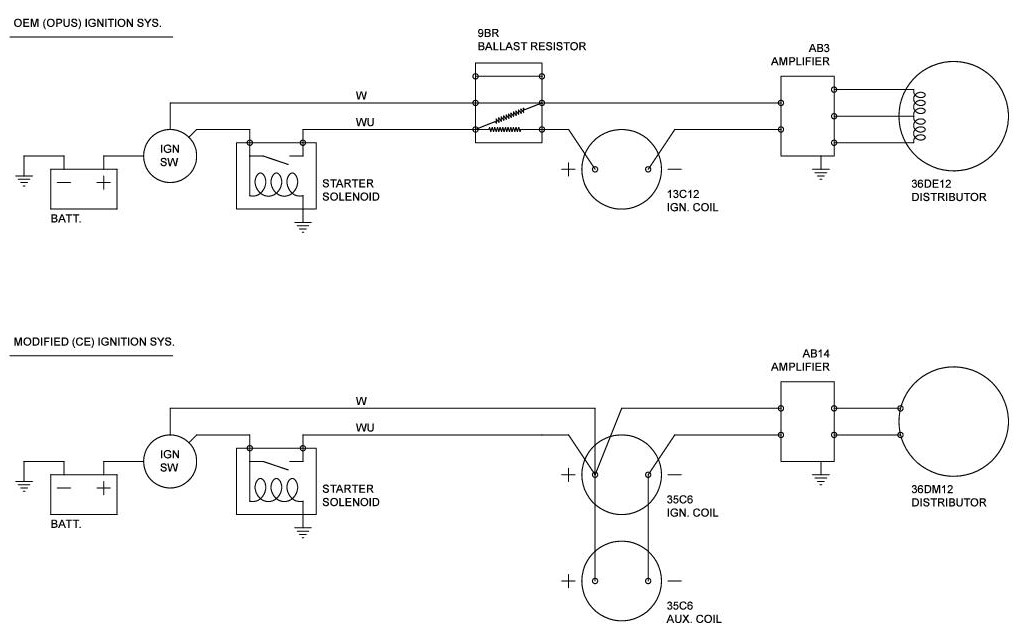
Opus ignition systems on pre-HE engines used Lucas 36DE12 distributors, with mechanical (centrifugal) advance and vacuum retard. There are 3 wires connecting to the amplifier and the vacuum connection faces forwards. The vacuum must be taken from under a carburettor (throttle bottom-edge tapping), where there is vacuum only when the car is idling (throttle closed). This was mainly to improve idling smoothness; during normal driving there should be no vacuum and therefore no retarding beyond a small transition stage (as u r taking off). A common practice, if idling smoothness is adequate, is to permanently disable the idling vacuum retard.
CEI ignition systems on HE engines used Lucas 36DM12 distributors, with both mechanical and vacuum advance. There are 2 wires connecting to the amplifier and the vacuum connection faces rearwards. The OEM vacuum system was sophisticated (complicated), now some components are NLA (no longer available). Common practice is to take vacuum directly from a top throttle edge tapping or, if such is not available, to use any available inlet manifold vacuum tapping and to adjust idle speed accordingly.
I have used both types of ignition system, the CEI system feels more responsive and enables ~3 mpg improvement in fuel economy, with no apparent disadvantage. Wired up as follows; duel coils not necessary for a pre-HE but, since I had them, what the heck:
Both these distributors have a bearing and separate seal in the distributor shaft, the seal is critical. Once it has failed the engine’s PCV (positive crankcase ventilation) system may not be able to maintain a slightly reduced pressure in the crankcase; inlet manifold vacuum hence engine performance may be reduced while engine fumes and oil leakage out of the engine rear crankcase oil seal may be increased.
To test the distributor seal, remove the distributor and try blowing into the small vent hole that is half way along the distributor shaft. If you can blow through this hole the seal has failed, needs to be replaced.
To replace the seal the distributor must be completely dismantled, including drilling out the drive-pin to remove the drive gear. The seal is NLA, the solution is to replace both the bearing and the seal with a modern sealed bearing, type R8-2RS. This is thicker than the original bearing so the distributor body has to be machined to suit. Instead, common practice is to buy a new distributor.
SNGB (Barratt) market a modified ignition system including “new” distributor with new bearing/seal. Electrically it is a CEI system that is designed to look like an Opus system. Two versions are offered: DAB113HE includes a vacuum retarding distributor while DAB113HEF (F on the end) includes a vacuum advancing distributor. They are sold on an exchange basis, in both cases as replacement for an original Opus system. Therefore, by specifying the “F” version, it is currently possible to replace an old vacuum retarding Opus ignition system with a new vacuum advancing CEI system.
Customer: Re ignition conversion kits DAB113HE. Are these vacuum advance or vacuum retard distributors? Are these reconditioned distributors? Is the bearing/seal in the shaft always new/renewed?
SNGB: I was under the impression DAB113HE is a vacuum advance.
Customer: Is there someone in SNGB who does know the answer to these questions? If so, pls can they be allowed to respond?
SNGB: I have spoken with our tech and he has confirmed that they are actually as original, as vacuum retard distributor. They are a brand new unit, not reconditioned.
Customer: Ok, thx. I interpret that, for vacuum advance, I should use the DAB113HEF kit (F on the end)? If these are new, why are these kits needing to be on an exchange basis, what do you do with the returns? Reason I ask, I have an Opus ignition (Lucas 36DE12 retarding distributor as per yr DAB113HE kit, that I want to upgrade to CEI ignition (Lucas 36DM12 advancing distributor as per yr DAB113HEF kit?).
SNGB: DAB113HE is for cars with carburettors and DAB113HEF is for fuel injected cars, that's the difference. We require the old distributor back as we require some of the old components from the inside.
Customer: What is the physical difference between DAB113HE and DAB113HEF? Is DAB113HEF vacuum advance? Because, while early fuel injected cars used vacuum retard distributors, later fuel injected cars used vacuum advance distributors. Also, regarding the old components that you use in these brand new distributors, is the bearing/seal in the shaft always renewed? Do you have evidence, e.g. what bearing/seal do you use? Pls note this was my original question.
SNGB: Having spoken with our tech he has confirmed that DAB113HEF is vacuum advance & DAB113HE is a vacuum retard. He has also confirmed that the bearing and seal are replaced with brand new components, you have the evidence in writing here.
Moving on, next level upgrade opportunity:
For fuel-injected engines, it is possible to replace the original ECU with one that can also control ignition timing, more accurately than can a mechanical/vacuum operated distributor, for improved performance and efficiency. EFIH (EFI Hardware) will modify CEI distributors (Lucas 36DM12 and SNGB’s DAB113HE and DAB113HEF distributors) to enable ECU controlled ignition with either single or multiple coils and without requiring crank angle sensors. The shaft bearing/seal is renewed. The mechanical and vacuum advance mechanisms are removed, the rotor is fixed and another sensor incorporated (HAL-effect with single tooth trigger which, together with the existing 12-point inductive sensor, provides all the triggering inputs that the ECU requires.
For multiple coil ignition the distributor rotor and cap are not used, replaced with a smooth low-profile cover. For single coil ignition through the distributor, timing control by the ECU relies on the width of the rotor tip (11 mm) and the width of the cap terminals (5 mm), providing 16 distributor degrees (= 32 crankshaft degrees) of timing sweep when a point on the rotor is adjacent a point on a terminal, i.e.:
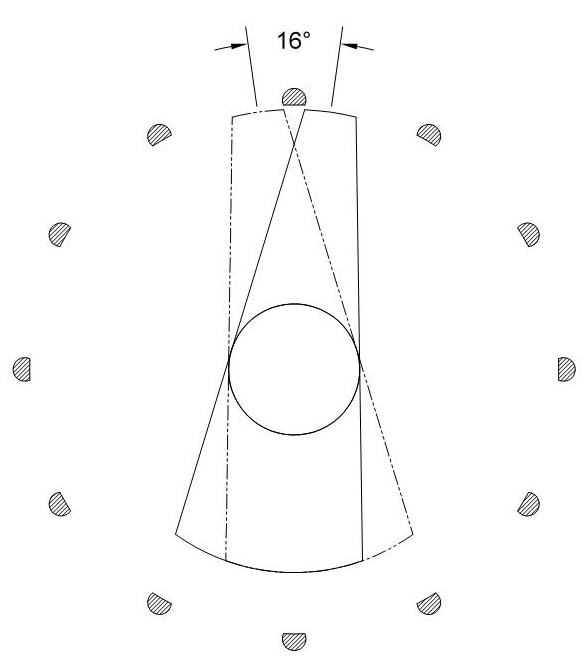
Phasing the rotor at 20 deg. BTDC then allows ECU controlled timing of between 4 to 36 degrees BTDC, (+/- 16 degrees from the centre 20 deg. phasing point). Claims are that it works quite well …
Opus ignition systems on pre-HE engines used Lucas 36DE12 distributors, with mechanical (centrifugal) advance and vacuum retard. There are 3 wires connecting to the amplifier and the vacuum connection faces forwards. The vacuum must be taken from under a carburettor (throttle bottom-edge tapping), where there is vacuum only when the car is idling (throttle closed). This was mainly to improve idling smoothness; during normal driving there should be no vacuum and therefore no retarding beyond a small transition stage (as u r taking off). A common practice, if idling smoothness is adequate, is to permanently disable the idling vacuum retard.
CEI ignition systems on HE engines used Lucas 36DM12 distributors, with both mechanical and vacuum advance. There are 2 wires connecting to the amplifier and the vacuum connection faces rearwards. The OEM vacuum system was sophisticated (complicated), now some components are NLA (no longer available). Common practice is to take vacuum directly from a top throttle edge tapping or, if such is not available, to use any available inlet manifold vacuum tapping and to adjust idle speed accordingly.
I have used both types of ignition system, the CEI system feels more responsive and enables ~3 mpg improvement in fuel economy, with no apparent disadvantage. Wired up as follows; duel coils not necessary for a pre-HE but, since I had them, what the heck:
Both these distributors have a bearing and separate seal in the distributor shaft, the seal is critical. Once it has failed the engine’s PCV (positive crankcase ventilation) system may not be able to maintain a slightly reduced pressure in the crankcase; inlet manifold vacuum hence engine performance may be reduced while engine fumes and oil leakage out of the engine rear crankcase oil seal may be increased.
To test the distributor seal, remove the distributor and try blowing into the small vent hole that is half way along the distributor shaft. If you can blow through this hole the seal has failed, needs to be replaced.
To replace the seal the distributor must be completely dismantled, including drilling out the drive-pin to remove the drive gear. The seal is NLA, the solution is to replace both the bearing and the seal with a modern sealed bearing, type R8-2RS. This is thicker than the original bearing so the distributor body has to be machined to suit. Instead, common practice is to buy a new distributor.
SNGB (Barratt) market a modified ignition system including “new” distributor with new bearing/seal. Electrically it is a CEI system that is designed to look like an Opus system. Two versions are offered: DAB113HE includes a vacuum retarding distributor while DAB113HEF (F on the end) includes a vacuum advancing distributor. They are sold on an exchange basis, in both cases as replacement for an original Opus system. Therefore, by specifying the “F” version, it is currently possible to replace an old vacuum retarding Opus ignition system with a new vacuum advancing CEI system.
Customer: Re ignition conversion kits DAB113HE. Are these vacuum advance or vacuum retard distributors? Are these reconditioned distributors? Is the bearing/seal in the shaft always new/renewed?
SNGB: I was under the impression DAB113HE is a vacuum advance.
Customer: Is there someone in SNGB who does know the answer to these questions? If so, pls can they be allowed to respond?
SNGB: I have spoken with our tech and he has confirmed that they are actually as original, as vacuum retard distributor. They are a brand new unit, not reconditioned.
Customer: Ok, thx. I interpret that, for vacuum advance, I should use the DAB113HEF kit (F on the end)? If these are new, why are these kits needing to be on an exchange basis, what do you do with the returns? Reason I ask, I have an Opus ignition (Lucas 36DE12 retarding distributor as per yr DAB113HE kit, that I want to upgrade to CEI ignition (Lucas 36DM12 advancing distributor as per yr DAB113HEF kit?).
SNGB: DAB113HE is for cars with carburettors and DAB113HEF is for fuel injected cars, that's the difference. We require the old distributor back as we require some of the old components from the inside.
Customer: What is the physical difference between DAB113HE and DAB113HEF? Is DAB113HEF vacuum advance? Because, while early fuel injected cars used vacuum retard distributors, later fuel injected cars used vacuum advance distributors. Also, regarding the old components that you use in these brand new distributors, is the bearing/seal in the shaft always renewed? Do you have evidence, e.g. what bearing/seal do you use? Pls note this was my original question.
SNGB: Having spoken with our tech he has confirmed that DAB113HEF is vacuum advance & DAB113HE is a vacuum retard. He has also confirmed that the bearing and seal are replaced with brand new components, you have the evidence in writing here.
Moving on, next level upgrade opportunity:
For fuel-injected engines, it is possible to replace the original ECU with one that can also control ignition timing, more accurately than can a mechanical/vacuum operated distributor, for improved performance and efficiency. EFIH (EFI Hardware) will modify CEI distributors (Lucas 36DM12 and SNGB’s DAB113HE and DAB113HEF distributors) to enable ECU controlled ignition with either single or multiple coils and without requiring crank angle sensors. The shaft bearing/seal is renewed. The mechanical and vacuum advance mechanisms are removed, the rotor is fixed and another sensor incorporated (HAL-effect with single tooth trigger which, together with the existing 12-point inductive sensor, provides all the triggering inputs that the ECU requires.
For multiple coil ignition the distributor rotor and cap are not used, replaced with a smooth low-profile cover. For single coil ignition through the distributor, timing control by the ECU relies on the width of the rotor tip (11 mm) and the width of the cap terminals (5 mm), providing 16 distributor degrees (= 32 crankshaft degrees) of timing sweep when a point on the rotor is adjacent a point on a terminal, i.e.:
Phasing the rotor at 20 deg. BTDC then allows ECU controlled timing of between 4 to 36 degrees BTDC, (+/- 16 degrees from the centre 20 deg. phasing point). Claims are that it works quite well …