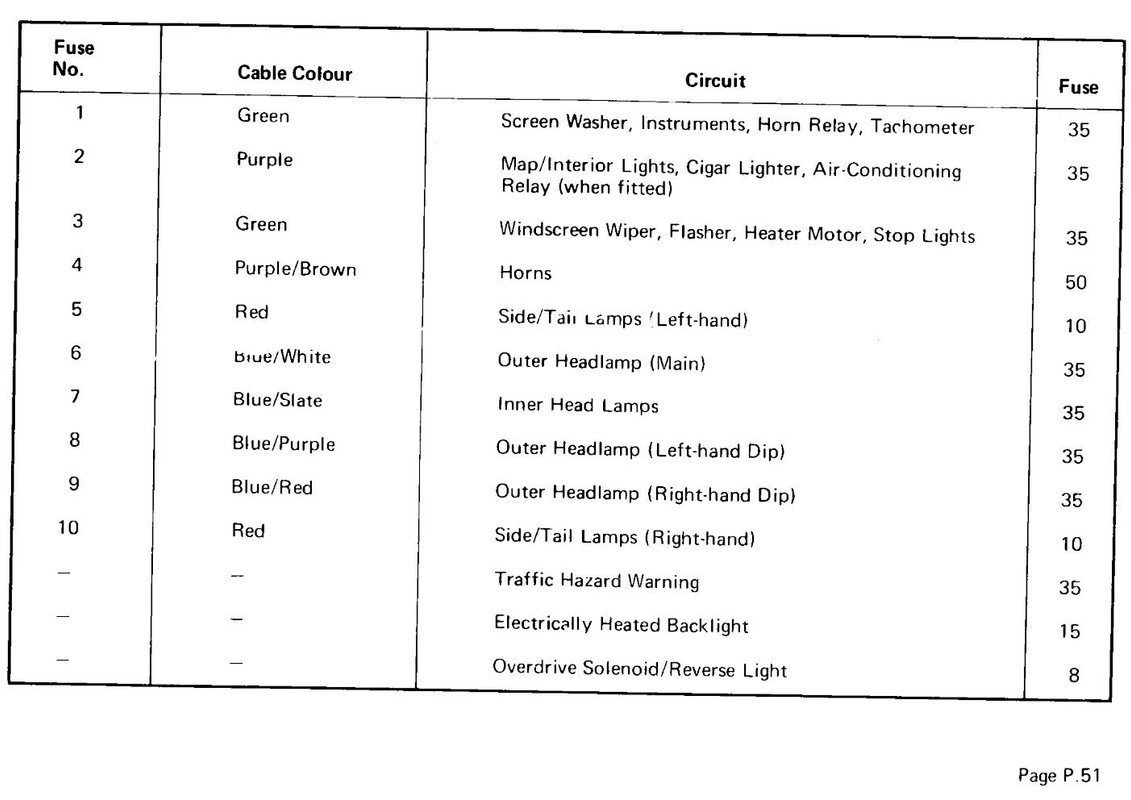
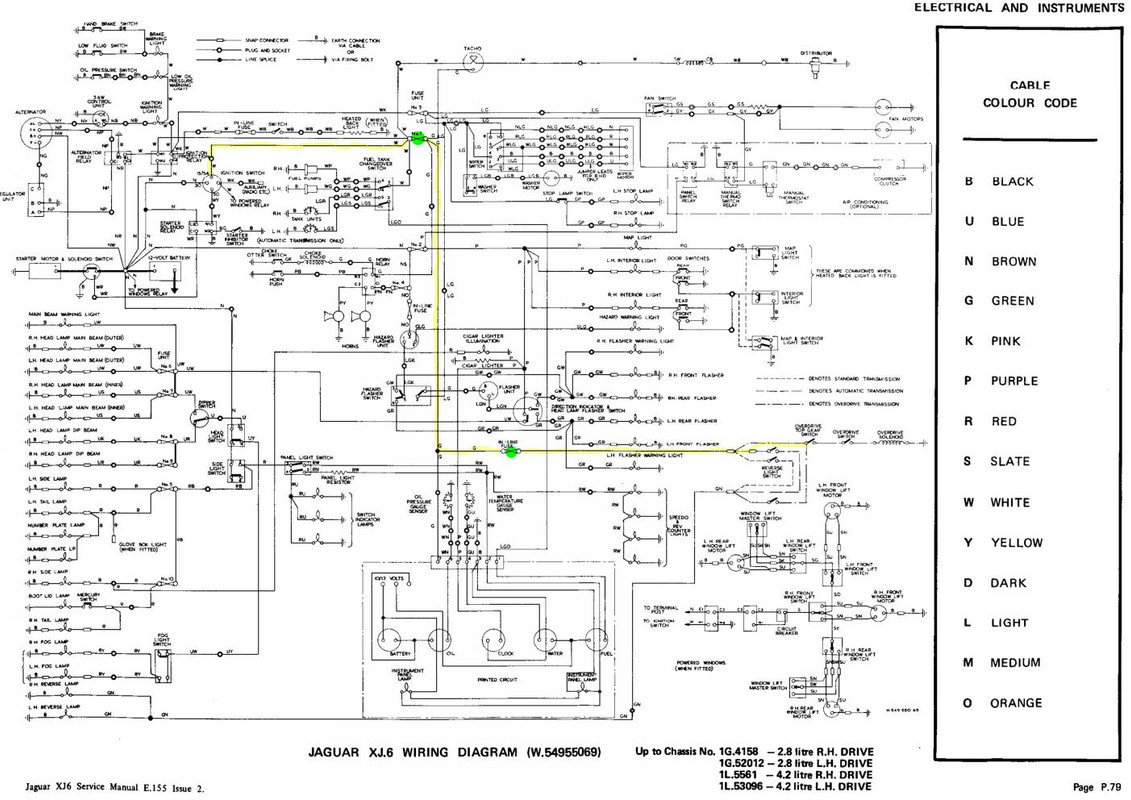
With the XJ6-S1 there is a second, in-line “Overdrive Solenoid/Reverse Light” fuse, that is rated at only 8 (eight) amps. I’m imagining that this would be the “good design” element, protecting the lightweight gearstick wiring and switch (without a relay)? Presumably, when there are no issues, the closing solenoid current draw, if more than 8 amps, would not be for long enough to heat up and burn out the fuse? At the same time it would provide the most immediate protection against what is seemingly the #2 error condition to be avoided, persistent high current? I’d like this, corroded solenoid contacts causing permanently high current is something I’d want to know about.
With the XJ6-S2 the in-line fuse has seemingly disappeared, maybe because 8A fuses kept blowing? “Seemingly” because there are ambiguities in the wiring diag and description, this was the height of the Leyland malaise. So I can’t trust that this is still “good design”. Might also be acknowledgement that the XJ6-S1 in-line fuse wasn’t good design either …
Then there is the LdA design, much more gung-ho, heavy wire from battery-side, no switch except for the relay, no fuse because, if there was one and it blew when you were pulling max revs in O/D 2nd, the instant overspeed could be catastrophic …
I’ve bought a relay, 30 Amp with built-in fuse, cost a tad more than $3… My thinking was to use a 10A fuse with it. The gear lever wiring/switch would be protected by the relay, the smaller current fuse would protect against any persistent high solenoid current. Relay winding would be supplied from the reverse-light circuit, solenoid would be supplied from either side of fuse #4 (hazard lights, brown wire battery-side supply). Ideally the relay would be located near the gearshift.
Having a dedicated and easily accessible O/D fuse would be a useful emergency isolation/testing provision imo. If this is only possible with an in-line (10A) fuse aka XJ6-S1 I might (?) try instead to do this. Also would be the least modification, entirely consistent with Jaguar O/D design and would avoid any relay reliability issues. But then, if the 10A fuse keeps blowing I would have to redo, run the extra wires and install the relay, just more fun to be had …