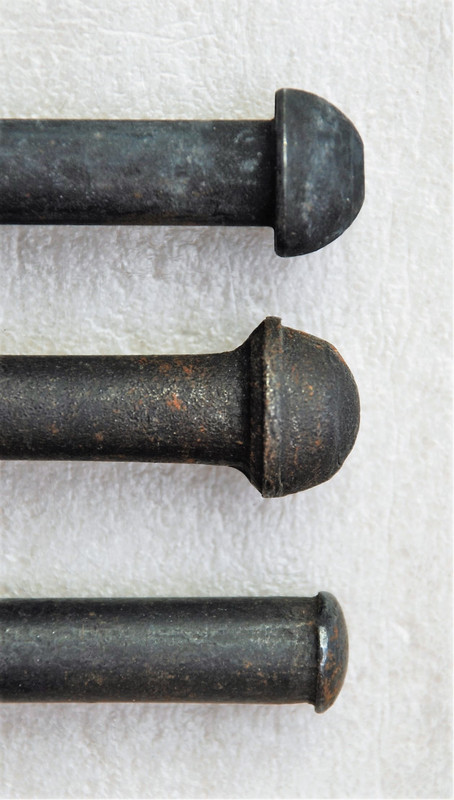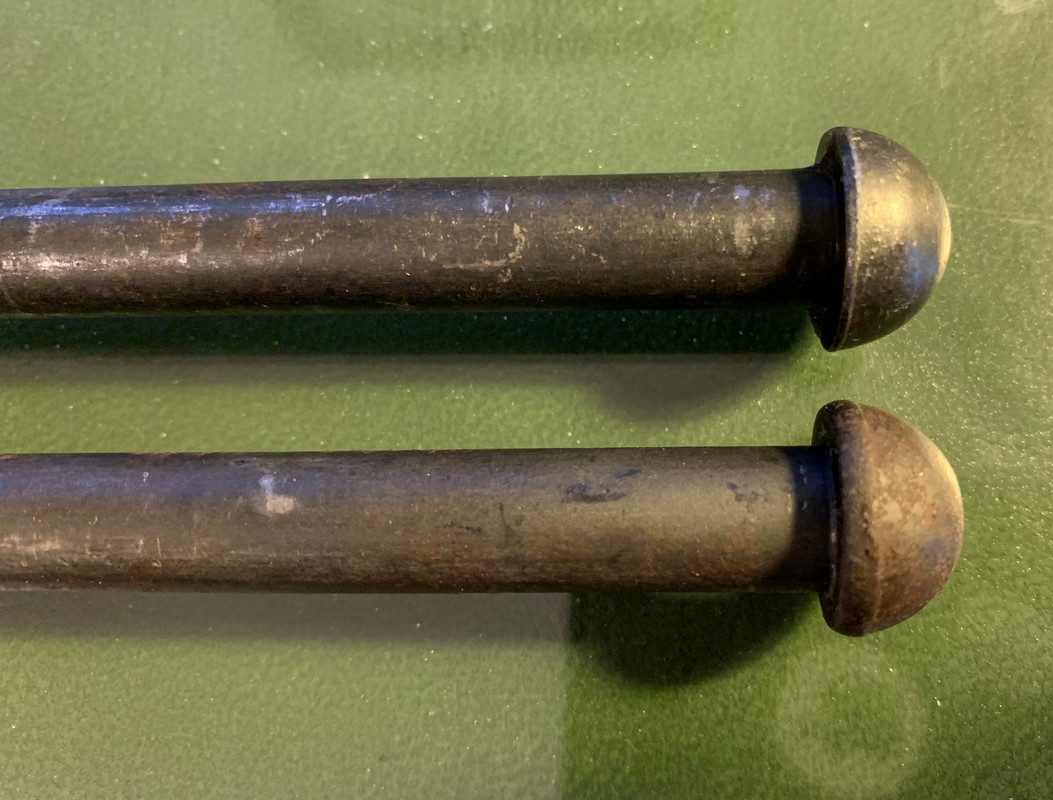
The bottom bar (referrred to as Bar #2 hereafter) has a slight ridge running around the base of the top whereas the top bar (#1) has a more chamfered base. Looking more closely at the tops highlights the following:
Bar #1 has striations running through the metal and has two distinct "winged extensions" on either side of the bar (which suggests it is not a machine turned reproduction although there is no such mention of such extensions in the Roger Payne article).
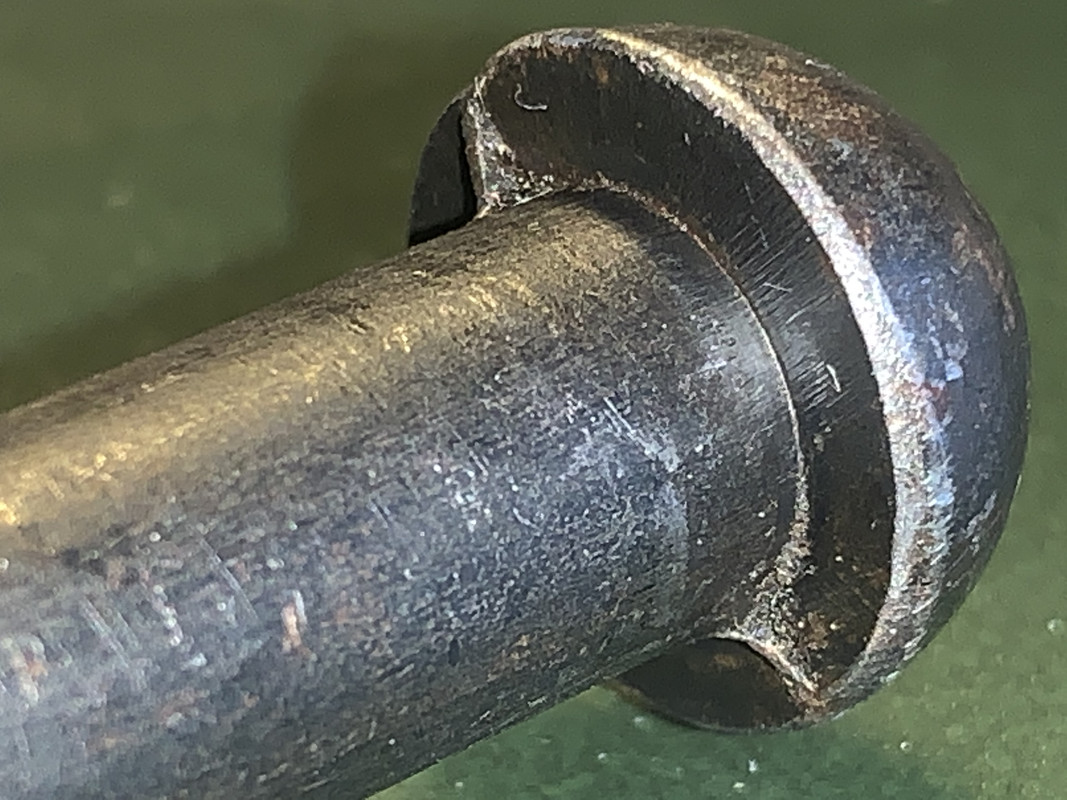
Bar #2 has no such extensions and also has no striations running through the metal. It also looks to have the "tell-tale flash of the join in the split-dies" referred to by Roger.
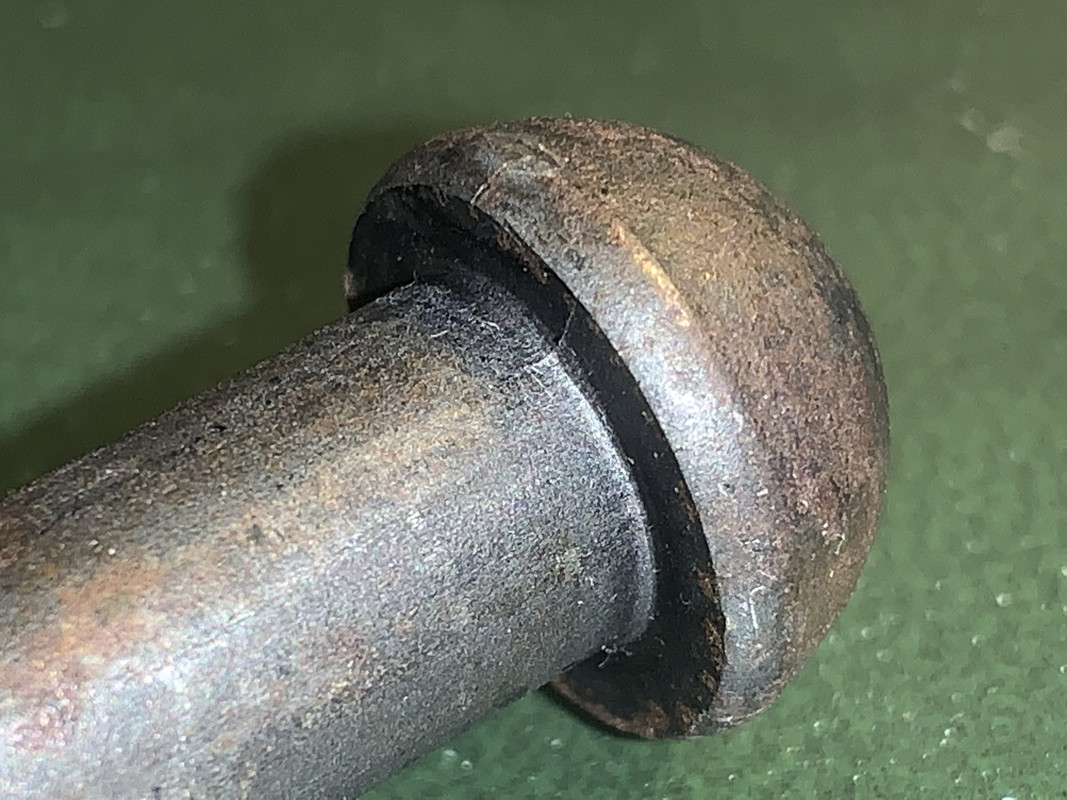
My inclination is to go with Bar #2, but I would really like to know whether Bar #1 is original and, if so, what year was it introduced?