


Hi,
Still investigating the not so smooth running of my Series 3. Decided to check the spark plug type, but discovered the Parts catalogue says N10Y, whilst the workshop manual says N9Y (presumably Champion).
The question is, which is correct, what do you guys run and also, if I choose the wrong type, what issues would I have?
Regards,
Simon
Which Spark Plugs?


#2
One bit of advice I can offer is to use 'Resistor' plugs (e.g NR9Y or NR10Y) because, as I found out with Megajolt, the non resistor plugs produce a lot of electrical interference.
David Jones
S1 OTS OSB
1997 Porsche 911 Guards Red
2024 Lexus LBX
Add your E-Type to our World Map: http://forum.etypeuk.com/viewtopic.php?f=1&t=1810
S1 OTS OSB
1997 Porsche 911 Guards Red
2024 Lexus LBX
Add your E-Type to our World Map: http://forum.etypeuk.com/viewtopic.php?f=1&t=1810
| Link: | |
| BBcode: | |
| HTML: | |
| Hide post links |
-
 PeterCrespin
- Posts: 4561
- Joined: Fri Mar 05, 2010 8:22 pm
- Location: Gaithersburg, Maryland.
- Contact:

#3
No, the question is, which plugs are in the misfiring engine?
In Championspeak lower means harder/colder plug liable to foul easier in slow or rich running but survive hard running better. One grade shouldn't affect anything much unless there are several other borderline scenarios going on.
Other makers use different notations.
Pete
In Championspeak lower means harder/colder plug liable to foul easier in slow or rich running but survive hard running better. One grade shouldn't affect anything much unless there are several other borderline scenarios going on.
Other makers use different notations.
Pete
1E75339 UberLynx D-Type; 1R27190 70 FHC; 1E78478; 2001 Vanden Plas
| Link: | |
| BBcode: | |
| HTML: | |
| Hide post links |
#4
The temperature rating is unlikely to make much difference unless they are wildly mis-specified but electrical interference with the Opus could cause misfiring. Happened to me when I fitted EDIS!
David Jones
S1 OTS OSB
1997 Porsche 911 Guards Red
2024 Lexus LBX
Add your E-Type to our World Map: http://forum.etypeuk.com/viewtopic.php?f=1&t=1810
S1 OTS OSB
1997 Porsche 911 Guards Red
2024 Lexus LBX
Add your E-Type to our World Map: http://forum.etypeuk.com/viewtopic.php?f=1&t=1810
| Link: | |
| BBcode: | |
| HTML: | |
| Hide post links |
#5
Hi, thanks for the answers.
The plugs fitted are actually Unipart GSP4462, sold as being correct for the car, but now I wonder. Getting detail on which plugs they are equivalent to is difficult, since every site I have explored differs slightly with their answer ? sometimes the difference is not slight! I think they are resistive plugs and closest to NGK BPR6ES or Champion RN9YC, but then other sites have RN9YC as being equivalent to NGK BPR5ES, so confusion reigns.
So I thought I would get hold of a set of actual Champion plugs, hence the original question. I actually have a set of NGK BP6ES plugs, which appear to be closest to N9Y in spec (although sometimes given as equivalent to N10Y ? I guess the temperature ranges overlap), so I will give these a try, although this will have to wait a while. They aren?t the resistive plugs that David refers to and it may well be worth me changing to that type (presumably RN9Y or RN9YC Champion Plugs) as, although I don?t have the OPUS system any longer, I do have the ReOpus, which has similar circuitry but modern components.
I also changed the leads from a set of Bosch resistive type to a set from SNG; new, but in a clear polythene bag with no details of manufacturer or spec. the Bosch lead set was made up from individual leads of the same length ? it wasn?t easy to source a set here in Australia and this was before I was regularly ordering from overseas. I am going to change back, as I feel the car may actually be a little worse on these, but it is difficult to be sure. If this is the case, then the argument for resistive plugs will be supported.
I can?t do much for a week or so due to work commitments, but may order some up in order to have them ready for when I can continue investigation. However I am still interested in the plugs other Series 3 owners are using, plus their experience of them.
Regards,
Simon
The plugs fitted are actually Unipart GSP4462, sold as being correct for the car, but now I wonder. Getting detail on which plugs they are equivalent to is difficult, since every site I have explored differs slightly with their answer ? sometimes the difference is not slight! I think they are resistive plugs and closest to NGK BPR6ES or Champion RN9YC, but then other sites have RN9YC as being equivalent to NGK BPR5ES, so confusion reigns.
So I thought I would get hold of a set of actual Champion plugs, hence the original question. I actually have a set of NGK BP6ES plugs, which appear to be closest to N9Y in spec (although sometimes given as equivalent to N10Y ? I guess the temperature ranges overlap), so I will give these a try, although this will have to wait a while. They aren?t the resistive plugs that David refers to and it may well be worth me changing to that type (presumably RN9Y or RN9YC Champion Plugs) as, although I don?t have the OPUS system any longer, I do have the ReOpus, which has similar circuitry but modern components.
I also changed the leads from a set of Bosch resistive type to a set from SNG; new, but in a clear polythene bag with no details of manufacturer or spec. the Bosch lead set was made up from individual leads of the same length ? it wasn?t easy to source a set here in Australia and this was before I was regularly ordering from overseas. I am going to change back, as I feel the car may actually be a little worse on these, but it is difficult to be sure. If this is the case, then the argument for resistive plugs will be supported.
I can?t do much for a week or so due to work commitments, but may order some up in order to have them ready for when I can continue investigation. However I am still interested in the plugs other Series 3 owners are using, plus their experience of them.
Regards,
Simon
Regards,
Simon
Series III FHC
Simon
Series III FHC
| Link: | |
| BBcode: | |
| HTML: | |
| Hide post links |
#6
David will that affect performance or just produce radio interference?Heuer wrote:One bit of advice I can offer is to use 'Resistor' plugs (e.g NR9Y or NR10Y) because, as I found out with Megajolt, the non resistor plugs produce a lot of electrical interference.
Wondering because i have an EDIS fitted and am troubled with the same miss under load as Simon seems to be; albeit i have a 4.2.
Andrew.
881824, 1E21538. 889457. 1961 4.3l Mk2. 1975 XJS. 1979 MGB (supercharged).
Adelaide, Australia
881824, 1E21538. 889457. 1961 4.3l Mk2. 1975 XJS. 1979 MGB (supercharged).
Adelaide, Australia
| Link: | |
| BBcode: | |
| HTML: | |
| Hide post links |
#7
Andrew
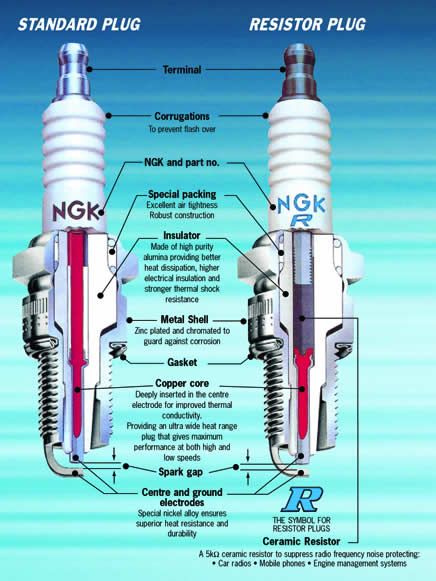
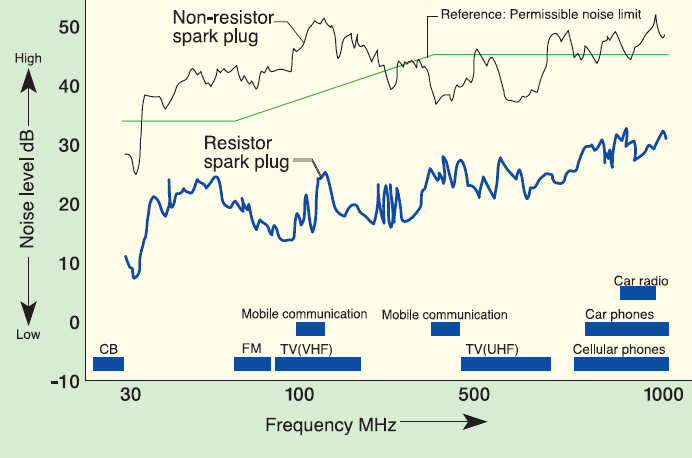
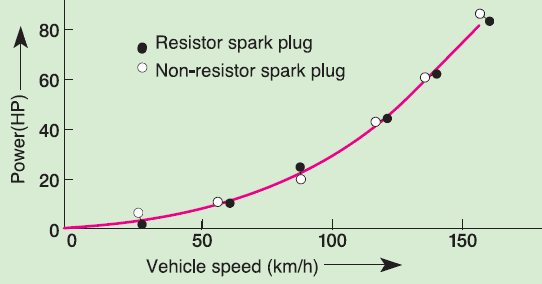
Yes! If you check out the EDIS/Megajolt support thread http://etypeuk.com/forum/viewtopic.php?t=437 you will find my adventures in discovering why I had a misfire - all down to using non-resistive plugs. They produce a huge amount of RFI which combined with other sources in the environment (electrical cables, mobile masts, radio transmitters etc) interfere with the car's electronics. It was never a problem in the early '60's because the only susceptible bit of the car was the radio and that could be sorted with a capacitor. As more cars came to market with a radio and FM became prevalent the plug manufacturers released the resistor types as it was cheaper than installing resistive plug wires. As electronic ignition became the norm the non resistor plugs dropped out of fashion except by the racing die-hards who said the must affect performance simply because they were "resistive". This was proved to be a complete nonsense but the myth lingers. Resistor plugs cost the same as non-resistor ones, have the same performance and are essential if your car is fitted with any kind of electronics (ignition, radio, navigation, mobile phone ......). Ray L has made resistive plugs a mandatory condition of installing his EDIS/Megajolt kit.
Simon
If you have fitted non-resistive plugs and have got rid of the resistive HT leads as well it is likely your Reopus is being affected by the resulting RFI. The conditions you are experiencing are what I would expect. According to the NGK web site you need BPR5E plugs with a 0.6mm gap. Either swap the plugs or put the Bosch suppressed cables back and report back.
"At the moment the spark jumps the gap it causes a high frequency burst of energy, this is known as RFI (radio frequency interference). This is why resistor spark plugs were introduced in the mid 1960's. Placing a resistor within the spark plug suppresses the RFI. Without resistor plugs in your car you can experience static on your radio as well as interference with other sensitive electronic equipment. Some later model vehicles as well as newer Powersport engines must use resistor plugs for a proper "talkback" to the electronic ignition. As a rule, performance is in no way impaired by resistor spark plugs."
Heat Range Explanation
Typically the heat range for NGK Spark Plugs varies from 2-11. This number indicates the thermal characteristics of a spark plug, or how ?hot? or ?cold? a spark plug is. The term hot/cold is commonly used to describe whether a spark plug heats up easily (hot) or whether it provides resistance to heating up (cold). Generally, low power engines such as lawn mowers don?t produce a large amount of heat, hence use a low heat range (or hot) spark plug such as a 4 heat range. This means the spark plug will heat up easily and reach its optimal operating temperature. High performance engines on the other hand produce a large amount of heat, hence a high heat range (or cold) spark plug such as a 10 heat range needs to be used to resist the heat developed by the engine. Several factors influence the heat range of a spark plug, although typically the insulator nose design provides an indication of the heat range of a spark plug. When a spark plug absorbs heat produced from combustion, the heat is transferred through the centre electrode and insulator nose to the metal shell, which then transfers the heat into the engine casing and circulating coolant.

A low heat range (or hot) spark plug typically has a long thin insulator nose which will heat up easily however will not dissipate readily to the metal shell (above left). Conversely, a high heat range (or cold) spark plug has a short thick insulator nose which will dissipate heat much easier (above right).
When the heat rating is too high: The spark plug temperature remains too low and causes deposits to build up on the firing end; the deposits offer an electrical leakage path that gives rise to loss of sparks.
When the heat rating is too low: The spark plug temperature rises too high and induces abnormal combustion (pre-ignition): this leads to melting of the spark plug electrodes as well as piston seizure and erosion.
Yes! If you check out the EDIS/Megajolt support thread http://etypeuk.com/forum/viewtopic.php?t=437 you will find my adventures in discovering why I had a misfire - all down to using non-resistive plugs. They produce a huge amount of RFI which combined with other sources in the environment (electrical cables, mobile masts, radio transmitters etc) interfere with the car's electronics. It was never a problem in the early '60's because the only susceptible bit of the car was the radio and that could be sorted with a capacitor. As more cars came to market with a radio and FM became prevalent the plug manufacturers released the resistor types as it was cheaper than installing resistive plug wires. As electronic ignition became the norm the non resistor plugs dropped out of fashion except by the racing die-hards who said the must affect performance simply because they were "resistive". This was proved to be a complete nonsense but the myth lingers. Resistor plugs cost the same as non-resistor ones, have the same performance and are essential if your car is fitted with any kind of electronics (ignition, radio, navigation, mobile phone ......). Ray L has made resistive plugs a mandatory condition of installing his EDIS/Megajolt kit.
Simon
If you have fitted non-resistive plugs and have got rid of the resistive HT leads as well it is likely your Reopus is being affected by the resulting RFI. The conditions you are experiencing are what I would expect. According to the NGK web site you need BPR5E plugs with a 0.6mm gap. Either swap the plugs or put the Bosch suppressed cables back and report back.
"At the moment the spark jumps the gap it causes a high frequency burst of energy, this is known as RFI (radio frequency interference). This is why resistor spark plugs were introduced in the mid 1960's. Placing a resistor within the spark plug suppresses the RFI. Without resistor plugs in your car you can experience static on your radio as well as interference with other sensitive electronic equipment. Some later model vehicles as well as newer Powersport engines must use resistor plugs for a proper "talkback" to the electronic ignition. As a rule, performance is in no way impaired by resistor spark plugs."
Heat Range Explanation
Typically the heat range for NGK Spark Plugs varies from 2-11. This number indicates the thermal characteristics of a spark plug, or how ?hot? or ?cold? a spark plug is. The term hot/cold is commonly used to describe whether a spark plug heats up easily (hot) or whether it provides resistance to heating up (cold). Generally, low power engines such as lawn mowers don?t produce a large amount of heat, hence use a low heat range (or hot) spark plug such as a 4 heat range. This means the spark plug will heat up easily and reach its optimal operating temperature. High performance engines on the other hand produce a large amount of heat, hence a high heat range (or cold) spark plug such as a 10 heat range needs to be used to resist the heat developed by the engine. Several factors influence the heat range of a spark plug, although typically the insulator nose design provides an indication of the heat range of a spark plug. When a spark plug absorbs heat produced from combustion, the heat is transferred through the centre electrode and insulator nose to the metal shell, which then transfers the heat into the engine casing and circulating coolant.
A low heat range (or hot) spark plug typically has a long thin insulator nose which will heat up easily however will not dissipate readily to the metal shell (above left). Conversely, a high heat range (or cold) spark plug has a short thick insulator nose which will dissipate heat much easier (above right).
When the heat rating is too high: The spark plug temperature remains too low and causes deposits to build up on the firing end; the deposits offer an electrical leakage path that gives rise to loss of sparks.
When the heat rating is too low: The spark plug temperature rises too high and induces abnormal combustion (pre-ignition): this leads to melting of the spark plug electrodes as well as piston seizure and erosion.
Last edited by Heuer on Wed Apr 17, 2013 11:33 am, edited 3 times in total.
David Jones
S1 OTS OSB
1997 Porsche 911 Guards Red
2024 Lexus LBX
Add your E-Type to our World Map: http://forum.etypeuk.com/viewtopic.php?f=1&t=1810
S1 OTS OSB
1997 Porsche 911 Guards Red
2024 Lexus LBX
Add your E-Type to our World Map: http://forum.etypeuk.com/viewtopic.php?f=1&t=1810
| Link: | |
| BBcode: | |
| HTML: | |
| Hide post links |
-
 AussieEtype
- Posts: 635
- Joined: Wed Jun 24, 2009 10:59 am
- Location: Canberra, Australia

#8
Simon - I cannot answer your question with respect to Champion plugs except to say that when I had my car in the Uk - I used one or the other - not helpful I know.
However for the 29 years I have had the car in Aust I have used NGK BP6ES plugs with absolutely no issues. My car is completely standard engine wise still running the Opus system and even have the original leads still on the engine. No electrical noise issues and the engine runs fine - started and drove it a few weeks back for the first time in about 9 yeas and once it started with a bit of warm idled easily and no misses in driving and acceleration.
So in the absence of better information I would go with the NGK BP6ES.
Garry
However for the 29 years I have had the car in Aust I have used NGK BP6ES plugs with absolutely no issues. My car is completely standard engine wise still running the Opus system and even have the original leads still on the engine. No electrical noise issues and the engine runs fine - started and drove it a few weeks back for the first time in about 9 yeas and once it started with a bit of warm idled easily and no misses in driving and acceleration.
So in the absence of better information I would go with the NGK BP6ES.
Garry
1971 Series 3 E-type OTS
1976 Series 2 XJ 12 Coupe
1976 Series 2 XJ 12 Coupe
| Link: | |
| BBcode: | |
| HTML: | |
| Hide post links |
#9
So my experience does not constitute "better" information? 
You have the original resistor leads on your car - although it is generally acknowledged they should be changed after 10 years or so - and the original Opus. Simon has swapped out his resistor leads and replaced them with an unknown set. He also has Reopus, which contains modern electronics which may be more susceptible to interference. He has non resistor plugs fitted. He is getting a misfire. Doh!
There is no excuse for using non-resistor plugs nowadays and using them is anti-social because the electrical noise produced can interfere with the sensitive electronics in adjacent vehicles and mobile phones. On several occasions I have come upon a classic car whilst driving and the electrical interference picked up by my modern car makes listening to the radio intolerable. A case of overtaking or backing off to get away from the pollution.
You have the original resistor leads on your car - although it is generally acknowledged they should be changed after 10 years or so - and the original Opus. Simon has swapped out his resistor leads and replaced them with an unknown set. He also has Reopus, which contains modern electronics which may be more susceptible to interference. He has non resistor plugs fitted. He is getting a misfire. Doh!
There is no excuse for using non-resistor plugs nowadays and using them is anti-social because the electrical noise produced can interfere with the sensitive electronics in adjacent vehicles and mobile phones. On several occasions I have come upon a classic car whilst driving and the electrical interference picked up by my modern car makes listening to the radio intolerable. A case of overtaking or backing off to get away from the pollution.
Last edited by Heuer on Wed Apr 17, 2013 5:02 pm, edited 1 time in total.
David Jones
S1 OTS OSB
1997 Porsche 911 Guards Red
2024 Lexus LBX
Add your E-Type to our World Map: http://forum.etypeuk.com/viewtopic.php?f=1&t=1810
S1 OTS OSB
1997 Porsche 911 Guards Red
2024 Lexus LBX
Add your E-Type to our World Map: http://forum.etypeuk.com/viewtopic.php?f=1&t=1810
| Link: | |
| BBcode: | |
| HTML: | |
| Hide post links |
#10
Thanks for all answers once again, it looks like the smart move is to try some Resistive plugs - I'll try to find some, then try a progressive change, leads first, then plugs and see if it makes a difference - as I say though ot will be end of next week before I can try this, but I'll report back when I have some results.
The recently fitted leads should be good, coming from SNG, but there is no way of knowing their spec and I remember measuring resistance on them when they arrived months ago. They were all different and I ended up believing my set made from individual Bosch leads (including a couple I had to modify to fit), were better, but changed them at the weekend in the interests of investigation.
I'll report back next week,
Regards,
Simon
The recently fitted leads should be good, coming from SNG, but there is no way of knowing their spec and I remember measuring resistance on them when they arrived months ago. They were all different and I ended up believing my set made from individual Bosch leads (including a couple I had to modify to fit), were better, but changed them at the weekend in the interests of investigation.
I'll report back next week,
Regards,
Simon
Regards,
Simon
Series III FHC
Simon
Series III FHC
| Link: | |
| BBcode: | |
| HTML: | |
| Hide post links |
#11
Incidentally, the ReOpus site (which I finally thought of consulting), also recommends resistive plugs, although their recommendation is as follows:
Spark plugs must be clean and in good condition.
Set Plug Gaps to 25thou before starting to tune the carburettors.
My experience is that NGK spark plugs BPR6XXX are a good choice. Below are the NGK options.
Premium (Iridium): BPR6EIX
Super (platinium): BPR6EGP
Standard: BPR6ES
V-Power: BPR6EY
Regards,
Simon
Spark plugs must be clean and in good condition.
Set Plug Gaps to 25thou before starting to tune the carburettors.
My experience is that NGK spark plugs BPR6XXX are a good choice. Below are the NGK options.
Premium (Iridium): BPR6EIX
Super (platinium): BPR6EGP
Standard: BPR6ES
V-Power: BPR6EY
Regards,
Simon
Regards,
Simon
Series III FHC
Simon
Series III FHC
| Link: | |
| BBcode: | |
| HTML: | |
| Hide post links |
#12
Forget the over priced platinum et al ones, the standard ones work just as well unless you expect to be doing 50k miles per year. The Iridium and Platinum are also difficult to adjust because you can easily break the electrode when doing so which is why they come pre-set for a particular car.
David Jones
S1 OTS OSB
1997 Porsche 911 Guards Red
2024 Lexus LBX
Add your E-Type to our World Map: http://forum.etypeuk.com/viewtopic.php?f=1&t=1810
S1 OTS OSB
1997 Porsche 911 Guards Red
2024 Lexus LBX
Add your E-Type to our World Map: http://forum.etypeuk.com/viewtopic.php?f=1&t=1810
| Link: | |
| BBcode: | |
| HTML: | |
| Hide post links |