


Seems there are two types of bypass valves that differ in every way, function/purpose design, construction and maintenance. For id purpose I’m going to refer these as Type 1 (‘cos I think it was 1st) and Type 2 (the type I’ve got). Type 2 is the one in the service/parts manuals (that I have). Here is my interpretation, most of what I say about Type 1 is assumed from comments by others, hopefully with assistance and correction there can be broad understanding of this completely redundant technology …
Type 1 does not have external vacuum assist. Type 2 does have external vacuum assist. Here is pic of my Type 2 with stub pipe for external vacuum connection.
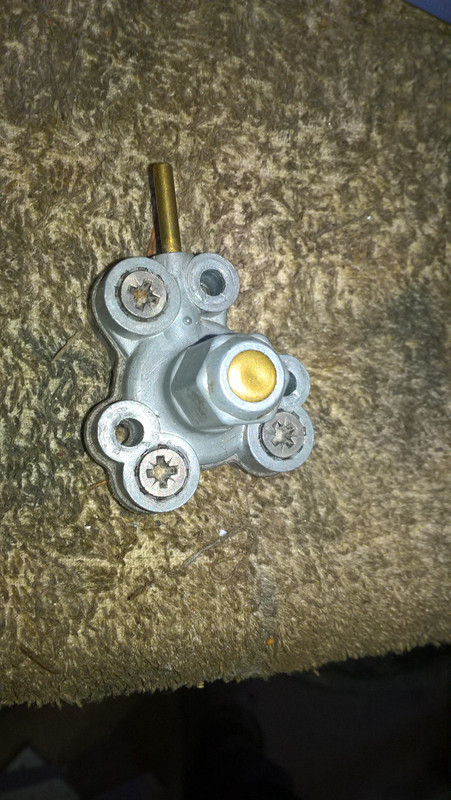
For Type 2, the tubing for the vacuum assist is a potential source of vacuum leaks. For some reason this tubing goes via the same temperature controlled vacuum switch (part C37430) as the vacuum supply for the distributor retard. I don’t understand this, in any case the vacuum switches are NLA.
Type 1 has external adjustment screw (under the brass plate). Type 2 does NOT have external adjustment screw, it has internal adjustment screw, it is the last thing to take out when u dismantle, to adjust a Type 2 u must remove carb, dismantle, adjust, reassemble, reinstate carb, test, fail, repeat … The service manual says about Type 2, there is no non-factory adjustment, even to fix a torn diaphragm, u need to replace the entire bypass valve.
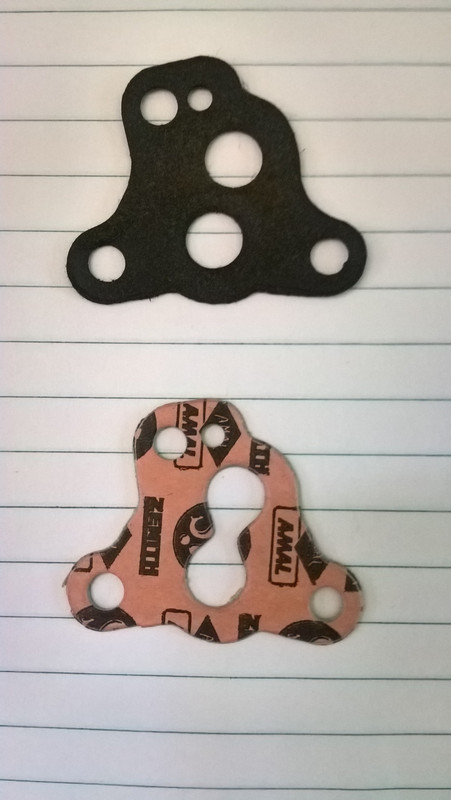
Type 1 and Type 2 have different mounting gaskets. Here is pic showing that one type has an opening between the inlet and outlet ports allowing a permanent bypass of the throttle plate. When u order gaskets (from SNGB or Burlens) if u are not specific, 50% of the time u get sent the wrong one. Having different gaskets on different carbs makes it IMPOSSIBLE to balance yr carbs. I believe (not certain) that the gasket with the opening is for a Type 1, the other (black in this pic) is for Type 2.
Type 1 and Type 2 valves have different weight springs. Type 1 has the stronger spring, Type 2 has a pissant spring. With Type 2, dismantling and screwing the adjustment screw in to the max, for strongest spring tension, is not enough to prevent a valve opening at idle vacuum. Usually only one opens, this makes balancing yr carbs IMPOSSIBLE.
Type 1 function/purpose is an “anti-pop” valve, it is to prevent backfiring when decelerating hard. Type 2 is for venting the carb chamber between the damper piston and the throttle plate under the same conditions and more, it is an emissions control thing. If u have Type 2, your car would also have a large “gulp valve” (C34018, mounted off the throttle cable capstan, NLA) that performs the “anti-pop” function. Means if u remove yr Type 2’s u must retain yr Gulp Valve. Fixing gulp valves (perished diaphragm) without vacuum leak is not easy, can be done. Cars with Type 1 don’t have or need gulp valves.
If u have Type 2’s: Remove them, fit blanking plates, fix yr gulp valve. Smash the bypass valves to gravel with a sledge hammer, blast the gravel to dust with an oxy torch, feed the dust to yr dog, shoot the dog.
If u have Type 1’s: Check the diaphragms and gaskets are ok, externally adjust as per any advice on the internet, drive smugly off into the sunset.
