Hi Rob,
Like many I am watching this post with great interest, I would love to be doing this all again. Some years ago I went through a similar process, my bodyshell was not quite as bad, not having the distortion you have described. As a result I only built a simple rotisserie, without the "jig" aspect to the design. As such I can't advise you on exact dimensions, but there are a few things which might help you.
Hinges - you appear to have a similar idea to mine - round posts which fit inside sleeves allowing rotation. This worked well and originally I was going to drill a series of holes to allow me to lock the car at 180, 80 and 45 degrees, but in the end it was much more helpful (and simple) to use a clamping system:

With a nut welded to either side of the outer sleeve and a bolt screwed in, you can lock the car at any angle, a great help when welding as you can position the car at any optimum angle. Another advantage is that if the balance is not perfect, you can turn the car with some friction remaining (by not fully loosening the bolts), making it easier to control. I still drilled one hole to allow me to lock the car easily at the normal angle, also meaning the car was safe and solid if I moved it.
As to balance, you should be able to see that I positioned the car with the pivot point directly through the same level as the upper engine frame, the rear mount went straight into the rear number plate panel; which at that time seemed to be accepted practice. Most now make a jig as you are doing and the extra effort is probably well worth it. Now with my arrangement, balance was almost perfect and I was able to turn the car single handed with no problem, normally doing it from one end of the car or another, with a spanner on the bolt ready to lock it of at the angle required; back the bolts off until it just turns, spin the car and tighten the bolt. Your jig will add some weight under the car, although my car had a sunroof, so the roof was a little heavier at first (before removal). When I later removed the sun roof (including wooden frame) and the dash assembly and tailgate, all of which are above the pivot point, the car was still easy to turn. I also turned the car both with and without doors and tailgate fitted and never found any problem doing it. I think I might lower the pivots by a few centimetres, depending on the depth of your lower rails, so that the pivot line is around 5cm lower than the upper engine frames, but this is guessing and may not be necessary. I also recommend stiffening bars from the jig, down to the lower engine frame points - you can see them in the photo showing the hinge/bolt arrangement. I made mine without originally and the car moved about rather alarmingly on the initial test! Oh by the way, my car is a Series 3 FHC (correct designation!) but like all S3 FHC actually has a 2+2 shell pretty similar to your own, so balance points will be similar.
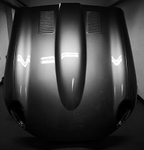
When completed I could do this:

Another view couple of views:


When the main welding was finished I removed the posts (which had plates allowing them to bolt to the base frames), then added some framework allowing me to mount the car on the jig to allow build of the car. I built the front suspension with the car at a comfortable height and added a lot of the underside components like fuel and brake pipes. With the frames on wheels I could move the car at will and in fact I painted the car like this, allowing access under sills and boot floor:

Also I sold mine for more than it cost to make, even without the jig fittings, so your work is a worthwhile investment, may even help you pay for parts later on when the body is finished!
(A couple of edits - more pictures here:
http://etypeuk.com/forum/viewtopic.php?t=385
Another site with helpful and even inspirational help, also showing a rotisserie - the original guide I based my design on:
http://mckennasgarage.com/xke/
And finally my XKE data page:
http://www.xkedata.com/cars/detail/?car=1S50097BW
Also make sure your pivot point is far enough forward to fit the sills which protrude forward from the bulkhead - easily overlooked)
Good luck and keep posting!
Regards,
Simon