Post
by MarekH » Sat Mar 14, 2020 10:32 pm
I'd measure the resistance of this horn. If it draws a steady ~2amps, then at ~12v it ought to have a resistance of ~6ohms. My guess is that it is much much lower than that and so the only [EDIT]-insert way I reconcile your mentioning of surge current and back emf.
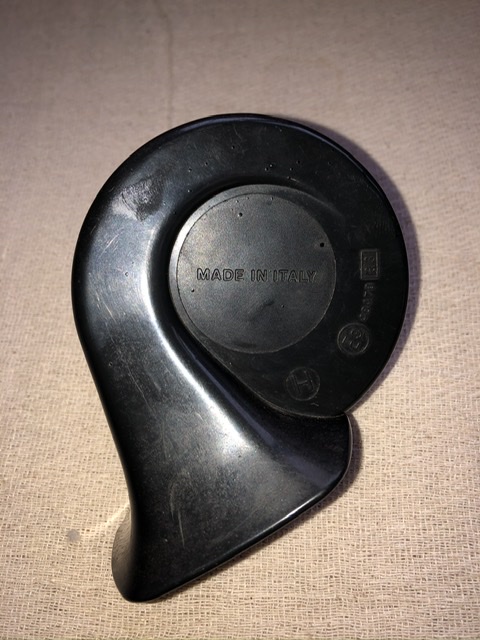
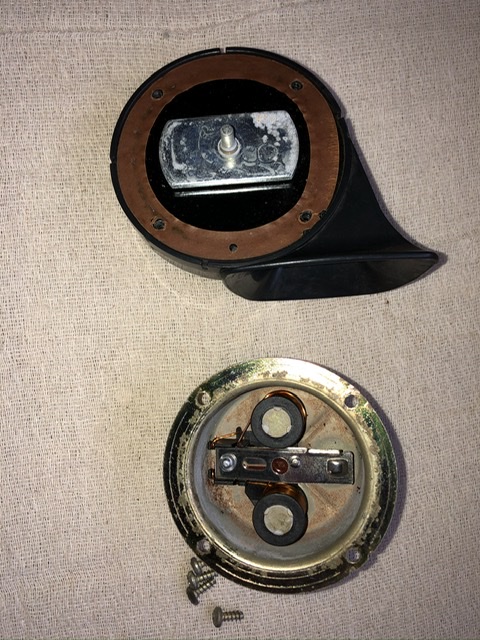
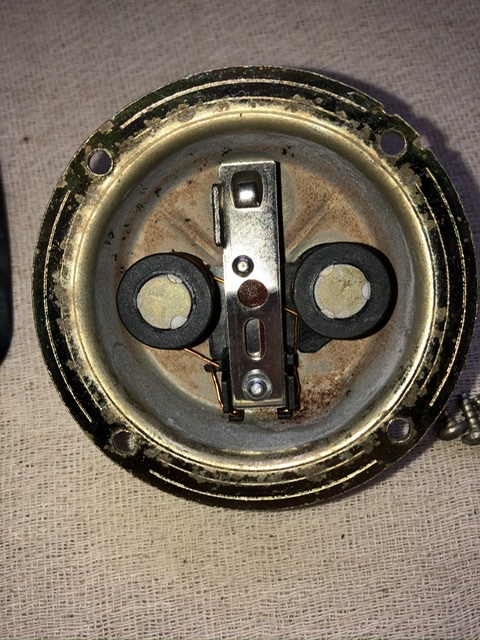
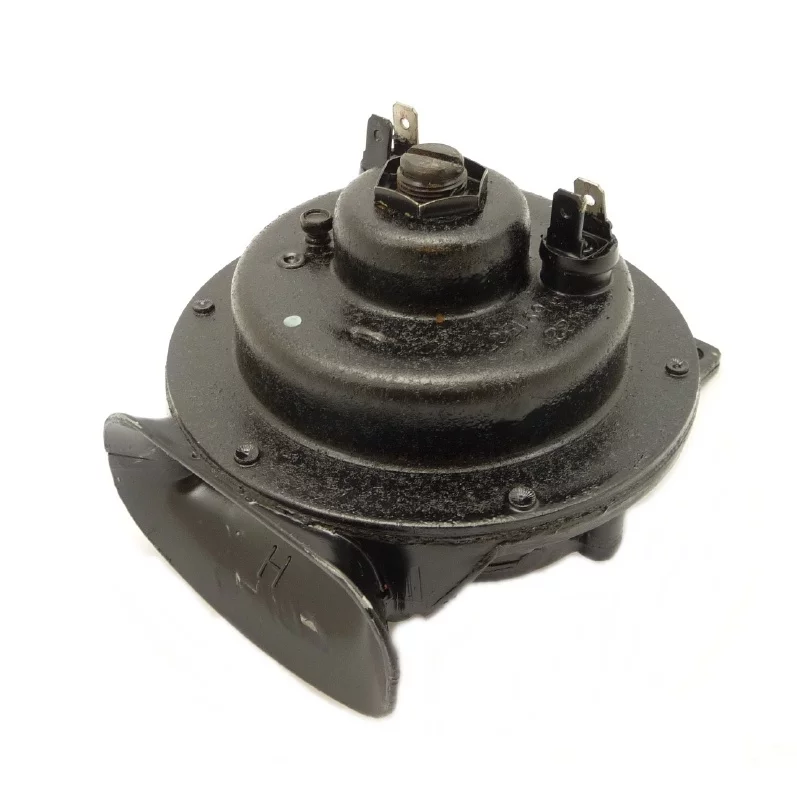
The way the horn works is basically an electromagnet attached to a diaphragm and it has a set of contacts which are open/closed depending on how far the thing moves. To produce a tone of say, 500Hz, the electromagnet and diaphragm move back and forth 500 times per second. That means the solenoid plunger moves in and out 500 times per second, making and breaking the circuit 500 times per second for all of the time that the horn button remains pressed.
Your horn probably has a coil resistance of about 1.5ohms - it is close to a short circuit and will easily pull 10 amps when connected. This drops rapidly down to a much lower number. That number is zero when it is disconnected, which it is 500 times per second. Your measured current is just an averaged out reading because the meter cannot respond fast enough to the changing current. You'll need an oscilloscope to see it changing 500 times a second.
The problem (like the solenoid which engages an overdrive) is that if the horn contacts decide to corrode and weld themselves shut, it doesn't oscillate at 500Hz, make a loud noise and consume the average current you measured, but it simply remains connected, pulling that high current 100% of the time. The relay contacts and steering wheel horn contacts are actually quite robust, but not having a relay would mean that the failure mode would be that rather than an average current you've measured going through a relay, you would now have the full startup (and never dropping) surge current coming through the ignition switch and all of the common wiring. Smoke will escape.
The relay also means this continuously changing high to low current (when it is working ok) stays out of the same circuit common with the ignition, as it is powered directly by a brown wire. This means your flyback voltage spikes, caused by the connection and disconnection of an inductive load) don't interfere with the ignition. (Neither the horn push contact, nor the horn relay are the contacts which are opening and closing at 500 times per second - that goes on at the contact breaker in the horn itself.)
I mentioned the overdrive solenoid because it is basically the same thing, but without a rubber diaphragm and contact breakers attached to make it make a loud noise. It pulls 16amps to engage the overdrive (your "surge current") and 0.9amps to remain engaged (your "my meter measures" amount). These are published figures, not mine. I've watched what happens when one of these solenoids fail under test and smoke literally does start escaping straight away. I hit the "off" button pretty damned fast.
The wiring is indeed happy to take a constant 4 amps, but what is actually happening is that it is seeing a rapidly pulsing high current which merely averages to that if you keep the horn pressed. A quick toot on the horn really will pull 20 amps or more. It is not a simple DC load and a meter does not measure it right.
kind regards
Marek