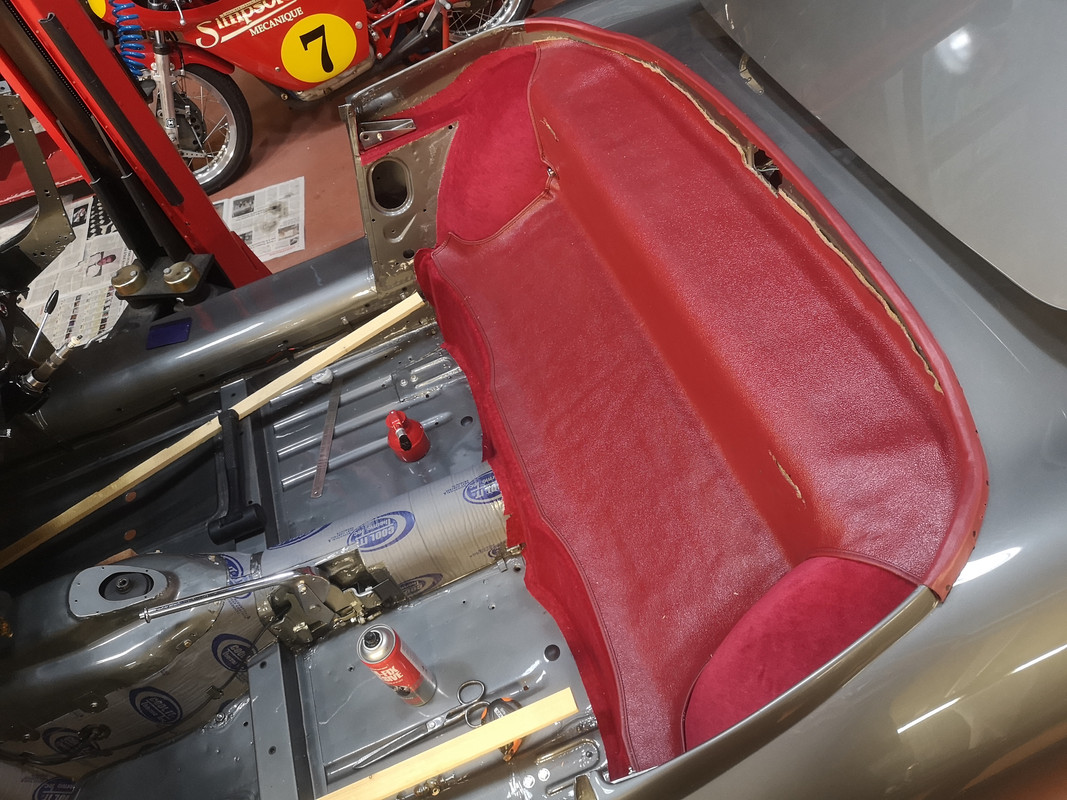
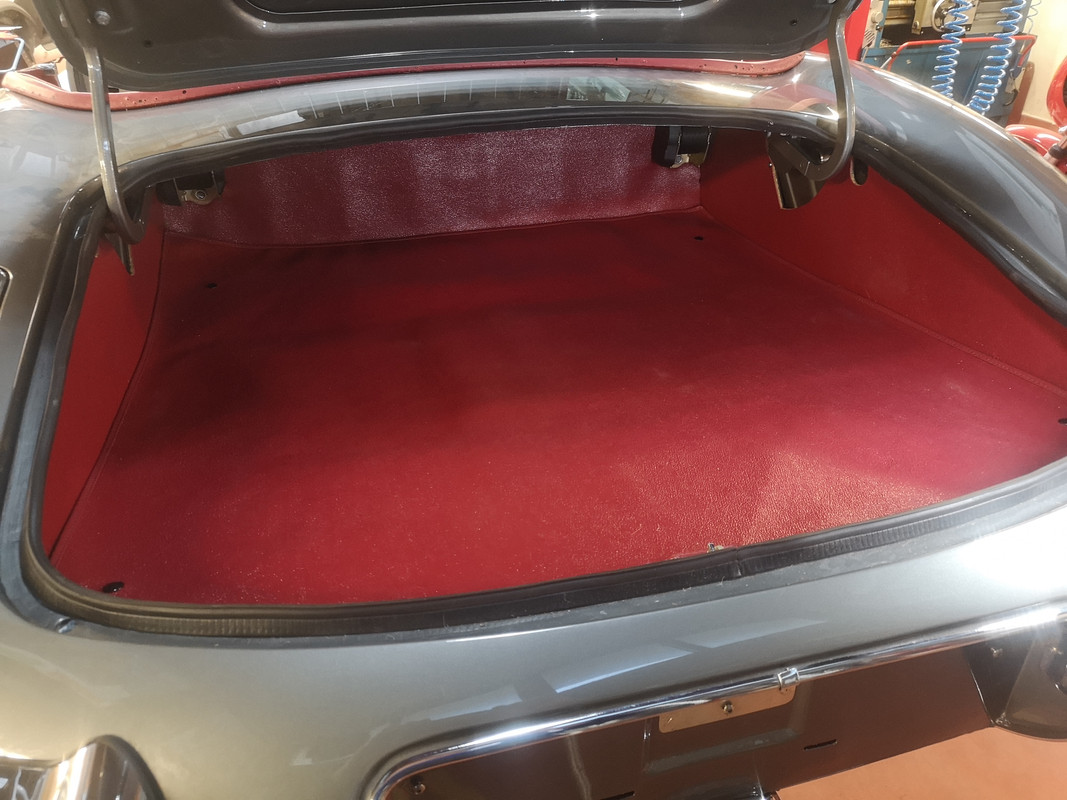
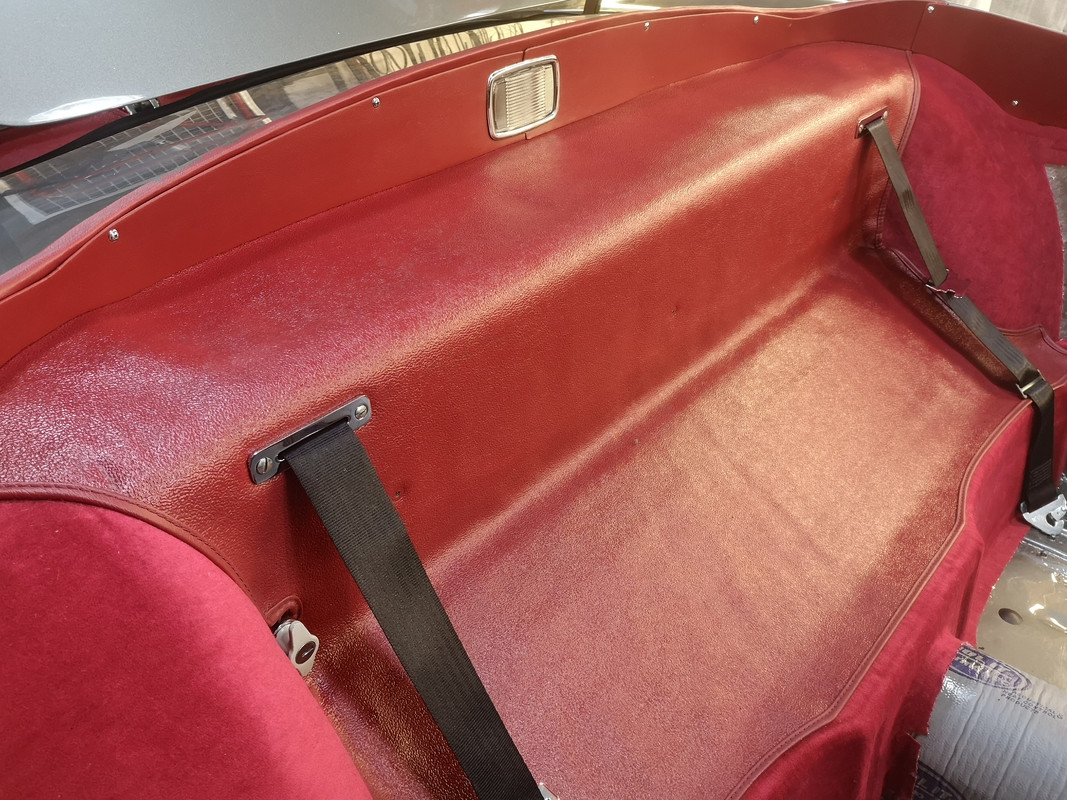
Yet I had done most of it before, in 2016-17 - some by myself, some by Jack McCarthy at BAS in Wales.
But I had found the experience so traumatic that I've blocked out most of the memories, conserving just one - that I f----ing HATED using contact adhesive.
The One-Shot Get It Right First Time is a killer for OCD-sufferers, who like repeated iterations as they strive for (unobtainable) perfection.
However, I think I've found a way of using it that makes it much more manageable.
This did NOT make me Jack McCarthy yet, by a long shot, but my efforts are way better than I feared.
How anyone manages some of the lighter fabrics without using contact-adhesive from a rattle-can just beats me, and the method I have used here seems to work best when using the spray on the trimming, and the oil-can-with-a-brush-applicator on the shell itself, where the zone has to be carefully delineated, or the rattle-can again for other areas.
It's worth reminding anyone that's new to this that one of the key ingredients is using "heavy thinners" - no idea what it's called in the UK, in France it's a "diluant lourd" which is a heavier fraction than cellulose thinners ; it doesn't attack 2-pack or cellulose paints, but it DOES soften and remove contact adhesive, and perfunctory usage doesn't seem to affect hardura or vinyl if you need to remove excess glue.
It's a lighter fraction, however, than plain white spirit.
It is widely used in the motor trade here, and I have contributor Mich @ mich7920 to thank for this, he even sent me my first can for free, and from the references on his version I was able to identify a supplier here, where it's actually also used as a thinners for some swimming-pool lining paint.
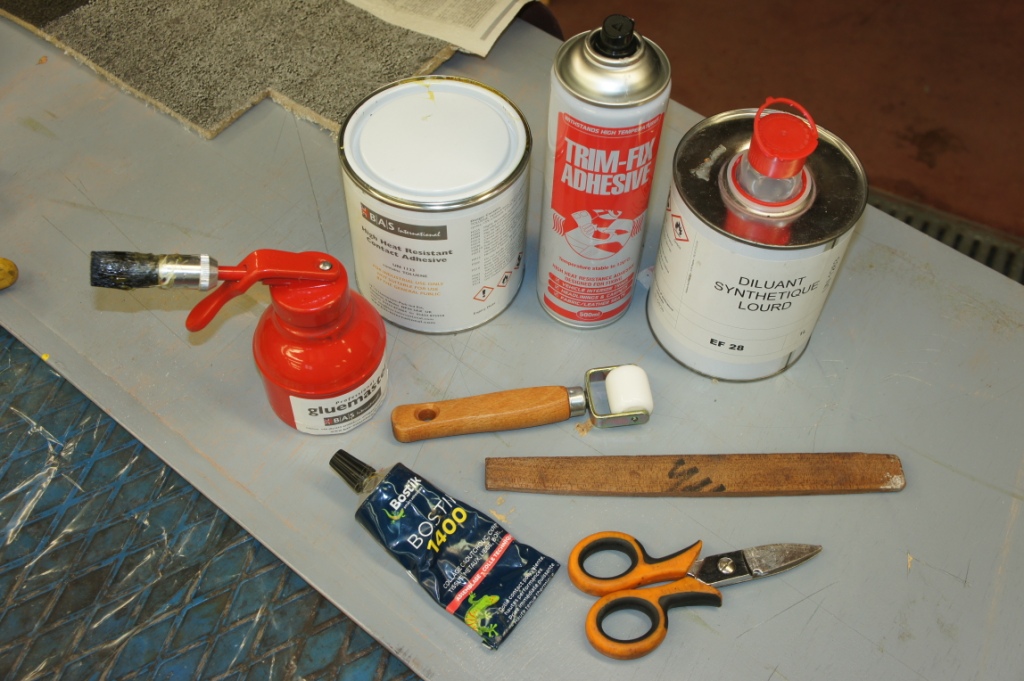
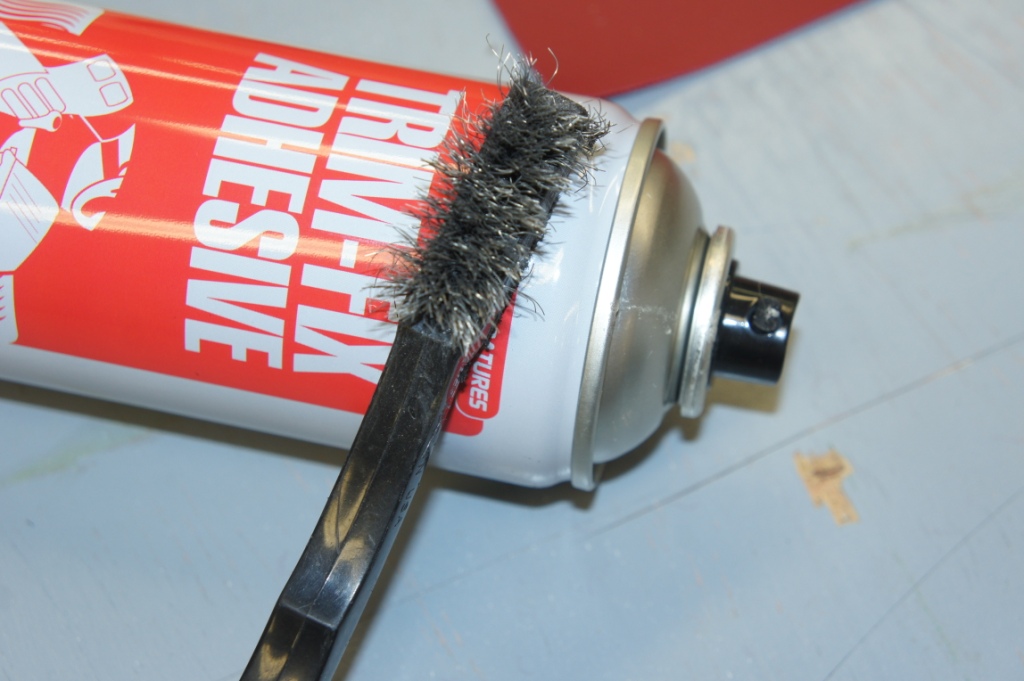
It's also very good for cleaning the rattle-can nozzle, vital as otherwise the spray pattern is destroyed within minutes of each usage.
I have found that a range going from acetone, brake-cleaner, cellulose thinners, Mich's Diluant Lourd, white-spirit, and meths, is necessary if one is to cover all workshop needs.
(Ed - and that will make for six corresponding carcinomas, then ?)
Anyway, the obvious issue on our cars is that as soon as you approach two glued-up items they behave as if magnetised, long before you've got the alignment right, and you're screwed, wrinkles and all.
One obvious fault I was committing was not leaving the glues for long enough, although the notion of "dry to touch" has always seemed pretty subjective to me, and I probably suffered from a disbelief that the chemistry would actually work if I waited 20 minutes or longer.
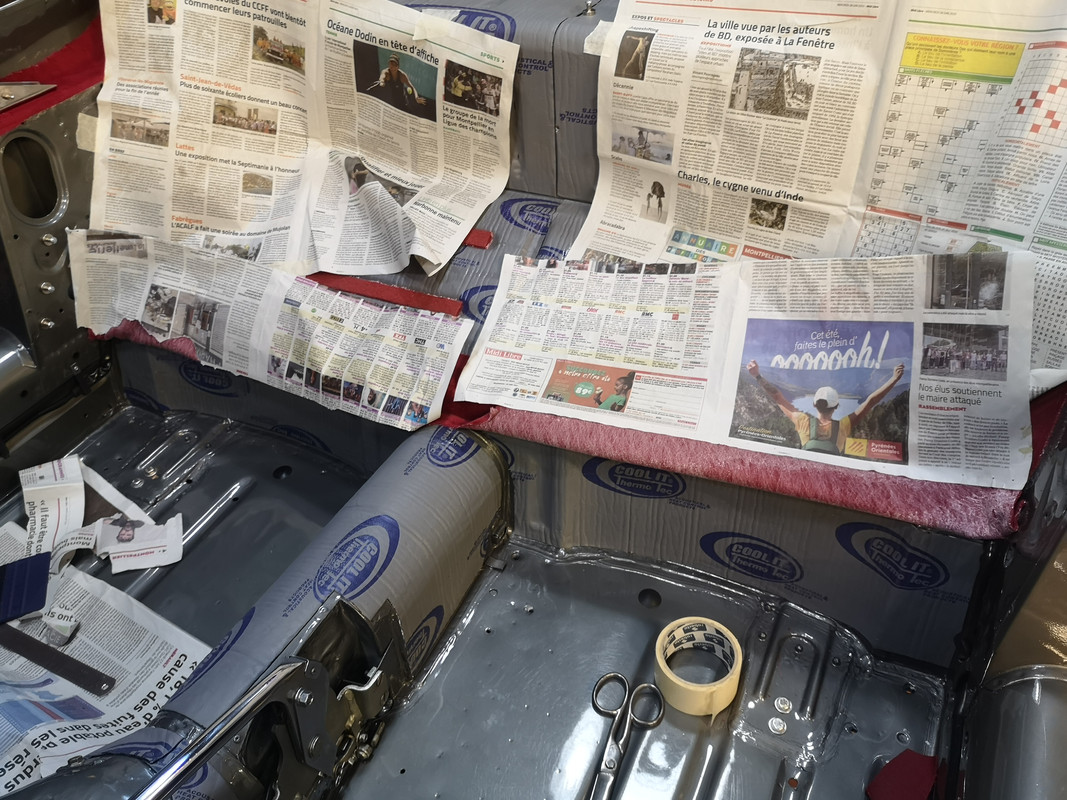
So I started to wait for longer, and above all I realised that once the can-sprayed surface had dried off a bit, I could use newspaper sheets (plastic sheet probably even better ?) - cut judiciously for size and position - to neutralise the majority of the surface.
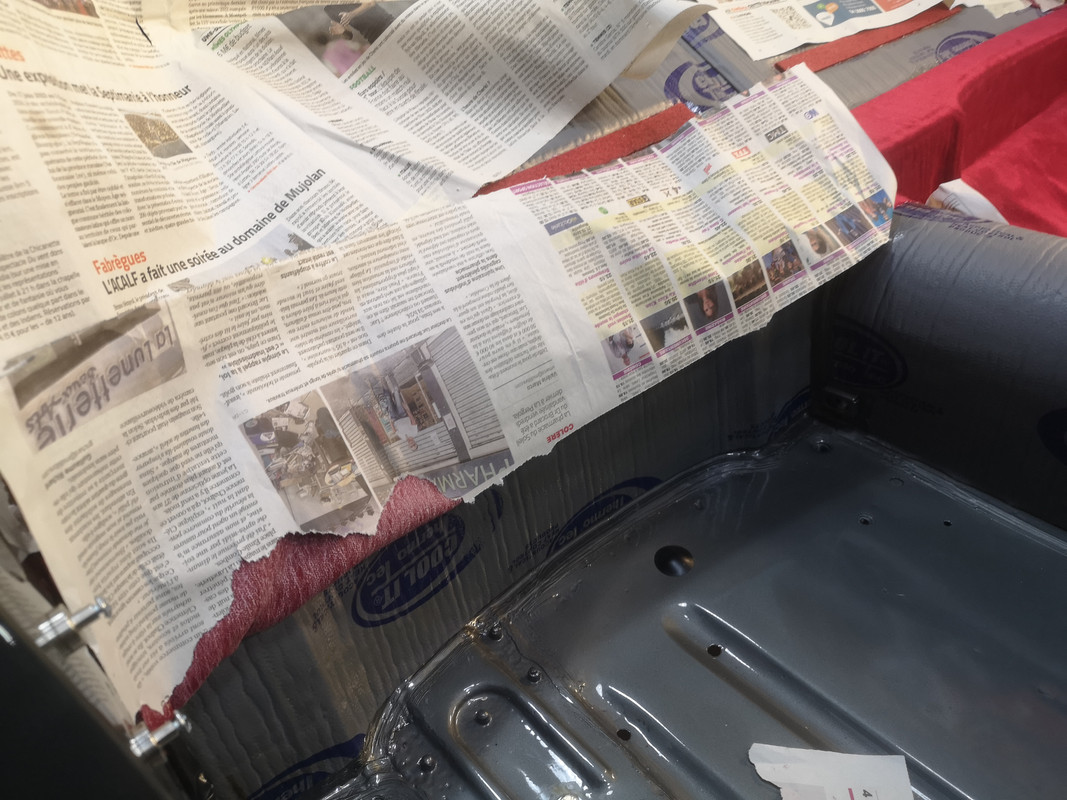
In this way I could position the trimming in a far less stressful way, and then progressively remove my backing sheets - just like you would with Fablon - as I brought the two glued surfaces together.
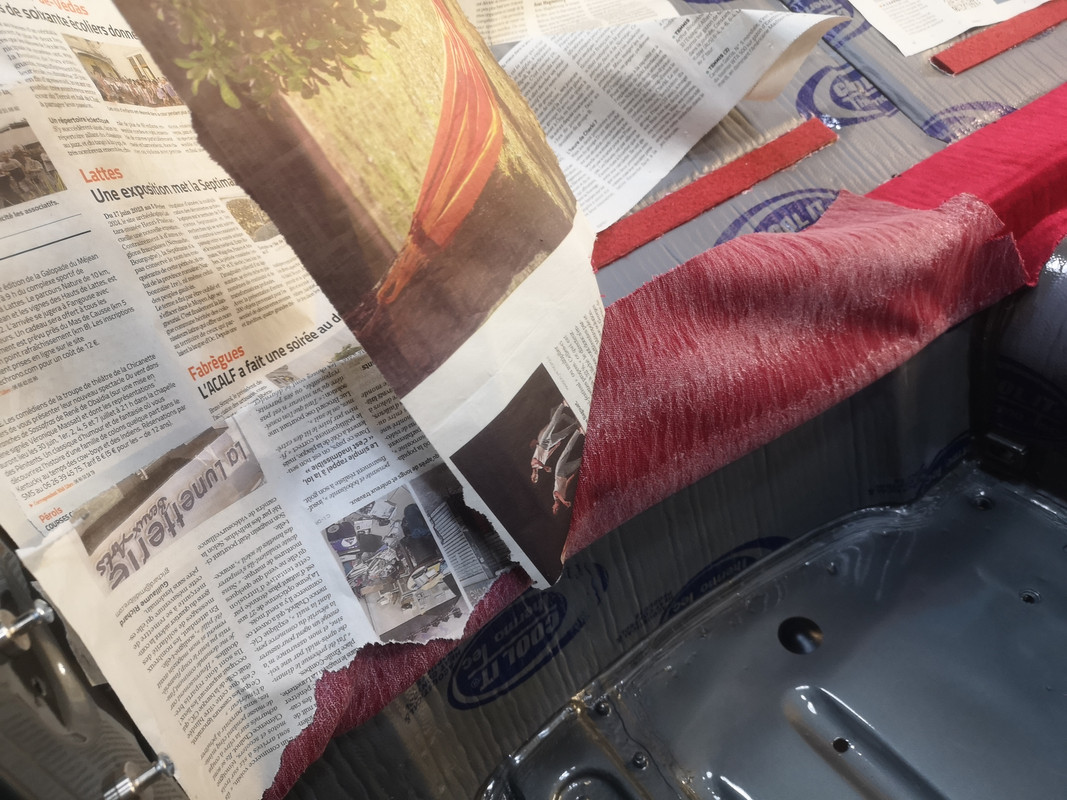
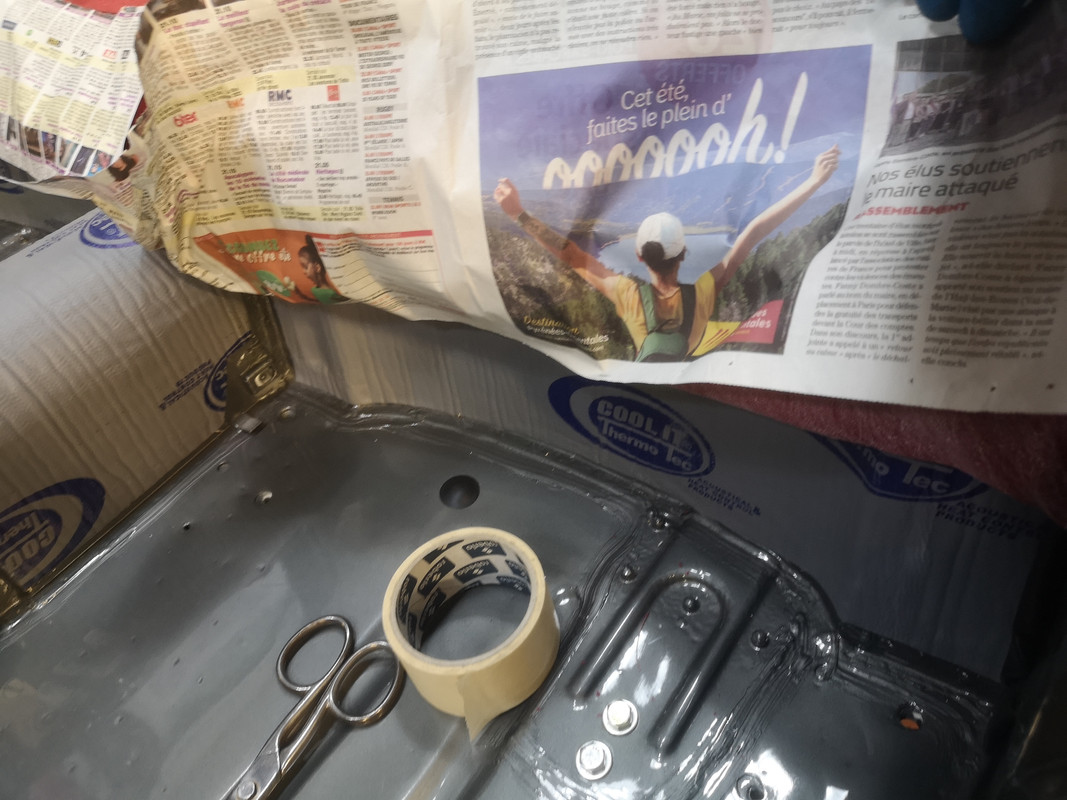
It's not nuclear physics, I grant you, and maybe loads of people do this already - but they never told me.
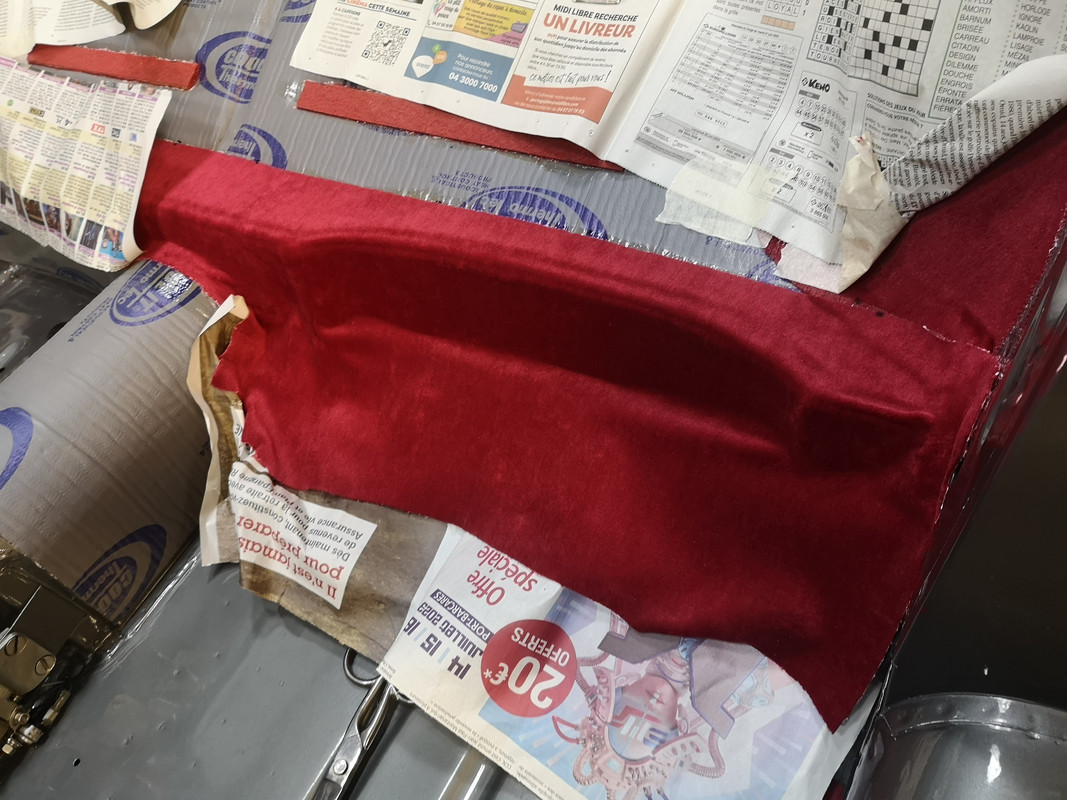
It has revolutionised my capacity to trim the car without having to re-order the stuff I've just destroyed, and at times it even became quite enjoyable ; the less-than-perfect bits are at least now confined to Out-Of-Sight.

NB - I find the moquette is a desperately fragile material, certainly the BAS version I'm using right now, for the environment it is living in, and it's still a bitch to apply - especially the haunches.
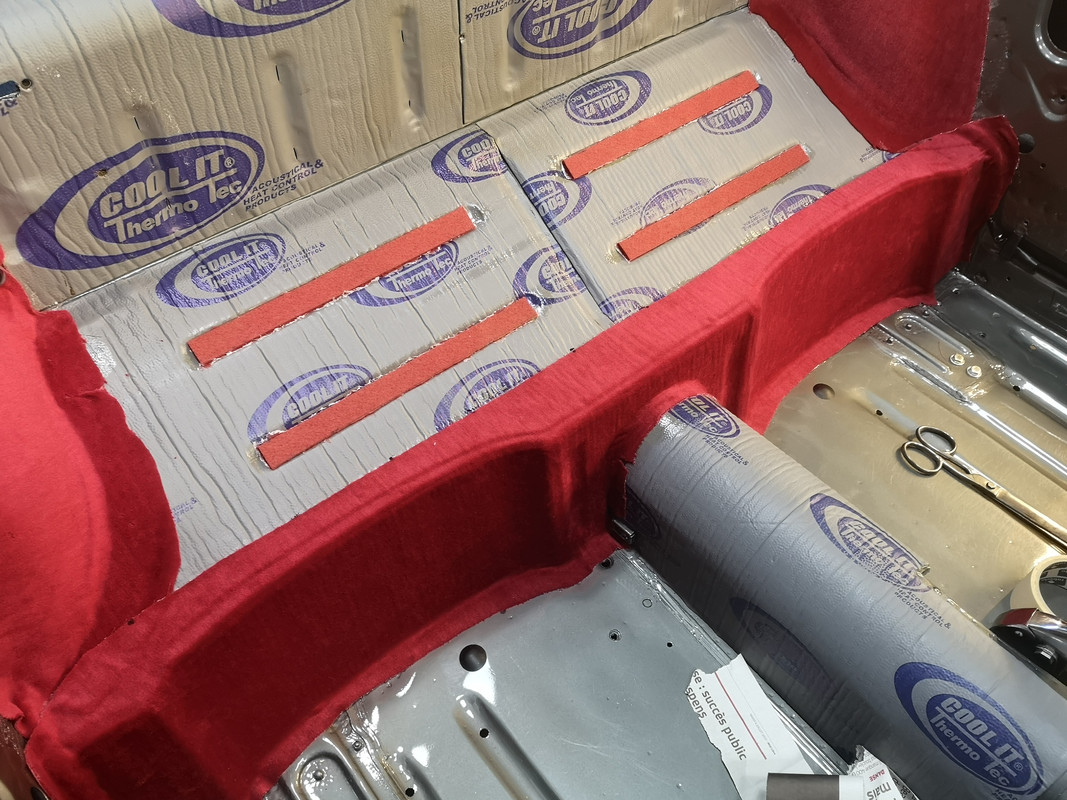
I imagine later versions of the car may have used something else, and if you're not 100% committed to originality I'd suggest you investigate that. I hardly dare open the boot now for fear of leaving marks when I pull on the toggle .............