I believe that the issue of what to do post-application of phosphoric-acid-based treatments may be far more critical than some of us are presuming.
Rustbuster Ltd, for example, are quite specific regarding their H3PO4 product Phos-Kleen B, stating
"...... it will phosphate the steels surface and passivate any rust spots within the steels micropores, the rust will be chemically changed into iron phosphate and completely neutralised ....... used for light surface rust removal prior to painting open surfaces/body panels.
Prior to applying paint over Phos-Kleen B, neutralise and remove any phosphate salts by washing down with Rustbuster Chlor-X DTS salt remover prior to priming."
The French product OTRouille, made by ICI Paints, which is a similar H3PO4 product, specifically states that drips/stains on adjacent painted surfaces must be removed, without saying
why, but then says "rincing with water is unnecessary" on ferrous metals ; however, does that mean that clean and bare steel don't need rincing, or
only that treated rust doesn't need rincing ?
Rustbuster refer to the fact that water is insufficient for salt removal (but don't say whether they mean Sodium or Phosphate salts) when talking up that same Chlor-X salt-remover :
"Dry salt crystals cling so well to the surface of steel that the treatment has to be able to get behind the salt to lift it from the steels surface. Power washing alone cannot do this. A sample coupon of salt contaminated steel boiled for one hour in water will only remove 90% of contaminant salt, it is this hard crystallised salt that requires a special surface surfactant to get behind the crystal and lift it from the surface our formula achieves this at a molecular level not previously available on the UK market. "
However, their much stronger product, Phos-Kleen A, which contains both Phosphoric
and Hydrochloric acids, comes with a spiel that says
"Once dry, neutralise Phos-Kleen A with Rustbuster Chlor-X solution or fresh water."
So water is OK with the more
powerful commercial-grade product, but
NOT with the Joe Public one ? Shurely Shome Mishtake ?
All this whilst maintaining that
"If you use a hydrochloric acid solution to remove rust from the steels surface you will find that the rust is removed back to clean steel very quickly but within a few hours the surface is rusting quicker than before, why? The dried surface salts from the hydrochloric acid (chlorides) are literally sucking water out of the air towards the steels surface creating the perfect rust cell.This is what happens when you know the salts are present the same process occurs when you don't."
Where's the logic in any of that ?!
My observation would be that whilst we are all faced with exactly the same complex surfaces composed of some rust, some paint, some bare-steel, we are all treating our cars with our own private formulations and concoctions, without any real conviction, which we then write up in our posts claiming victory and success - without
any of the cars ever being subject to the kind of treatment (damp, rain, neglect, salt) that got them into that condition.
Not being sure of how to treat phosphoric-acid treated surfaces seems a glaring hole in our reasoning, and it's not because I've never had paint fall off or rust rear its ugly head - after using various brews of acid-based pickling, red-oxide undercoats, top coats, then spraying everything hollow with Waxoyl/Dinitrol or w.h.y. - that I have a fecking clue whether it really works - as my sample is too small and my vehicles are too cossetted.
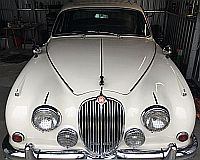
Having just rinced out the inside of the Jag doors with Phos-Kleen B only this afternoon, and with them drying at 25°C in about 20% humidity even as I type, I find it hugely irritating that the clowns who retail most of the products that I've used for the last 10 years are incapable of giving me a comprehendible, logical, and comprehensive strategy of how and when to use them.
PS - for Forum-readers who didn't see this Topic
viewtopic.php?f=4&t=10381&p=83396&hilit ... ter#p83396
I'm adding this extract :
I tried really hard back in 2014, whilst doing the Mini shell, to get to the bottom of how to use the Rustbuster Fe-123 stuff.
It sounded great.
However, I couldn't see how it was possible to use it in our familiar classic-car context where every surface is, generally, a mixture of 1) some good original paint, 2) some good bare steel, and 3) some rusty surface that you've done your very best to wire-brush and generally abrade down so it's brown and without loose flakes.
In my experience it is often impossible to accurately and precisely use a product or treatment "A" on surface-type 1, "B" on surface type 2, and "C" on type 3, as all three surfaces are intermingled.
I went to inordinately diplomatic lengths to try to find out from the manufacturer how to manage Fe-123 in this context, as ALL three types of surface - painted, bare, and rust - go black when you use it ; but the black is only anchored properly on ONE of the three, the rust, and on the paint and the steel it will fall off.
It's all very well saying "only use it on rust" - but the edges of your rusty area are by definition either bare steel or good paint, and the instructions appear to assume you're painting a rusty oil-rig.
All I can say after a multitude of emails is that I would NEVER buy, ever again, anything from that manufacturer.
My conclusion at the time was
"the product instructions are crap, it’s hopeless for mottled/mixed surfaces since you can’t apply it to anything but rust, and since every type of surface goes black you then can’t see where you shouldn’t have applied it ; the firm doesn’t read the questions you send them, the employee you get on the ‘phone gives ambiguous replies that belie a failure to grasp the subject, and the plastic tubs are a bitch to open."
Nice business, if you can get it.
PS - and don't ever buy more than you need ; I had to throw away 5 x 1 kg tubs of the stuff, unopened, that had separated out and would no longer re-incorporate when mixed.